
Should there be more sex education in schools?
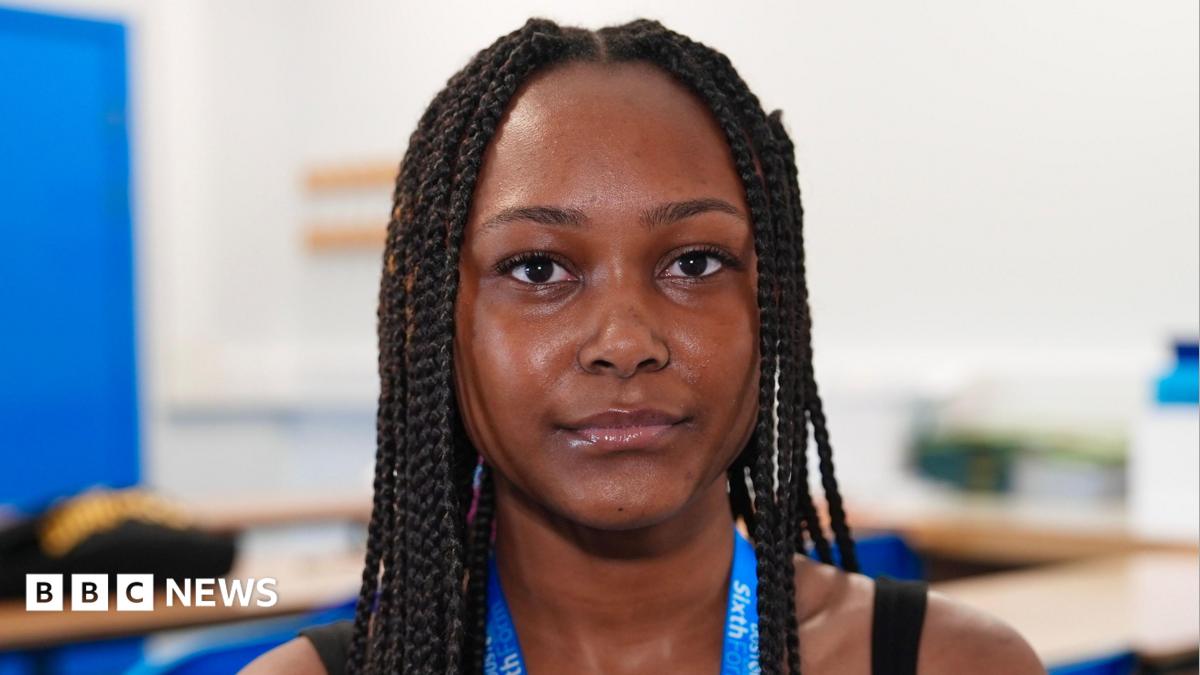
Sixth form students at The Duston School near Northampton are taught about relationships and sex education, but that is not always the case for this age group
Relationship and sex education (RSE) could become mandatory up to the age of 18 in a bid to prevent violence against women and girls.
The Labour MP for Hitchin, Alistair Strathern, has been pressing the government for change and pledged to end a postcode lottery of provision for teenagers in further education, with the introduction of his private member's bill.
The Relationships and Sex Education (Further Education Sector) Bill follows a petition by the survivor-led campaign group Make it Mandatory, which called for sex education to be mandated to 18 and gathered more than 106,000 signatures.
The Duston School in Northampton teaches children from early years to 18.
At primary school pupils learn about healthy relationships, with a particular focus on friendships at an age-appropriate level.
When students progress to secondary school they revisit these themes and move on from friendships to sexual intimate relationships by the time pupils are post-16.
Sixth Form students at the school recently had an assembly about sextortion, when victims - often teenagers - are duped into sending intimate photos or videos to scammers, who then threaten to pass the images on unless they are paid.
Jude, 17, said some male influencers on social media could provide dangerous ideas to teenage boys.
"I think there is a culture for men that you should treat sexual relationships as almost a trophy, as a thing to brag about, as a thing to go and tell your mates about, as a thing to be proud of," he said.
"Equally you should present yourself as being very proficient in those relationships and that the sort of pornification and the radicalisation of young men's attitudes towards sexual relationships is really quite damaging."
Isabelle said she received threats via social media, but says "things could have got a lot worse" had she not spoken to her family.
The 17-year-old says: "I'm very open with my mum especially, and my dad even down to my grandma and my nan and I think it's helped me as a person it sort of made me a lot more confident and not to be ashamed like some people are to have those conversations."
Isabelle said she thought there should be compulsory RSE to the age of 18.
She says: "Something does need to be done, there needs to be more awareness because there is a wide world out there and when you leave school you're on your own.
"You've got to sort of build the connections and the bonds with people who you think you can trust."
Imani said external factors have significant impacts on young people, adding: "I feel like shows like say Love Island, Too Hot to Handle, they play really vital roles in how people, young people especially, see sex.
"They see these bodies, these body images and a lot of the time they think that this is a healthy way to live their life."
The 16-year-old welcomes RSE lessons in school: "I feel like students being educated by schools helps them understand that this isn't normal."
Currently relationships education is compulsory for all primary school children and RSE is mandatory for all students at secondary schools.
New government guidance on relationships, sex and health education will be legally binding from September 2026.
It outlines areas that should be introduced in primary school and what students should know by the end of secondary school.
Further education colleges and sixth forms are not currently required to provide it, though guidance from the government encourages voluntary provision, external.
Kelly Wells said making RSE compulsory up to 18 "will improve kind of the life chances of these young people that we have in front of us every day"
Kelly Wells, the lead practitioner for RSE at The Duston School, explained: "We just think that although it is only mandatory up to 16, actually those students that are 16, 17, 18 are probably more likely to need those things than maybe they are further down the school.
"Everyone needs lessons on good relationships and healthy relationships and consent but particularly those students that are now going out, they're more likely to be experimenting, more likely to be exploring different ideas, different relationships.
"We think it's really, really important that they have the opportunity to discuss in a safe environment and to have knowledgeable people talking to them about any of these things so that they're actually equipped to go into the real world later on or as themselves now at 16."
Government data shows that 16 to 19 year olds face the highest rates of domestic abuse, external.
The charity Northamptonshire Domestic Abuse Service said: "We strongly support high-quality, age-appropriate relationships and sex education as part of the wider solution to tackling violence against women and girls."
"Teaching young people about healthy relationships, consent, respect, and recognising harmful behaviours early can play a crucial role in prevention.
"It helps children and young people to understand what is and isn't acceptable, and to seek help sooner.
"However, while education is vital, it must sit alongside properly funded specialist support services. Prevention and response go hand in hand – we need both if we are to effectively support children and break the cycle of abuse."
The Department for Education has been contacted for comment.
Do you have a story suggestion for Northamptonshire? Contact us below.
Follow Northamptonshire news on BBC Sounds, Facebook, external, Instagram, external and X, external.