
Socialists surge: Leftists in Congress poised to double after midterm
The number of democratic socialists in the U.S. House of Representatives is set to more than double after the November midterms, a shift that would hand the movement its largest congressional bloc in American history.
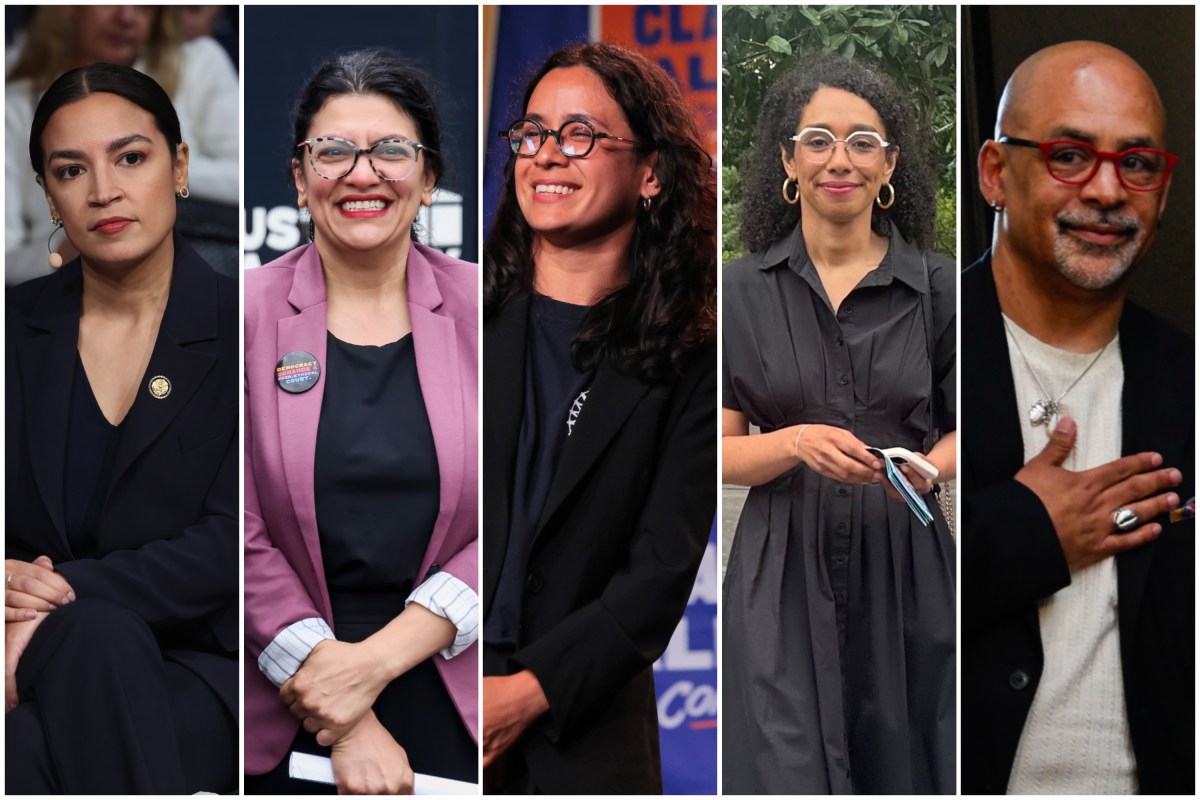
The Democratic Socialists of America count two current members in the House, New York Representative Alexandria Ocasio-Cortez and Michigan Representative Rashida Tlaib. Three more candidates aligned with the group won Democratic primaries this spring in heavily Democratic districts, putting them on a clear path to Washington next year and the total at five.
The newcomers are Claire Valdez, a state assembly member and former United Auto Workers organizer running in a Brooklyn and Queens seat; Darializa Avila Chevalier, a 32-year-old community organizer who unseated a five-term incumbent in Upper Manhattan and the Bronx; and Chris Rabb, a Pennsylvania state representative who won a Philadelphia-based primary in May. All three districts are among the most Democratic in the country, making their primary victories close to decisive.
Valdez and Avila Chevalier prevailed on June 23 as part of a slate backed by New York City Mayor Zohran Mamdani, himself a member of the organization, whose mayoral victory last year reshaped the city's politics. Avila Chevalier defeated Representative Adriano Espaillat, the chair of the Congressional Hispanic Caucus, and is projected to become the first Dominican American woman elected to Congress. Valdez won an open seat being vacated by retiring Representative Nydia Velázquez.
For the leaders of the movement, the wins are less a sudden break than a long arc finally surfacing.
"This isn't a sudden surge, it's ten years of work becoming visible," Joseph Geevarghese, executive director of Our Revolution, the progressive group founded out of the 2016 presidential campaign of Vermont Senator Bernie Sanders, an independent who caucuses with Democrats, told Newsweek. The group endorsed Ocasio-Cortez in 2018 when she was an underdog and backed Mamdani during his run for state assembly, years before his mayoral bid.
"There are currently two DSA members in Congress, and this cycle's primary wins alone are on track to roughly double that, with more contested races still ahead before November," Geevarghese said.
A bloc of five would surpass the movement's modern peak. Four organization members served together in 2021, when Ocasio-Cortez and Tlaib were joined by Cori Bush of Missouri and Jamaal Bowman of New York. Both Bush and Bowman lost reelection in 2024, dropping the count back to two.
The deeper history is more textured, and Geevarghese was careful not to overstate it. Socialists have served in Congress before, he noted, pointing to Victor Berger and Meyer London, who held House seats as members of the Socialist Party around World War I. They never served at the same time. Decades later, Ron Dellums of California and Major Owens of New York, both affiliated with the organization, overlapped in the House for years.
"So overlapping socialist representation in Congress isn't new on its own," Geevarghese said. "What is new is the scale and speed of growth happening inside the Democratic Party itself, with institutional backing."
That distinction matters because the bloc could still grow. The organization has endorsed Melat Kiros, an attorney challenging Colorado Representative Diana DeGette in a Denver-based district, whose primary is scheduled for June 30. It is also backing Oliver Larkin in a South Florida primary on August 18 against Florida Representative Jared Moskowitz, and a comeback bid by former Representative Cori Bush to reclaim her St. Louis seat in August.
The New York and Pennsylvania winners hold safe Democratic seats, where the primary is the decisive contest. The summer races must first clear their primaries.
The wins come at a moment of measurable strain on Americans' faith in the economic status quo, though not a full embrace of the alternative.
Positive views of capitalism fell to 54 percent in a Gallup survey conducted last August, the lowest reading since the firm began tracking the question in 2010 and down from 60 percent in 2021. Views of socialism, by contrast, have barely moved in 15 years, with 39 percent of Americans viewing it positively and 57 percent negatively.
The shift is concentrated among Democrats. Two-thirds viewed socialism favorably in the Gallup poll, the only partisan group to rate it higher than capitalism, and Democrats under 50 were markedly cooler on capitalism than older members of the party. A Marquette Law School survey in May found 38 percent of Democrats viewed socialism favorably, while an I&I/TIPP poll the same month put socialism's favorability nationally at 33 percent against 44 percent unfavorable.
To skeptics inside the party, those numbers describe a ceiling, not a launchpad.
"The number of DSA members in Congress next session will be tiny. They are a tiny fraction of the overall Democratic Party," Jim Kessler, an executive vice president at Third Way, a centrist Democratic group, told Newsweek. "But they are nonetheless a factor and if their numbers continue to grow they could make Democrats an unelectable party on the national level."
Kessler argued that the movement wins only on the most favorable terrain. By his calculation, the New York seats that flipped this week backed former Vice President Kamala Harris by an average of 36 points in 2024. The competitive districts Democrats are targeting to retake the House majority, he said, average a Trump margin of about 8 points.
The label itself has lost some of its sting, he acknowledged, "because the Cold War and communism are ancient history to most voters." The positions, he said, are the liability. "Defund the police, open borders, abolishing federal prisons, and nationalizing large sectors of the economy don't stand up to scrutiny" in a competitive seat, Kessler said.
Geevarghese rejected the premise that voters are responding to ideology at all. The polling, he said, is downstream of a broader anger at corporate power. Our Revolution surveys its members each year, and after 2024, they ranked corporate corruption as the single biggest problem in American politics for the first time, ahead of health care and wages.
"They're not falling in love with an ideology," Geevarghese said. "They're done with a government that answers to corporations instead of to them." Red Scare attacks, he added, "only work on people who haven't lived through what unchecked corporate power actually does."
The fight over the socialist label sits inside a larger argument about how Democrats should run in a year that, by most measures, favors them.
"We need a populist message," Robert Creamer, a longtime Democratic strategist, who said the party should campaign on what he called kitchen-table issues, told Newsweek. "The narrative has to name the antagonist, and that is billionaires."
Creamer pointed to a long divergence between productivity and pay as the grievance the left is tapping. "For the last 40 years, we've had a 70 percent increase in productivity per hour and only a 12 percent increase in wages," he said. He warned that Democrats repeat a mistake from 2024 if they only warn voters about President Donald Trump rather than offer solutions of their own.
Party leaders have moved to play down the risk. House Minority Leader Hakeem Jeffries, a New York Democrat, dismissed the idea that the primary results would damage the party when reporters raised it the morning after the vote, noting that President Trump has twice hosted Mamdani at the White House. He offered mock condolences to Republicans who spent millions trying and failing to shape a Democratic primary in a battleground district.
Jeffries acknowledged friction with the mayor over his decision to back challengers against sitting Democrats. The two New Yorkers "agree to strongly disagree" about some of those endorsements, he said, adding that Mamdani had work to do with members of Congress going forward. He described their relationship as good and said the two speak regularly.
The movement has also been selective about where it fights. The New York City organization declined to recommend a challenge to Jeffries himself, and the council member eyeing that race, Chi Ossé, withdrew. Ocasio-Cortez stayed out of the anti-incumbent primaries entirely, confining her endorsements to state legislative contests.
The model does not travel everywhere. In San Francisco, Saikat Chakrabarti, a former chief of staff to Ocasio-Cortez whose supporters likened him to Mamdani, finished a distant third in the June 2 primary for retiring Representative Nancy Pelosi's seat, drawing about 15 percent despite spending millions of his own money. He was not endorsed by the Democratic Socialists of America, but his loss in one of the country's most liberal cities showed that the insurgent left's New York playbook does not guarantee wins elsewhere. In Florida, even if Larkin wins his August primary, the district Republicans redrew this year leave him a hard general election.
What the spring made clear is that the movement intends to keep testing the map. Whether it can win anywhere other than its safest ground is the question the summer primaries, and then November, will begin to answer.