
Socotra Archipelago: The Yemeni islands covered with astonishing cucumber, bottle and dragon
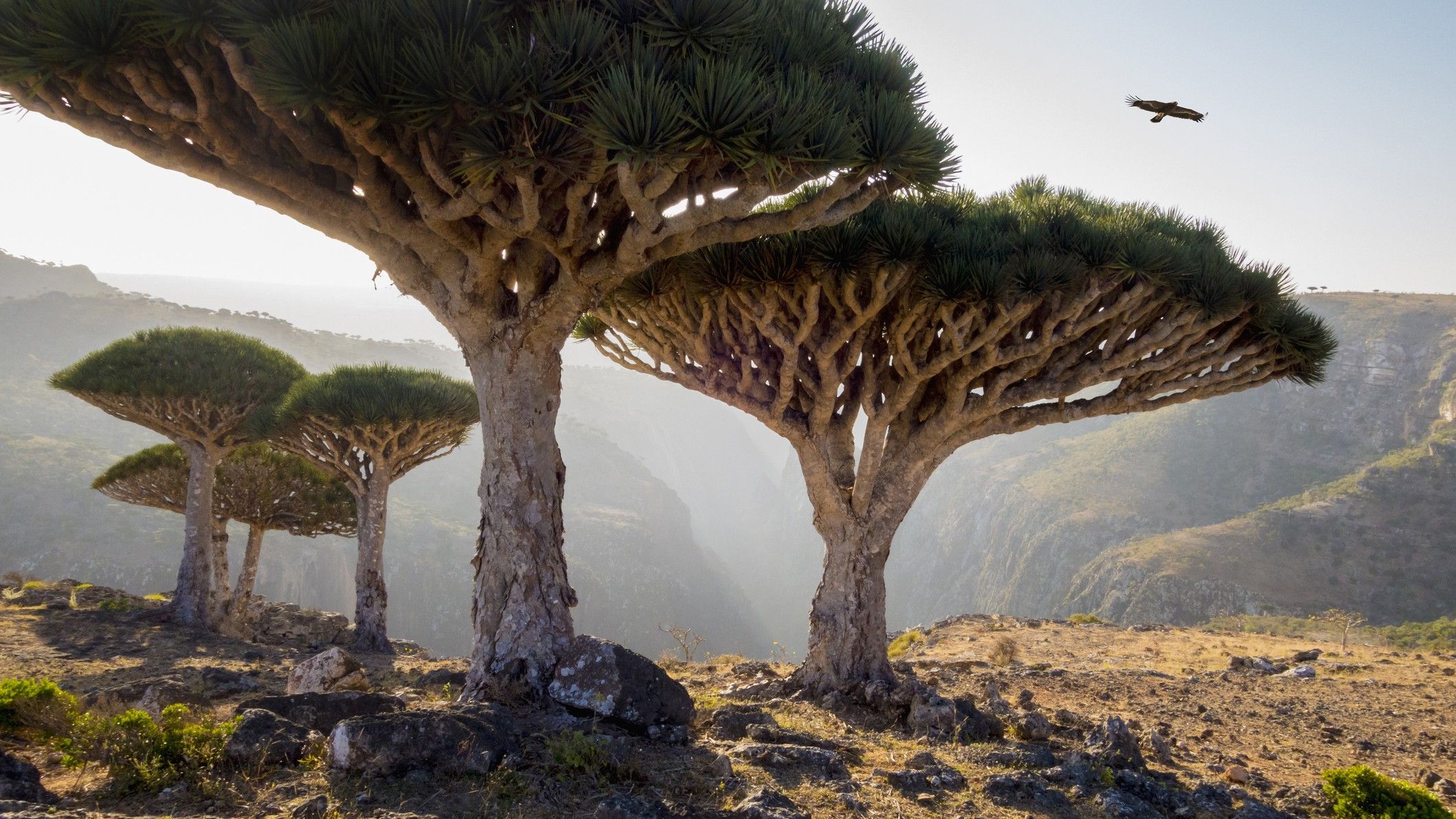
Why it's incredible: It is a biodiversity hotspot that hosts hundreds of species found nowhere else on Earth.
The Socotra Archipelago is a cluster of four islands and two rocky islets belonging to Yemen. It is nicknamed the "Galápagos of the Indian Ocean" due to its staggering biodiversity, which includes hundreds of species that aren't found anywhere else in the world.
Located about 250 miles (400 kilometers) south of the Arabian Peninsula and 140 miles (220 km) east of the Horn of Africa, the Socotra Archipelago is home to around 60,000 people. As of 2023, visitors could reach it only via a weekly flight from Abu Dhabi, United Arab Emirates, that had to be booked through WhatsApp and was often canceled without reason.
The archipelago has one main island, Socotra, which makes up 95% of the landmass, along with three smaller islands and two islets. The main island hosts snow-white sand dunes, a central mountain range, and limestone plateaus peppered with drought-resistant cucumber trees (Dendrosicyos socotranus) and umbrella-shaped dragon's blood trees (Dracaena cinnabari) that do not exist elsewhere on Earth. The dragon's blood tree gets its name from its crimson resin, which is used for natural medicine and as a pigment.
The bottle tree (Adenium obesum socotranum; left image) and the cucumber tree (Dendrosicyos socotranus; right image)from the Socotar Archipelago aren't found anywhere else in the world.
Socotra was recognized as a UNESCO World Heritage Site in 2008, thanks to its unique plants and animals, which have evolved in isolation for at least 15 million years. Socotra is a leftover fragment from when Arabia and Africa pulled apart around 30 million years ago. The split opened the Red Sea and the Gulf of Aden, which connects the Red Sea and the Arabian Sea.
More than one-third of Socotra's plants, 90% of its reptiles and 95% of its land snail species are found exclusively in the archipelago, according to UNESCO. The marine life in Socotra is also incredibly diverse; it includes sea turtles, whale sharks (Rhincodon typus) and more than 250 species of reef-building corals.
The archipelago is tricky to get to, and pirates sometimes hijack vessels in the surrounding seas. Due to Yemen's ongoing civil war, many governments, including the U.S., advise against all travel to the country, including Socotra, citing threats of terrorism, unrest, crime, health risks, kidnapping and landmines.
Discover more incredible places, where we highlight the fantastic history and science behind some of the most dramatic landscapes on Earth.
Get the world’s most fascinating discoveries delivered straight to your inbox.
Sascha is a U.K.-based staff writer at Live Science. She holds a bachelor’s degree in biology from the University of Southampton in England and a master’s degree in science communication from Imperial College London. Her work has appeared in The Guardian and the health website Zoe. Besides writing, she enjoys playing tennis, bread-making and browsing second-hand shops for hidden gems.
Please logout and then login again, you will then be prompted to enter your display name.