
Somerset volunteers go wild for animal research project
Researchers have taken a new approach to protecting animals - by attempting to live like them.
The aim of the work undertaken as part of the Risks Beyond Human Eyes project, a joint venture between risk research company ASRA and the University of the West of England, was to identify the risks animals face around the River Tone.
The volunteers lived like five different species for a few hours at a time over a six-month period - red deer, otter, earthworm, kestrel and salmon - to see what they experience.
Artist Fiona MacDonald, who replicated life as an otter, said: "I used a body board and underwater camera. I surfed down the river... just to feel what it was like to be in the flow."
MacDonald said that one of the "most bizarre" things about being an otter was thinking about crossing the road, something otters have to do when roads are built across their usual paths.
"How can you predict when a car is going to turn up when you are only 30cm from the ground?" MacDonald said.
"You haven't had that experience of hold your mum's hand, look right, left. Otters get killed on our roads."
Scientist Phil Tovey, who is overseeing the project, said he wanted to understand the systematic risk some species face.
"Something happens in one part of the system and it cascades through and contaminates everything," he said.
"We don't just tackle one particular road crossing site.
"We also look at how that integrates with hedgerows, voles and tackling how we can do that at a community level rather than depending on other agencies to do that."
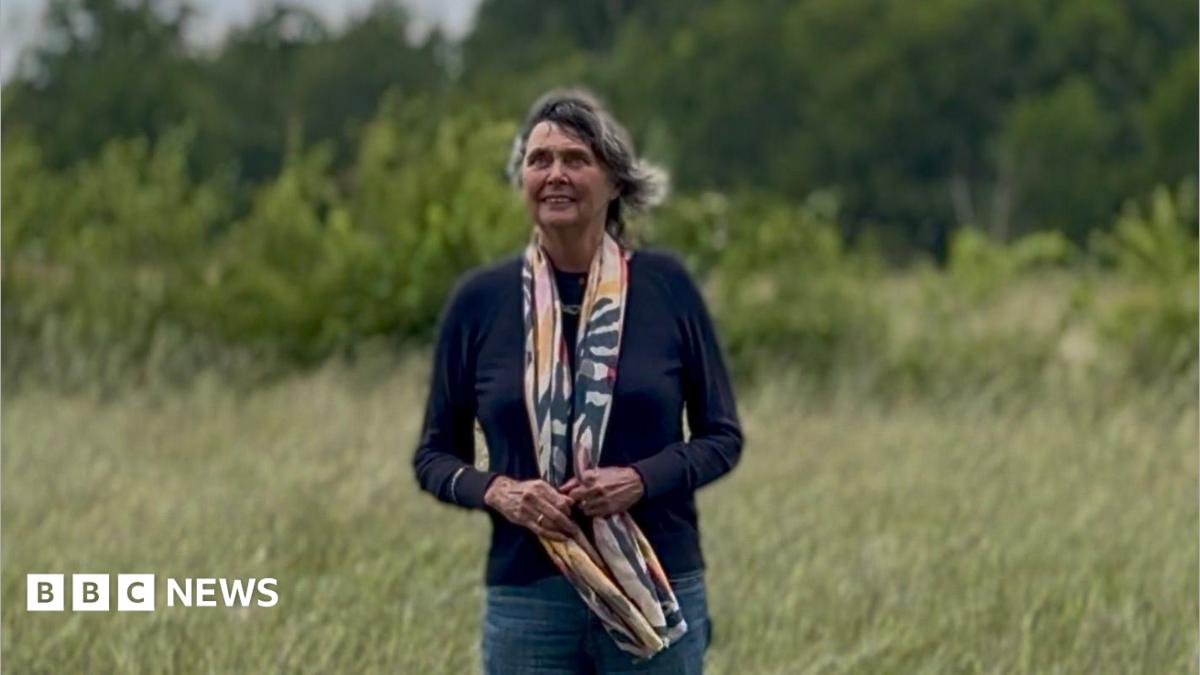
Helen Lewy, part of the Friends of Longrun Meadow in Taunton, decided to be a kestrel as part of the project.
She said: "I went out and sat at the side of a meadow and got my mind into being a kestrel in this landscape.
"We wanted to view the landscape in a new way and see the animals within the whole system."
She said the experience gave her a "new perspective" on what animals experience.
The results of the group's research will be published in scientific journals.
Follow BBC Somerset on Facebook, external and X, external. Send your story ideas to us on email or via WhatsApp on 0800 313 4630.