
SpaceX is preparing for blast off, but will the mega IPO send shares into orbit?
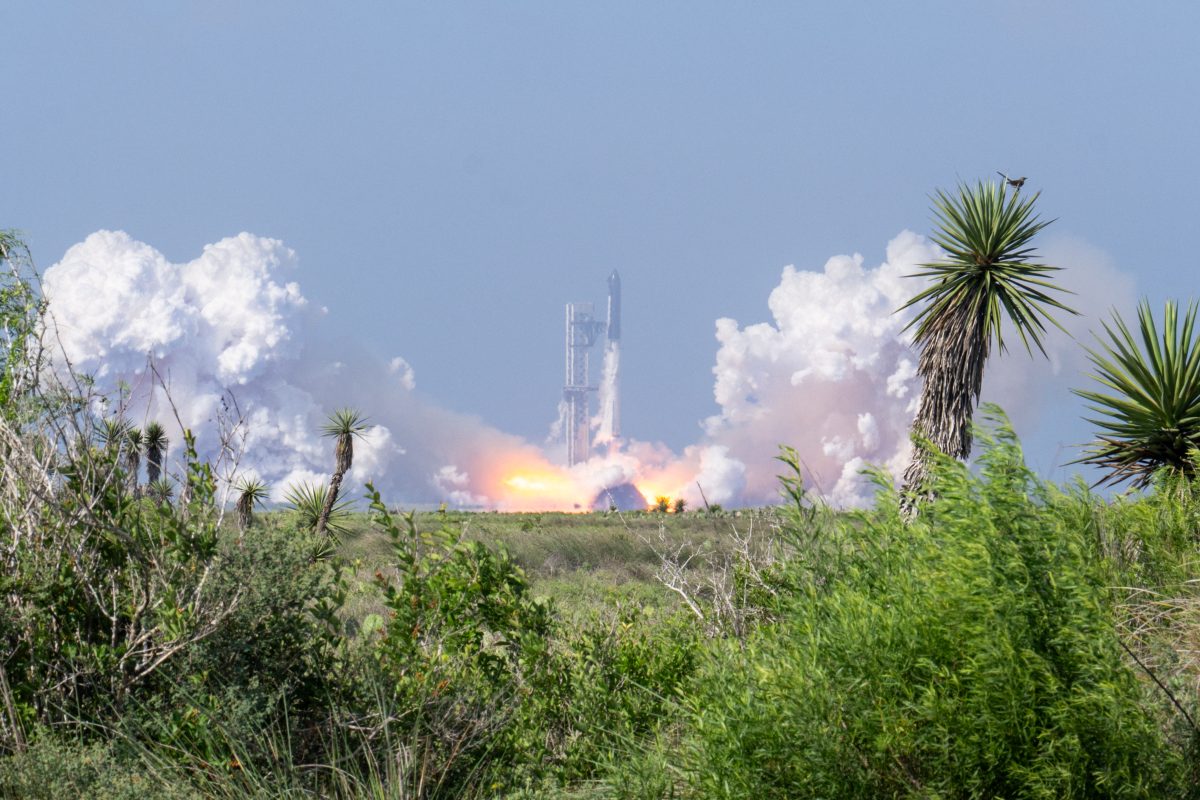
SpaceX is set to launch the largest retail allocation ever attempted in a megacap IPO as part of its hotly anticipated listing on the Nasdaq tomorrow, with around 30 per cent of shares reserved for retail investors.
Bret Johnsen, SpaceX CFO, has said the unusually large allocation is a deliberate recognition of “folks that have been incredibly supportive of us and of Elon for a long time.”
The company is looking to raise $75bn (£55.9bn) in capital from the listing, with Reuters reporting on Wednesday that the IPO has drawn more than $250bn of investor demand as hundreds of institutional investors seek a slice of the action.
International retail investors are generally excluded from US IPOs, but SpaceX has earmarked around £1.5bn worth of shares for a rare UK retail offer’
The exemption has granted Brits the opportunity to access the listing and purchase shares in the company.
Marex Financial will act as the public offer platform operator, making it the ‘middleman’ through which UK investment platforms and brokers can access the IPO.
Customers have the chance to bid for and purchase shares through these platforms.
The likes of AJ Bell, Etoro, Freetrade, Hargreaves Lansdown and Interactive Investor are facilitating UK retail investor demand.
Minimum subscriptions are typically around £1,000 with applications having closed yesterday, and analysts and brokers have reported strong client demand.
Freetrade investment writer, Duncan Ferris said: “The buzz around SpaceX…tells us that when investors are excited about the next generation of tech, raw financials and profitability are not the whole story.
“Fundamentally, SpaceX’s pitch is about the scale of growth and potential, rather than current profitability… The company is progressing from launching satellite networks into orbit, all the way to firing AI hardware into space. Here, the plan is for near-perpetual solar power to tackle the energy constraint on AI.”
But Ferris noted that continued investor interest may depend on whether “SpaceX will be able to achieve its lofty goals” and if “the stock will pay off for day one public market investors”, with some analysts already questioning growth plans.
He said: “After all, the valuation is enormous, the tech is highly experimental, and the risk factors involved are as varied as they are numerous.
“This is the tension investors face with the current crop of tech and AI IPOs. The purported opportunity may be vast, but so is the uncertainty.
While Brits scrambled to meet the Wednesday application deadline, Wall Street remains locked in a fierce debate over whether SpaceX’s take-it-or-leave-it $135 share price represents a huge buying opportunity, or an unprecedented valuation stretch.
At a targeted $1.7 trillion to $2 trillion market cap, SpaceX would debut as the seventh-largest company on the Nasdaq 100, despite generating an operating loss of $4.2 billion on $18.7 billion in revenue last year.
According to its registration statement, the group’s financial engine is split into three reporting segments: the core launch business, Space (22 per cent of 2025 revenue); the profitable satellite internet arm, Starlink (61 per cent of revenue); and AI (17 per cent of revenue), which houses Grok and massive compute infrastructure following a merger at the start of the year.
“The valuation for SpaceX is highly dependent on huge revenue forecasts in the next two to five years,” said Kathleen Brooks, research director at XTB.
“Goldman Sachs and Morgan Stanley expect a six-fold increase in SpaceX revenues to $160bn by 2028. This valuation is built on faith and trust in Elon Musk’s vision. It’s an extremely unusual IPO – usually you are betting on a business with proven revenue-generating abilities.”
The massive retail appetite comes as tech stocks take a heavy beating, yet data from trading platform IG reveals that British retail investors overwhelmingly treated the pullback as a buying opportunity.
“The recent swoon in US tech names was viewed by many investors as a buying opportunity rather than a reason to head for the exits,” said Chris Beauchamp, chief market analyst at IG.
“While Friday saw the most concentrated burst of dip-buying activity, trading remained significantly above normal levels on Monday. The data points to continued willingness to ride this astonishing rally, with the OpenAI IPO adding further spice to the mix.”
At the core of SpaceX’s pre-IPO narrative lift is its radical plan to bypass earthbound energy bottlenecks by firing AI hardware into orbit.
The company recently filed a proposal with the Federal Communications Commission (FCC) to deploy up to one million solar-powered data-center satellites, pitching space as the ultimate frontier for infinite compute.
But analysts have warned investors of just how staggering the capital expenditures required to execute Musk’s vision are.
The AI segment accounted for 61 per cent of the group’s capital expenditure in 2025, accelerating to 76 per cent in the first quarter of 2026 as operating losses mounted.
“Is the market fully pricing in the massive capital expenditures required for the Starlink and xAI data center buildouts? Probably not,” said David Morrison, senior market analyst at Trade Nation.
“The problem is really with xAI. Starlink and the launch business are profitable, but xAI is not, generating a loss of $6.4bn on $3.2bn of sales in 2025. If you strip out Starlink and launch from the $1.8 trillion expected total value, you’re left with xAI being worth $1 trillion on its own. That’s a big bet on xAI getting a durable competitive advantage.”
Octavia Garcia Granados, senior analyst at Forrester, described the orbital data center plan as “classic Musk valuation inflation” designed to expand the company’s total addressable market ahead of the listing.
“The arithmetic is sobering,” Garcia Granados said. “Hardware alone ranges from $250bn to $1 trillion before launch and refresh cycles.”
For individual investors lucky enough to secure an allocation through the UK retail offer, the biggest immediate risk may be structural rather than interstellar.
The deal has drawn more than $250bn in total investor demand – dwarfing the $75bn being raised – meaning the float will be heavily oversubscribed.
“Successful applicants for stock may be disappointed to see SpaceX soar in its first few sessions but be unable to take a profit due to selling restrictions,” Morrison warned, noting that SpaceX is skipping the standard 180-day Wall Street lock-up in favour of a staggered framework.
“As seen frequently in the past, the stock price can get ramped up excessively early on in an IPO, only for it to pull back sharply after the initial euphoria passes.”
Institutional investors have also flagged concerns with SpaceX’s corporate governance, with Danish pension fund Akademiker Pension opting to exclude the company as a potential investment due its “catastrophic” structure.
Morningstar’s director of institutional content, Lindsay Stewart, warned that SpaceX’s dual class share structure could create a power imbalance between ownership and shareholders.
Under the scheme, Musk alongside a few other SpaceX insiders will be granted 10 votes per Class B share, while public shareholders will receive one vote to each Class A share they own.
Stewart said: “Dual class share schemes have long been a point of consternation for governance-focused institutional investors, and the issue seems to keep coming back onto the agenda.
“I first covered this issue five years ago… observing that dual class share schemes allow management to control a company with only a thin sliver of the equity.
“Musk has long expressed a desire for greater control of Tesla, so it appears that he has got his way this time with SpaceX.”
Industry figures have warned that the model can allow “founders to wield power far beyond their equity stake”.
Amid the debate, there’s now doubt that the IPO will be watched as closely as a rocket launch.