
SpaceX launches 13th Starship test flight, deploys 20 next-generation Starlink satellites
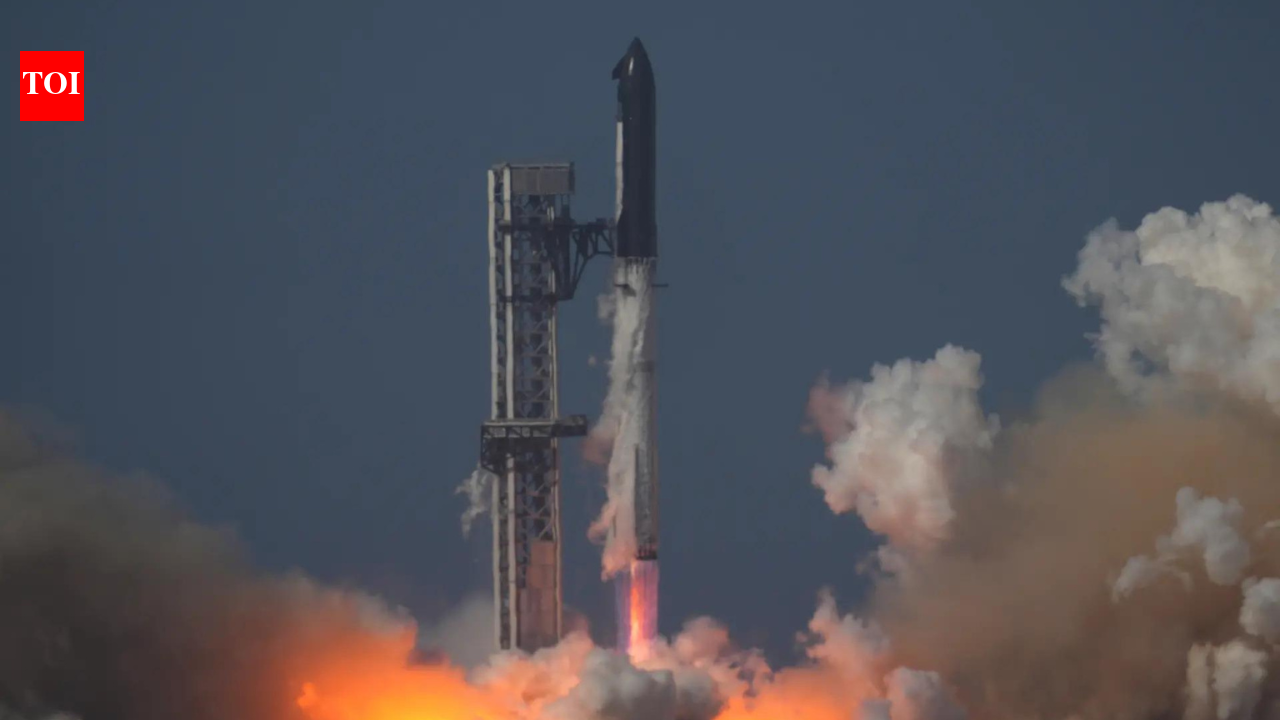
SpaceX on Friday launched its Starship rocket on its 13th test flight, sending the world's largest and most powerful launch vehicle into space carrying 20 next-generation Starlink satellites as the company advanced its plans for future Moon and Mars missions.The 407-foot (124-metre) rocket lifted off from SpaceX's Starbase facility in southern Texas after an earlier launch attempt was aborted last week when six engines on the first-stage booster failed to ignite.
The company replaced the engines before Friday's successful liftoff.The hour-long mission marked the second flight this year of the upgraded Starship V3. The booster splashed down in the Gulf of Mexico, while the spacecraft completed its planned re-entry and splashdown in the Indian Ocean after travelling more than 10,000 miles (16,000 km).During the mission, the spacecraft deployed 20 Starlink V3 satellites, which extended their solar arrays and antennas and attempted laser communications with existing Starlink satellites in orbit before eventually burning up during re-entry, as planned.SpaceX said six of the newly launched satellites carried cameras to photograph Starship's heat shield during flight.
The spacecraft's heat shield also featured sensors to record the extreme conditions experienced during launch, while some thermal protection tiles were painted white to simulate damage as part of a durability test.The company is working to ensure Starship can safely survive atmospheric re-entry and eventually return to its launch site for reuse.
SpaceX has already demonstrated catching the rocket's booster using giant mechanical arms and plans to use the same method for the spacecraft in future missions.Nasa is closely watching the programme as it plans to use a modified Starship as the lunar lander for the Artemis III mission, which aims to return astronauts to the Moon.
The agency wants Starship to complete testing and reach orbit before astronauts begin docking practice next year.Beyond Nasa's lunar programme, SpaceX founder Elon Musk has said Starship will serve as the primary vehicle for future missions to Mars.The latest test flight had been delayed twice—first by the last-second launch abort on July 16 and then by poor weather caused by Tropical Storm Bertha.Catch the latest World News and Live updates.
Download the TOI app.