
SpaceX launches 15,000-pound SiriusXM satellite to orbit from Florida
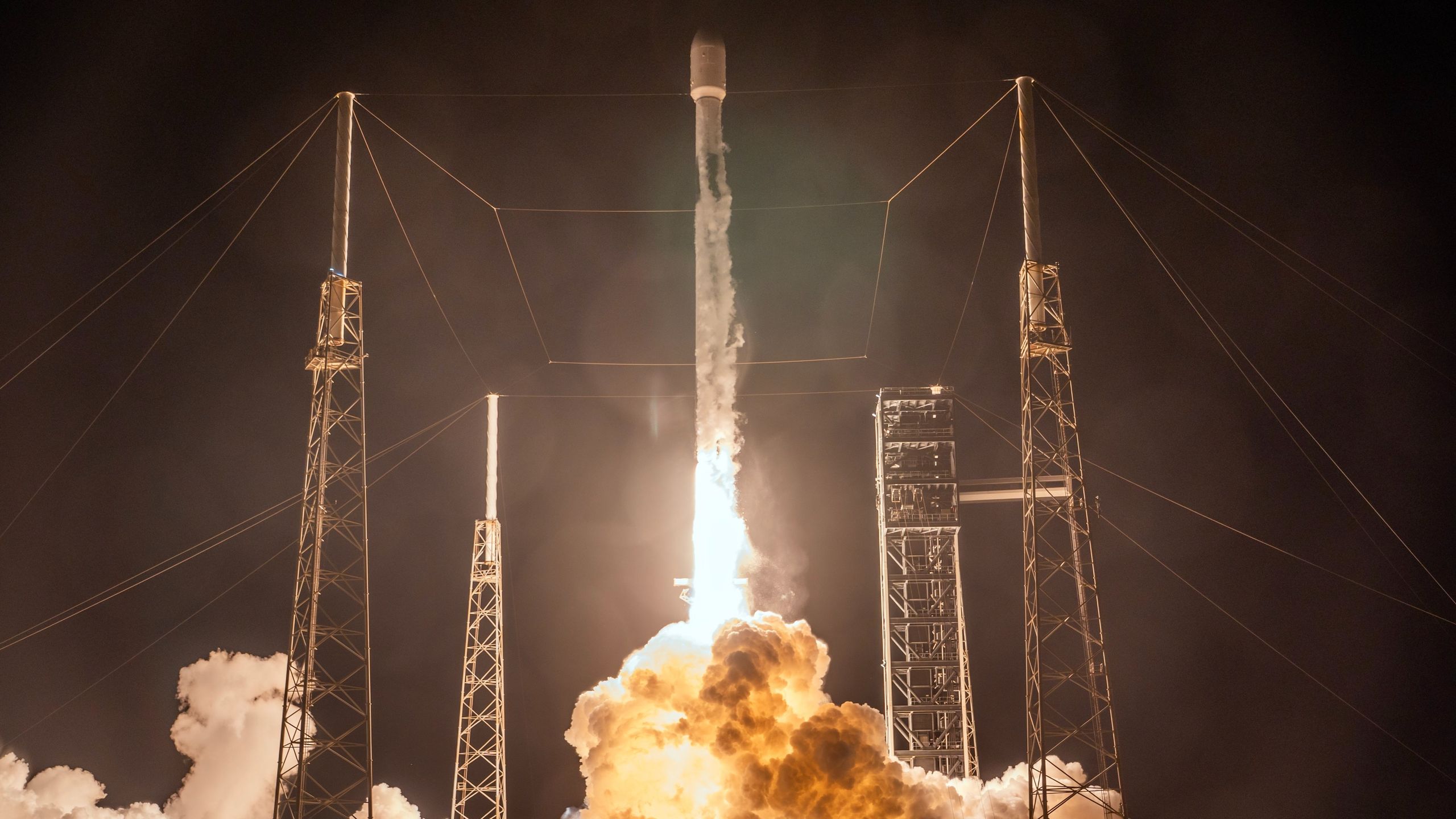
SpaceX launched a big SiriusXM radio satellite to orbit from Florida's Space Coast on Sunday night (June 28).
A Falcon 9 rocket topped with the 15,400-pound (7,000 kilograms) SXM-11 spacecraft lifted off from Cape Canaveral Space Force Station Sunday at 10:25 p.m. EDT (0225 GMT on June 29).
The Falcon 9's first stage came back to Earth for a landing about 8.5 minutes after launch as planned, touching down in the Atlantic Ocean on the SpaceX drone ship "A Shortfall of Gravitas."
According to a SpaceX mission description, it was the 17th flight for this particular booster, which is designated B1085.
The Falcon 9's upper stage, meanwhile, continued carrying SXM-11 to an elliptical geosynchronous transfer orbit, where it was deployed on schedule, 34.5 minutes after liftoff.
SXM-11 will now circularize its distant path around our planet and join SiriusXM's satellite-radio fleet, which currently consists of seven spacecraft.
SpaceX has now launched four of those spacecraft to date. The others were SXM-8 in June 2021, SXM-9 in December 2024 and SXM-10 in June 2025, all of which also rode to orbit on Falcon 9 rockets.
SpaceX has launched 76 Falcon 9 missions so far in 2026. The vast majority of those flights — nearly 80% of them — have been dedicated to building out the company's Starlink broadband megaconstellation in low Earth orbit.
Editor's note: This story was updated at 2:30 a.m. ET on June 28 with news of successful launch, rocket landing and satellite deployment.
Please logout and then login again, you will then be prompted to enter your display name.
Michael Wall is the Spaceflight and Tech Editor for Space.com and joined the team in 2010. He primarily covers human and robotic spaceflight, military space, and exoplanets, but has been known to dabble in the space art beat. His book about the search for alien life, "Out There," was published on Nov. 13, 2018. Before becoming a science writer, Michael worked as a herpetologist and wildlife biologist. He has a Ph.D. in evolutionary biology from the University of Sydney, Australia, a bachelor's degree from the University of Arizona, and a graduate certificate in science writing from the University of California, Santa Cruz. To find out what his latest project is, you can follow Michael on Twitter.