
SpaceX’s record IPO is helping spur a new wave of startups aiming for orbit and opening a vast new market beyond Earth
SpaceX’s blockbuster IPO did more than turn Elon Musk’s rocket company into one of the world’s most valuable businesses.
Investors and founders say it is also helping transform space from a government-dominated industry into a supercharged startup market ripe for disruption.
The company raised about $85.7 billion in its June initial public offering—the largest IPO on record—after pricing its shares at $135. Since then, shares have fallen to $110, as stocks face a downward slide.
Yet, the most important achievement from SpaceX’s IPO may not be its size but its lasting after effects, say experts.
Investment in the space industry had already accelerated in anticipation of the listing with global funding for space companies reaching an all-time high $7.95 billion in the first quarter, nearly double the $3.93 billion invested during the previous three months, according to Seraphim Space data. Investors completed 159 transactions during the quarter, bringing the trailing 12-month total to a record 654 deals.
These startups aren’t limited to building rockets and satellites. The emergence of space as a venue for innovation means creative ideas have followed. That includes startups like Beyond Reach Labs, which is building solar panels for space that can expand from the size of a dining table to the size of a football field, or Galactic Resource Utilization Space (GRU), which is aiming to build the first hotel on the moon.
Keval Desai, founder and partner at early-stage investment firm Shakti VC, told UnHerd that SpaceX’s IPO could have as big an impact on the space industry as Amazon’s 1997 listing.
Before Amazon went public, there had been only a handful of e-commerce IPOs. Yet, hundreds followed as investors and entrepreneurs began treating online retail as a major market.
SpaceX’s IPO, along with rapidly improving technology, could usher in a similar phenomenon, he said, helping unleash space-related startups that deal with communications, drug development, and orbital computing.
“The next decade in space is going to be full of startups,” Desai predicted. “Not just the large companies and the governments, but startups, or the true Silicon Valley entrepreneurial ecosystem participating in the space commerce economy.”
SpaceX’s reusable rockets have helped rapidly decrease the cost of launches as well as cut the cost of sending mass into space by 95% since 2008. This trend, plus a slowly expanding launch supply chain open up opportunities for startups to fill in the gaps, he said.
Shakti has placed roughly 10% of its portfolio in space technology over the past five years, according to Desai, who expects that share to climb to between 25% and 30% over the next several years.
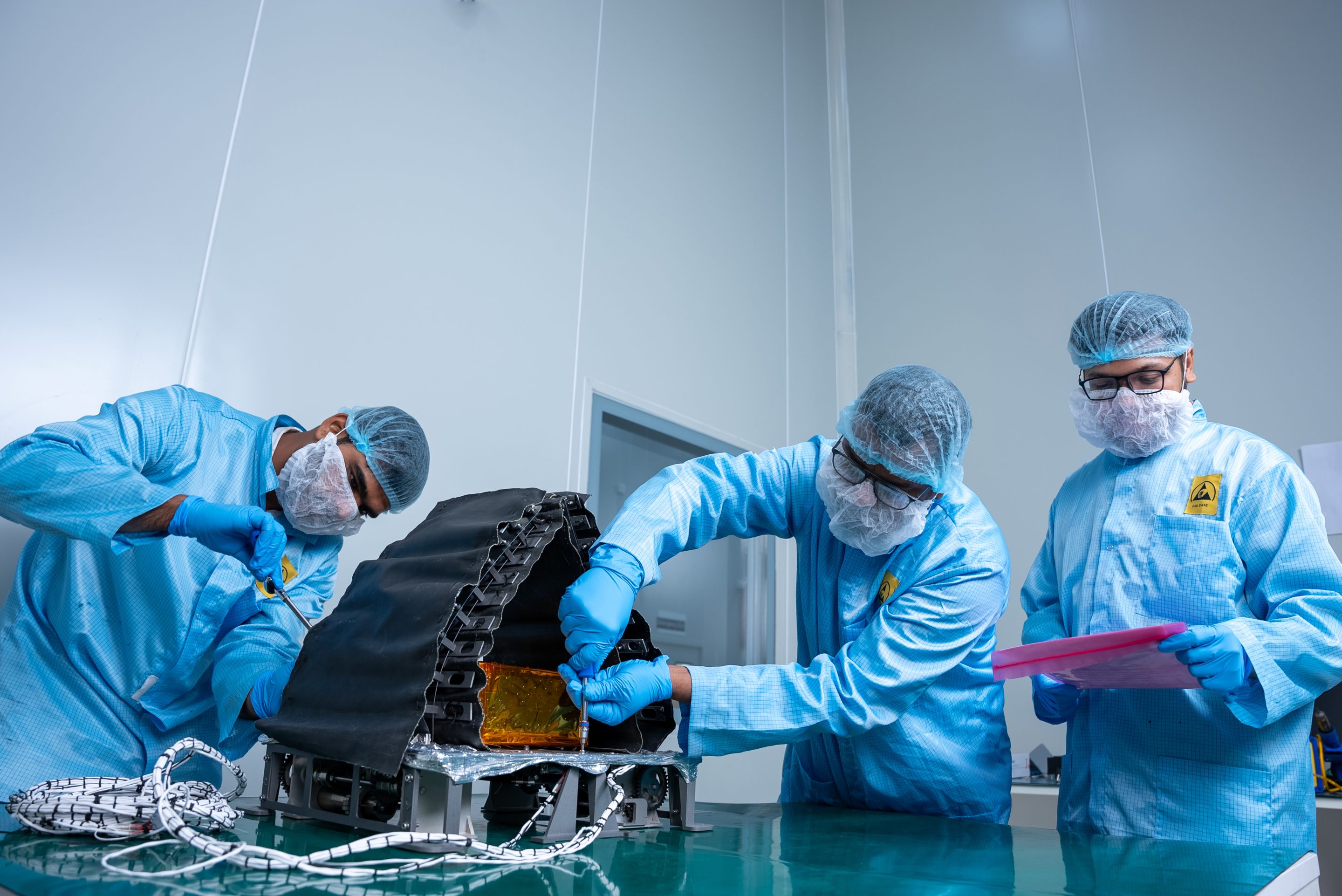
One of Shakti’s space-related investments is Cosmoserve Space, an Indian startup founded by CEO Chiranjeevi Phanindra, a former scientist at the Indian Space Research Organization. The startup is building a robotic spacecraft designed to capture and remove space debris, including some of the thousands of dead or decommissioned satellites in Earth’s orbit that threaten space operations.
The startup’s robot sports soft “petals,” inspired by the Venus flytrap, that are meant to wrap around objects of varying shapes and sizes. Phanindra claims his company’s system could remove debris 10 times cheaper than competing approaches.
The company in July conducted its first space test after launching its robot aboard the Vikram-1, India’s first privately developed orbital launch vehicle created by startup Skyroot Aerospace. Although the robot’s “petals” didn’t deploy as expected, the startup “collected some very critical information in the extreme space conditions,” and will use the data to improve its product.
But while Cosmoserve Space continues its progress, SpaceX’s IPO has already changed conversations with investors.
“People are now considering space as a less risky item or less risky domain compared to a year back because SpaceX has proven that space will give a lot of returns to investors,” Phanindra told UnHerd.
Cosmoserve, which began operating in August 2025, raised $3.17 million in pre-seed funding and recently closed a seed round.
While some space startups are clearing new ground, challenges remain. Developing products takes advanced knowledge that can only be accessed through a limited talent pool, said Desai. Dealing with regulations, sometimes across countries, is also a challenge given the nature of space as an international area. Finally, funding for space-related startups is also still scarce, he added.
Still, Desai argued that SpaceX’s IPO will have a lasting impact on the industry, and ultimately open up capital markets for entrepreneurs building the next billion-dollar businesses.
“We’ve just added a massive total addressable market,” he said. “It’s not just Earth, but also space that is the playing field.”