
SpaceX’s Starship V3 deploys most advanced Starlink satellites then pulls off best re-entry yet with splashdown so soft it floated in the Indian Ocean
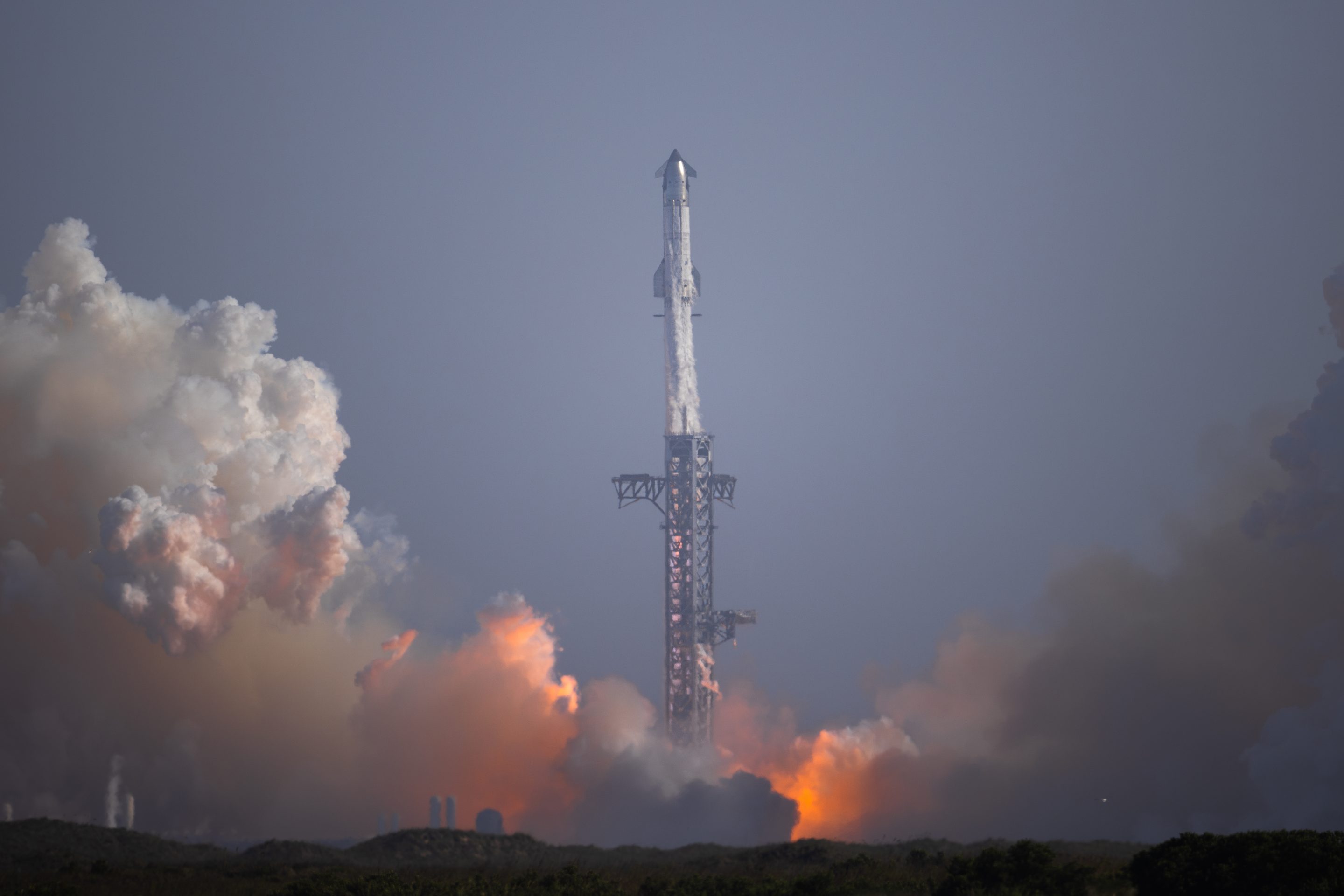
SpaceX’s mammoth Starship rocket blasted off Friday on another test flight stretching halfway around the world, this time releasing 20 of the most advanced Starlinks.
Towering 407 feet (124 meters), Starship soared from the company’s base at the southern tip of Texas. NASA monitored the space-skimming flight, a critical step toward using the Starship as a lunar lander for moon crews.
The hourlong journey ended with a splashdown so soft that the spacecraft remained afloat in the Indian Ocean as the SpaceX webcast drew to a close, drawing cheers from employees back at the launch site.
Elon Musk’s SpaceX had replaced six of the 33 engines on the first-stage booster after some of them failed to ignite last week, resulting in a last-second launch abort. The previous Starship flight in May also experienced engine trouble, which prevented the booster from making a controlled return.
This time, all of the engines fired at liftoff, but not enough of them lit back up for the booster’s return, causing it to descend too fast and slam into the Gulf of Mexico. The spacecraft continued soaring eastward, popping out the Starlinks one by one 124 miles (200 kilometers) up before reentering.
It was the 13th flight of the world’s biggest and most powerful rocket, and the second this year of the new version dubbed V3. Like the previous demo, neither the booster nor spacecraft was meant to be saved, instead plunging into the sea.
The stainless steel, retro-looking spacecraft hovered upright over the Indian Ocean before lowering into the water, more than 10,000 miles (16,000 kilometers) from where the flight began.
It was the best reentry yet, according to SpaceX, with the intact booster floating amid just a few flames. Previous flights ended with the spacecraft engulfed in flames and exploding at splashdown — or rupturing in midair.
“We’re really pumped about this,” said SpaceX engineer Kate Tice, calling it “lucky flight 13.”
The Starlinks accomplished all their jobs before reentering over the Indian Ocean.
After being ejected from the Starship’s Pez-like dispenser, the Starlinks had just 20 minutes to communicate via lasers and radio before reentering. SpaceX said its engineers made contact and even downloaded data from each one. With more than 10,000 Starlinks currently providing internet, SpaceX boasts the world’s largest satellite constellation.
Six of the newly launched Starlinks carried cameras that photographed Starship’s heat shield at flight’s end, beaming back amazingly crisp shots even as the spacecraft bobbed in the ocean. The heat shield was also equipped with sensors to measure the extreme pressure placed on the spacecraft during launch. Most of the heat shield’s thermal tiles were black, but some were deliberately painted white to simulate missing tiles, part of an experiment to test the shield’s robustness.
“We got all the heat shield data we needed and then some!” Musk said on X.
NASA Administrator Jared Isaacman offered congratulations. “Excited for what will be learned from this mission,” Isaacman noted on X.
SpaceX wants to make sure Starship’s heat shield can withstand the heat of entry before trying to return it to the Starbase launch pad near the Texas-Mexico border. The company already has used a pair of giant mechanical arms at the pad to capture a Starship booster. The company plans to do the same with the actual spacecraft, which is designed to be totally reusable.
NASA needs Starship to wrap up testing and reach orbit soon so the Artemis III astronauts — three Americans and one Italian — can practice docking their capsule with it next year.
Starship is also the vehicle with which Musk intends to build a city on Mars. He’s already booking tourist trips to Mars, as well as the moon.
The latest test flight was delayed first by the July 16 launch abort, then again on Thursday by thick clouds from Tropical Storm Bertha.