
Spanish Film Archive sets out to reconstruct Orson Welles's 'Quixote'
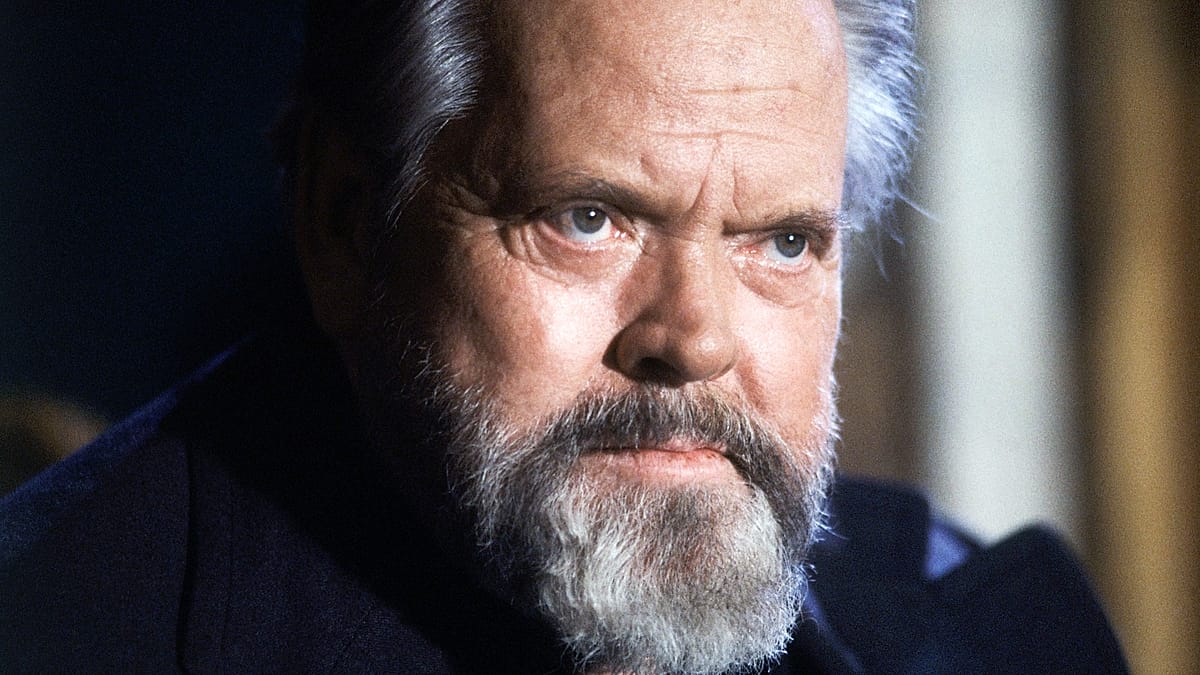
“Film directors are a bunch of wretches who devote themselves to doing something that is, technologically, almost obsolete,” Orson Welles declared in a 1985 interview, recorded by ‘Arte TV’ (source in Spanish), months before his death. Alonso Quijano could have said something similar about the profession of chivalry, already obsolete in the Renaissance Spain that witnessed his exploits, which may explain why one of the most influential filmmakers in history felt compelled to adapt Cervantes’ classic.
Nearly 40 years later, a project led by the Spanish Film Archive, in collaboration with the Cinémathèque Française, Italy’s Cineteca Nazionale and Munich’s Filmmuseum, aims to gather the material scattered across these four countries in order to reconstruct the filmmaker’s dream: a shoot that began in 1957 in Mexico and then stretched over the next three decades of his life, without a final version ever seeing the light of day.
“We are not talking about a restoration,” clarifies Esteve Riambau, a historian specialising in Welles and former director of the Catalan Film Archive. “We’re talking about reconstructing a film whose ideas and materials kept changing, with things being added and discarded… It is still too early to know whether we have everything or what we are missing,” he adds in a phone call from Bologna, the city where he has presented this project at the Il Cinema Ritrovato festival together with the director of the Spanish Film Archive, Valeria Camporesi.
Riambau’s aim is to achieve a result as close as possible to the intentions of the American genius, born in 1915 and raised between Wisconsin and Illinois in a well-off Midwestern family. “It is not going to be a documentary. What is envisaged is a cultural presentation, not a commercial release.”
The specialist is very mindful of the attempt that Jesús Franco, a friend of Welles, made in 1992 with the material then available (around 40,000 metres of footage) for Seville’s Universal Exposition, ‘Don Quijote de Orson Welles’.
“It was a very disappointing version because he mixed the material with a documentary by RAI [the Italian public broadcaster] and even smuggled in his own images as if they were original,” Riambau explains. The Spanish dubbing of the film is also questionable: the actors recited passages from Cervantes’ novel in sequences that did not correspond, ignoring lip-sync with the performers.
Technically, this will be the second time the Spanish Film Archive has been involved in this cinematic feat: Franco’s adaptation was at the time overseen by José María Prado, the institution’s longstanding head from 1989 to 2016, a former member of the San Sebastián Film Festival selection committee and widower of actress Marisa Paredes.
Over the remainder of 2026, the institutions involved will study and rework the original script, which runs to 2,000 pages, and digitise the material available: some 70,000 metres of film. In 2027 they will carry out a comparative analysis of the sequences available, their later variations and the written material. Riambau, however, takes a firm stance on the possible use of artificial intelligence in the reconstruction: only human minds and hands will be involved in the process.
The director of ‘Citizen Kane’ (a classic dashed off by Herman Mankiewicz, an alcoholic left disabled by a car accident, which revolutionised film history through its non-linear structure and the moral journey of its protagonist) also reworked other classics of world literature over the course of his career, such as Kafka’s ‘The Trial’ and no fewer than three Shakespeares.
It was in 1957 that Welles set about bringing Don Quixote to the big screen. An undertaking apparently cursed for filmmakers, as shown by Terry Gilliam’s recent adaptation ‘The Man Who Killed Don Quixote’, which took almost two decades to come together, with eight abortive production attempts and decidedly lukewarm reviews on its release in 2018.
Even so, Gilliam’s ordeal pales in comparison with Welles’s efforts. He stretched his vision of the contemporaneous adventures of the false hidalgo over three decades and never managed to finish shooting.
The American director began his odyssey between Mexico and Italy and came up with a pretext – the shooting of a documentary series on Spain during the developmental years of Francoism – so that RAI would let him move there and secretly begin his project in the land where the novel was born. The cover documentary was titled ‘Viaggio nel paese di Don Chisciotte’, ‘Journey through the Country of Don Quixote’.
For Welles, an ardent defender of the Republican cause during the Civil War years, it was not easy to get the regime to look kindly on his plans, and he repeatedly moved the shoot, both to keep it hidden from the authorities and from the producers of the other projects he was involved in.
Not that these comings and goings bothered the filmmaker. Clearly fascinated by Castile, Welles shot in Santa María de la Huerta and Calatañazor (Soria), Pedraza (Segovia), Brihuega (Guadalajara) and in the city of Valladolid. When asked in 1960 in which Spanish town he would like to live, the American did not hesitate. “Ávila. The climate is awful: very hot in summer; very cold in winter. It is a strange and tragic place. I don’t know why I feel something so special.”
Esteve Riambau explains that the project is being revived partly because of the love Welles felt for Spain. Director Oja Kodar, his artistic partner in this later period of maturity from the 1960s onwards, contacted the historian when he was still heading the Catalan Film Archive for this reason. “She believes that the most logical place for [the footage] to end up is Madrid, given Welles’s legacy in Spain,” says the coordinator of this film initiative.
The artist, born in Zagreb in the former Yugoslavia, retrieved some 50,000 metres of negative in 2017, whose digitisation will be carried out by the Cineteca Nazionale. The rest of the material to be assembled is divided among the other archives, including around 80 minutes of 35 mm positives held by the Cinémathèque and various work prints, negatives, fragments, tapes, videos and documents kept by the Filmmuseum.
From 1966 – the year the main shoot ended – until his death, Welles changed his mind several times about his work, apparently disappointed with the result. “In my view, Orson did not want to finish ‘Don Quixote’,” Jesús Franco once said. “He wanted to keep that project as something of his own, that would live with him; as an illusion, a dream that could never be completed.”
A utopian pursuit, straddling reality and metafiction, more than fitting for an adaptation of the story – with apologies to Pedro Almodóvar – of La Mancha’s most universal figure.