
‘Stop all outdoor activities’: South Korea issues emergency alert as temperatures hit record 42.5°C
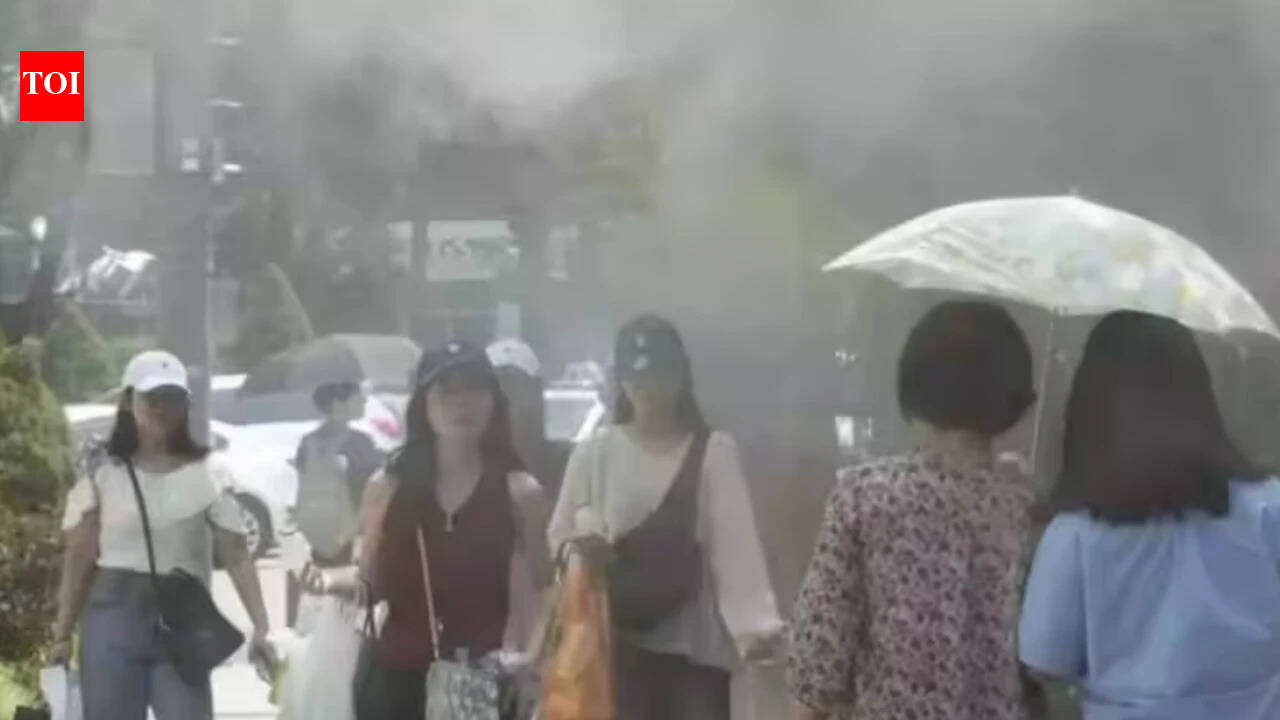
South Korea recorded its highest temperature since modern weather observations began in 1904 as the south-eastern city of Yangsan reached 42.5°C on Sunday afternoon, prompting emergency alerts and warnings for people in affected areas to stop outdoor activities and move to cooler places.The Korea Meteorological Administration (KMA) said Yangsan, the centre of the ongoing heatwave, recorded temperatures above 40°C for a fifth consecutive day on Sunday, The Guardian reported.
Temperatures also climbed into the high 30s in several cities, including Daegu and Busan.How severe is the heatwave?More than 20 localities were under emergency heatwave alerts on Sunday. The warning category was introduced this year to better address rising temperatures.An emergency alert is issued when an area experiencing a heatwave is forecast to reach a perceived temperature of 38°C or an actual temperature of 39°C during the day.The weather agency urged people to “immediately stop all outdoor activities”, warning that “indoor spaces without air conditioning are dangerous”.“Move immediately to a cool place, such as a designated cooling centre or a shaded area, and stay hydrated while resting,” it advised.Prime minister Han Seong-sook ordered local officials to strengthen safety checks on people most vulnerable to the heat and ensure stable power and water supplies.People seek relief as heat disrupts daily lifePeople gathered in airconditioned shopping malls and cafes or sought relief at mist-spray zones in Seoul.Ju Dong-yeol, 27, took refuge from the heat with his parents at a Starbucks in the South Korean capital.
“It is too hot to be outside doing anything,” he told AFP.“I can’t think of anything else to do other than stay in airconditioned places like home, shopping malls and cafes,” the office worker said.Gyeongju, about 240km south-east of Seoul, reached 40.3°C on Sunday, its highest recorded temperature in eight years.North Korea was also experiencing intense heat, with temperatures reaching 40°C in some regions, state media reported on Monday.
Pyongyang had endured a week of nights when the temperature did not fall below 25°C.The heat forced South Korea’s professional baseball league to cancel a game in Changwon after the city’s temperature climbed to 39.5°C. It was the second consecutive game to be cancelled in the city.“The decision was made with the safety and health of spectators and players as the top priority, as a severe heatwave warning remains in effect for the Changwon area,” the Korea Baseball Organization said in a statement.KMA data show that the country’s average annual number of heatwave days has more than doubled to 19 in the past five years.
A heatwave day is defined as one with a maximum temperature of at least 33°C.Will the extreme heat ease?Easterly winds were expected to push the extreme heat further inland on Monday, with Seoul forecast to reach 37°C. Temperatures in South Jeolla and South Gyeongsang were expected to exceed 39°C, bringing life-threatening heat, the KMA said.Officials were also monitoring Typhoon Dolphin, which was tracking towards China’s south-east coastal regions, south of the Korean peninsula.
Its path could determine how long the stifling heat persists.A move towards eastern China could increase humidity and worsen the heatwave and tropical nights in Korea. A path closer to the south of the Korean peninsula could bring stronger winds, greater cloud cover and rain, temporarily easing the heat.What is driving the extreme weather?Scientists warn that extreme weather events such as heatwaves are becoming more frequent and intense because of human-induced climate change.
Adding to the extreme weather is the return this year of El Nino, a natural climate phenomenon that warms Pacific Ocean surface temperatures and typically occurs every two to seven years.Catch the latest World News and Live updates. Download the TOI app.