
Strait of Hormuz: US fires at oil tanker as new Iran blockade begins
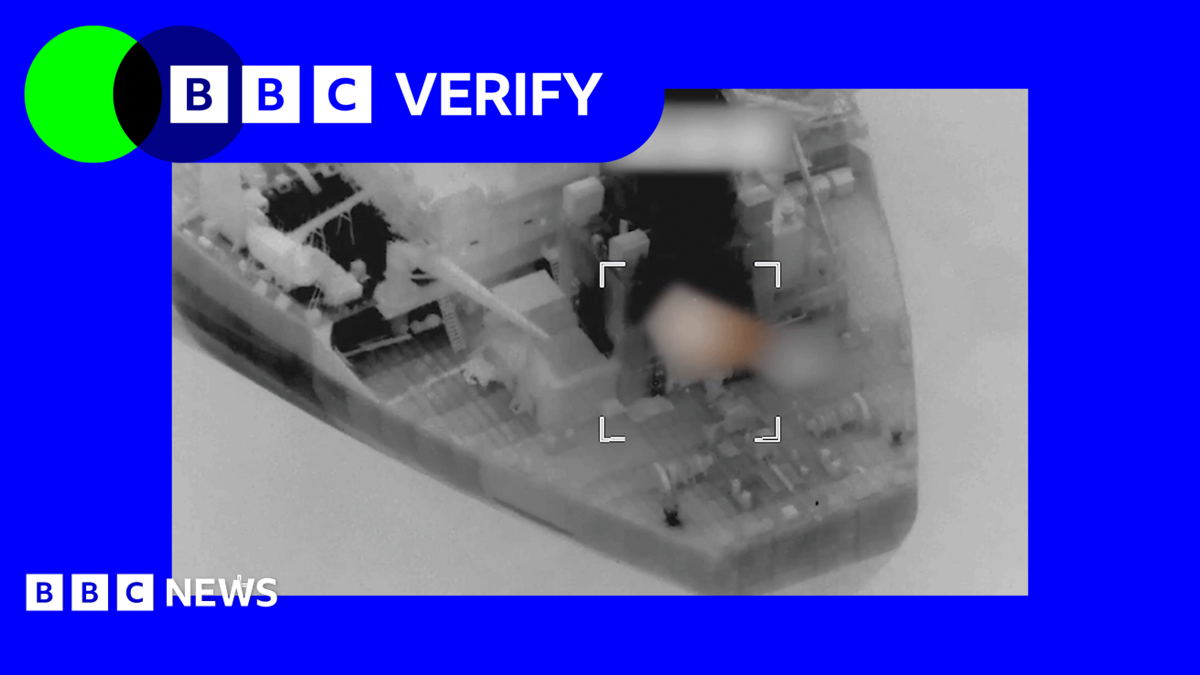
The US has attacked an oil tanker in the Gulf, which it said was heading towards Iran's largest oil export terminal, as it reimposed a blockade of Iranian ports.
US Central Command (Centcom) said on Wednesday that Belma "ignored multiple warnings" as it was heading towards the Kharg Island oil terminal and an aircraft disabled the tanker by "firing Hellfire missiles into the ship's smokestack".
President Donald Trump reintroduced a blockade of Iranian ports on Tuesday, in response to a series of alleged Iranian attacks on commercial vessels in the Strait of Hormuz and days of tit-for-tat strikes by the US and Iran.
He had previously declared a ceasefire "over" following days of escalating attacks.
A naval blockade on ships going to or from Iranian ports was in place between 13 April and 18 June. The US said it redirected more than 140 vessels and disabled nine ships during that time.
Both the blockade and key US sanctions on Iranian oil were lifted as part of a ceasefire deal signed on 17 June - and experts estimate Tehran exported at least 74 million barrels of oil worth up to $6bn before they were reimposed.
In addition to the strike on Belma, Centcom said it redirected two other commercial vessels which did comply with its instructions to change course.
Belma, which had previously been sanctioned by the US under a former name for links with Iran, entered the Gulf on Tuesday after passing through the Strait of Hormuz, according to ship-tracking data from MarineTraffic.
It was reporting no cargo on board and last broadcast its location about 100km (63 miles) south-east of Kharg Island on Thursday.
Another crude oil tanker under US sanctions for links with Iran reversed course on Thursday, returning to Iranian waters in the Gulf of Oman, ship tracking data shows.
It is not clear whether the vessel - Fuyao - which was listed on MarineTraffic as heading for Pakistan with a cargo of oil changed its course in response to US enforcement of the blockade.
As part of the ceasefire deal Washington also eased decades-old sanctions by issuing a temporary license to allow the sale of Iranian oil and payment to Tehran in US dollars.
In the weeks that followed, Iran was selling oil at prices roughly 20% higher than before the war, according to its chief negotiator Mohammad Bagher Ghalibaf.
Analysts with advocacy and monitoring group United Against Nuclear Iran (UANI) and shipping experts TankerTrackers.com estimate that between the end of the blockade and its resumption Iran has exported at least 74 million barrels of oil. UANI has said this has an estimated value of more than $6bn (£4.4bn).
The US restricted this licence last week after Iran carried out a series of attacks on ships in the Strait of Hormuz.
Crossings through the critical Strait of Hormuz have fallen over the last week and remain far below the pre-conflict average of 138 per day.
Just 11 fuel tankers and cargo vessels crossed the Strait of Hormuz on Wednesday, according to preliminary data from maritime intelligence firm Kpler.
This is down from 17 ships on Monday and 16 on Tuesday.