
Supreme court gives Trump wins—but draws key limits
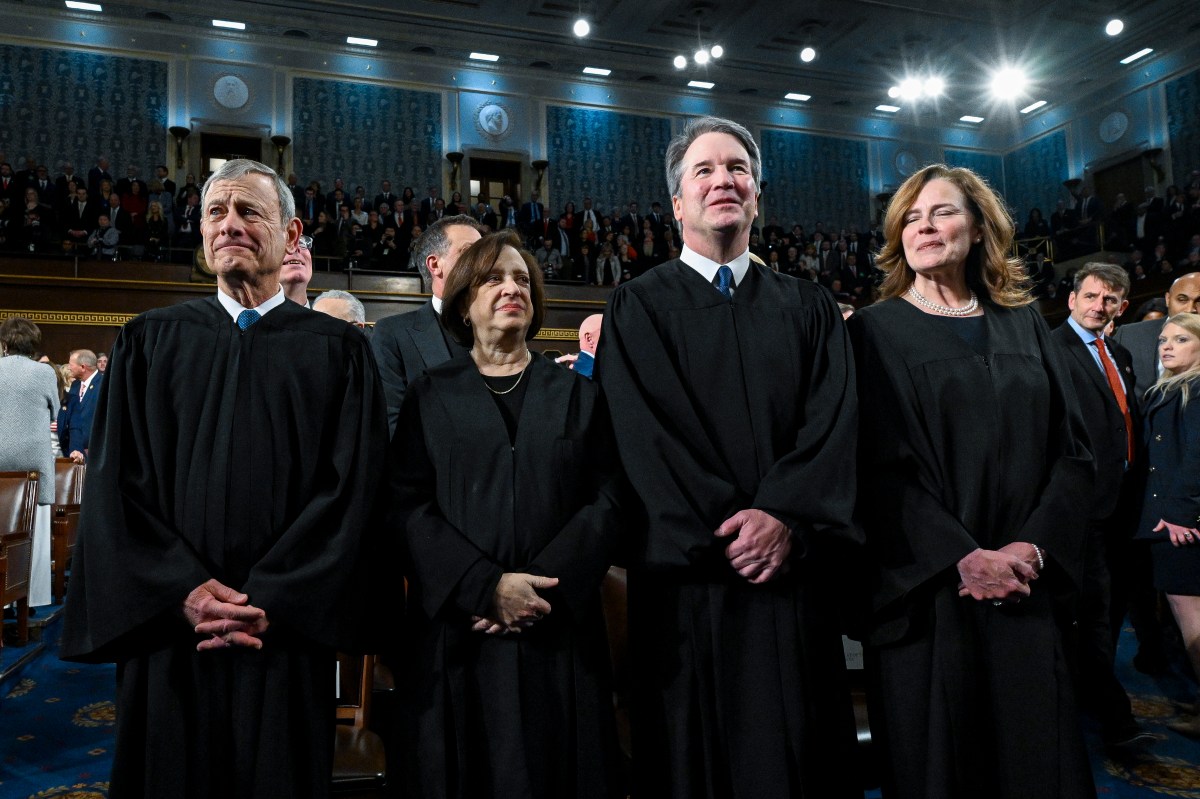
The Supreme Court’s final days delivered a series of major rulings reshaping the scope of presidential power under Donald Trump, expanding control over some agencies while drawing limits in others, alongside decisions affecting election law, privacy rights and federal authority.
In a rapid succession of opinions released Monday, the justices split on key questions central to Trump’s agenda—expanding presidential control over some independent agencies while drawing limits in others.
The mixed outcomes highlight both the court’s readiness to revisit long-standing precedent and its reluctance to extend executive power uniformly across the federal government.
Court watchers often call this period the “June rush,” when the justices deliver their most consequential and divisive decisions.
At the center of the term were cases testing how far a president can go in exercising executive authority.
In one of the most consequential rulings, the court sided with Trump in allowing him to remove a Federal Trade Commission commissioner in Trump v. Slaughter, overturning a nearly century-old precedent that had limited the president’s ability to fire officials at independent agencies. The ruling effectively overturns longstanding limits that had protected certain independent agencies from direct presidential control. The decision significantly expands presidential authority over regulatory bodies long designed to operate with some insulation from political control.
Writing for the majority, Chief Justice John Roberts concluded that the FTC "unquestionably exercises executive power and must therefore be controlled by the Chief Executive."
Trump wrote on Truth Social on Monday: “To show the importance of the Slaughter Case, 90 years of precedent has been COMPLETELY AND UNEQUIVOCALLY OVERRULED, greatly increasing Presidential Power at a time when it is most needed!”
He later described the decision as a “BIG WIN” and “a Historic and Unprecedented Ruling.”
In a sharp dissent, Justice Sonia Sotomayor warned that the ruling upends decades of settled law and risks concentrating too much authority in the White House, arguing the court had effectively abandoned longstanding protections for independent agencies created by Congress.
“Today, this Court undoes centuries of political practice,” she wrote, warning of sweeping consequences.
She wrote that for nearly a century lawmakers relied on those safeguards to ensure certain regulators could operate without direct political pressure, cautioning that the decision could allow presidents to remove commissioners of the opposing party and erode the bipartisan structure of bodies such as the FTC.
But in a separate case, Trump v. Cook, the justices declined to let Trump remove Federal Reserve Governor Lisa Cook, leaving her in place while the legal fight continues and signaling resistance to expanding presidential control over the central bank.
Writing for the majority in the 5–4 decision, Roberts emphasized that Federal Reserve governors “do not serve at the president’s pleasure” and may be removed only for cause under the law establishing the central bank, reinforcing long-standing protections designed to shield monetary policy from political pressure.
The ruling found that the administration had failed to provide the procedural protections required before attempting to remove Cook, including an opportunity for her to respond to the allegations.
Cook pushed back on the allegations in a statement, saying: “This was never about mortgage documents signed years before I became a Federal Reserve governor. It was an attempt to remove me on a manufactured pretext because I refused to bow to political pressure and continued to set interest rates based only on what would best serve the American people.”
Roberts warned that removing Cook without those protections “would allow the President to remove a member of the Federal Reserve at any time, for any reason, without any notice before, and without any judicial check after. That would turn for-cause protection into little more than at-will employment.”
Roberts and Justice Brett Kavanaugh joined the court’s liberal justices in the decision, preserving the Fed’s independence for now and underscoring divisions within the conservative majority.
In dissent, Justice Clarence Thomas argued the court’s decision improperly restricts the president’s authority, contending that Federal Reserve officials exercise executive power and should therefore be removable by the president. He warned that the ruling elevates policy concerns about central bank independence over what he described as the Constitution’s allocation of executive authority.
The decision marked a setback for Trump’s effort to assert control over the central bank, preserving existing limits on presidential authority over the Fed.
The ruling comes amid broader scrutiny of personnel changes across the Trump administration. A wave of high-level Pentagon departures under Defense Secretary Pete Hegseth has drawn bipartisan concern in Congress, with lawmakers warning that removing senior officials could undermine decision-making and discourage candid advice, raising questions about whether loyalty is outweighing expertise in leadership decisions.
Taken together, the rulings suggest the court is drawing distinctions between different types of independent institutions, rather than applying a single rule across the executive branch.
In another major decision, the court placed new limits on the use of “geofence” warrants in Chatrie v. United States, which allow investigators to gather location data from phones near a crime scene in order to identify potential suspects who were in the area at the time.
The justices found that collecting location data from multiple devices can constitute a search under the Fourth Amendment, marking a significant development in digital privacy law and placing new constraints on a rapidly expanding investigative tool.
Writing for the majority, Justice Elena Kagan said individuals have a reasonable expectation of privacy in their cellphone location data, rejecting the argument that such information can be freely obtained simply because it is held by third-party technology companies.
Critics have argued the practice amounts to a broad, dragnet search that critics say is overly broad, while supporters say it is a valuable method for solving serious crimes. The ruling is expected to influence how law enforcement uses location data going forward.
"The Court reaffirmed that you have an expectation of privacy in location data that reveals your movements in the physical world, and that even short-term surveillance of these movements is a search subject to the Fourth Amendment," the Electronic Frontier Foundation, a digital rights advocacy group, said in a statement.
The group said police have used geofence warrants “tens of thousands of times to cast dragnets” that sweep in the data of innocent bystanders without targeting a specific suspect or device.
In dissent, Justice Samuel Alito sharply criticized the decision, calling it an “irresponsible escapade” that could leave law enforcement without an effective investigative tool and undermine efforts to solve serious crimes.
The court also issued a ruling affecting how Americans vote in a case involving federal election law and absentee voting deadlines, Republican National Committee v. Wetzel, upholding state authority to count mail-in ballots received after Election Day so long as they are postmarked on time.
The decision preserves practices used in numerous states and rejects arguments that federal law requires ballots to be received by Election Day, a shift that could have shaped voting procedures nationwide.
The majority concluded that federal law sets the day for casting ballots but does not prohibit states from counting ballots that arrive later if they were sent on time, preserving flexibility in how states administer elections.
Another dispute still before the court involves limits on coordinated campaign spending by political parties, a case tied to Vice President JD Vance and backed by Trump allies seeking to strike down the restrictions. The outcome could reshape how campaigns are funded and how free speech protections apply to political spending.
Together, these rulings and pending decisions could influence voting procedures and campaign strategies ahead of the next election cycle.
Critics of the decision argue that allowing ballots to arrive after Election Day could prolong vote counting and create uncertainty, while supporters say it ensures ballots are not discarded due to mail delays beyond voters’ control.
Republican National Committee Chairman Joe Gruters said in a statement on Monday that “if we want fair and secure elections, Election Day should mean exactly what it says...Democrats are inviting chaos at the ballot box by allowing elections to drag on for days and weeks after voters cast their ballots."
He added that the ruling made it "even more imperative that Congress pass the SAVE America Act."
The SAVE America Act is a GOP-backed election bill that would tighten voting rules and deadlines nationwide; it has been introduced in Congress but has not advanced amid Democratic opposition.
Trump also reacted to the ruling, calling it a “tremendous loss” on Truth Social and arguing it would lead to fraud, while renewing his push for Congress to pass the SAVE America Act. He added, "There is only one reason to oppose — CHEATING!"
In a separate action Monday, the court declined to hear Trump’s appeal of a $5 million civil judgment involving writer E. Jean Carroll, leaving the verdict in place. The justices issued no explanation and noted no dissents, a routine but consequential step that effectively shut the door on his challenge.
Carroll welcomed the outcome in a post on Substack, writing “WE WON!” and calling the decision “for every woman in the world,” framing it as a broader victory for survivors.
Trump, meanwhile, blasted the ruling on Truth Social, writing: “Surprisingly, the Supreme Court declined to ‘review’ a Fake Case brought against me by a woman I never met… I will continue the fight against this Weaponization and Lawfare Case, including the ridiculous claim of Defamation, with all of my power and strength.” He added that the case was an “Injustice” that “should never be allowed to happen to another President, or Candidate to be.”
The decision effectively requires Trump to pay the $5 million judgment, closing off his latest attempt to overturn the verdict.
With multiple decisions now handed down, the court has delivered a notably mixed record for Trump—expanding his authority in some areas while drawing firm limits in others.
The contrast between the rulings in Trump v. Slaughter and Trump v. Cook, in particular, highlights the court’s evolving approach to presidential power and the structure of independent agencies.
At the same time, rulings on voting and privacy suggest the justices are willing to cross ideological lines on issues with broad constitutional implications.
That uneven pattern has made the court’s direction harder to classify, but legal scholars say the final rulings offer important clues about how the justices are balancing executive authority against institutional safeguards.
A major decision still pending will determine the fate of Trump’s attempt to limit birthright citizenship.
The challenge centers on the 14th Amendment, which guarantees citizenship to most people born on U.S. soil. Lower courts have blocked the policy, finding it likely unconstitutional. If the justices allow the order to take effect, it could overturn more than a century of precedent. If they reject it, it would deal a major blow to a central pillar of Trump’s immigration agenda.
Trump has suggested he expects the court to rule against him on the issue, underscoring the uncertainty surrounding the case.
The issue has also exposed divisions within Trump’s own party, with Republicans nearly split, according to polling on GOP views of birthright citizenship. A survey from the Associated Press-NORC Center for Public Affairs Research found that 44 percent of Republicans support birthright citizenship.
The case comes amid a broader series of immigration rulings, including one allowing the administration to move forward with ending Temporary Protected Status for migrants from countries including Haiti and Syria.
Another high-profile case remaining before the court asks whether states can bar transgender athletes from competing on girls’ school sports teams.
The court’s conservative majority appeared inclined during oral arguments to uphold such restrictions. A ruling in favor of the states would effectively greenlight similar laws nationwide.
A decision the other way could expand federal protections for transgender students and reshape civil rights law in education. Legal analysts say the impact could extend beyond athletics into other areas of anti-discrimination policy.
The court is scheduled to issue any remaining opinions in the coming days, with the term expected to conclude by early July.
While some high-profile rulings are still pending, the decisions already released have defined a key theme of the term: the limits of presidential power are being tested and, in some cases, redrawn.
The outcomes will shape not only the immediate fate of contested Trump-era policies but also the institutional boundaries of executive authority for future administrations. With multiple high-impact cases still unresolved, the final days of the term are set to define one of the most legally significant chapters of the court's modern history.
Contact Newsweek editors on this story: Steve Mollman and Anthony Murray.