
Taiwan raids Super Micro office as Nvidia chip smuggling investigation widens
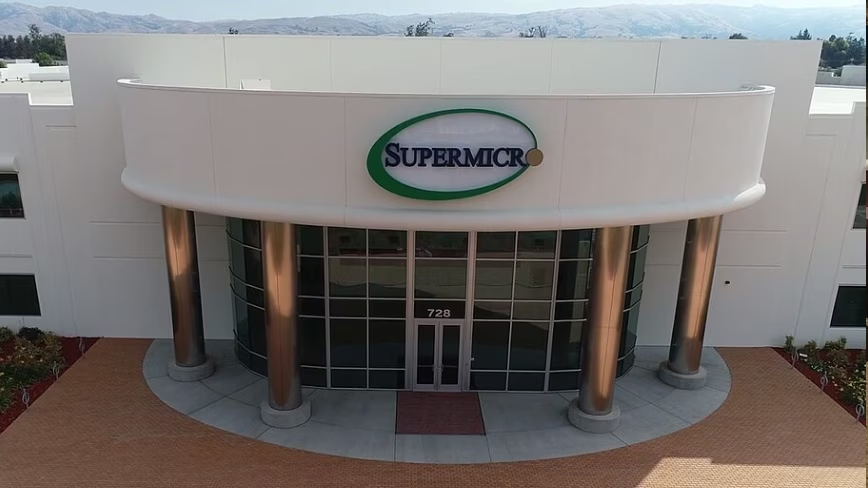
Taiwan raided Super Micro’s office and two affiliated companies as it widens its first criminal probe into Nvidia chip smuggling to China.
Taiwan’s Keelung District Prosecutors Office raided Super Micro Computer’s local office on Monday, widening an investigation into the alleged smuggling of Nvidia chips to China through the company’s servers. The raid also targeted the residences of six individuals and the sites of two other affiliated companies, according to Bloomberg. Super Micro shares fell more than nine percent on the news.
Taiwanese data centre operator Chief Telecom and Super Micro distributor Albatron Technology were also searched, according to a person familiar with the investigation cited by Bloomberg. Albatron confirmed in an exchange filing that it had been searched but did not explain why. Chief Telecom did not immediately comment.
Super Micro said in a statement that it is working closely with Taiwanese authorities and remains committed to protecting its technology and intellectual property. The company said its products continued to be targeted in the smuggling cases and that it is cooperating with law enforcement in Taiwan and other jurisdictions. Super Micro itself has not been charged in the investigation.
The raid extends Taiwan’s first formal crackdown on AI chip diversion, which began in May when prosecutors detained three individuals accused of using forged documents to export Nvidia-equipped servers to China. The three suspects, including Super Micro co-founder Wally Liaw, allegedly routed at least one shipment through Japan before it reached the mainland. Around 50 servers were seized before they could leave the island.
Taiwan does not currently treat AI chip exports to China as a crime. Prosecutors have instead been charging suspected smugglers with violations of existing laws such as document forgery. Taipei is now considering criminalizing the exports themselves, which would give local prosecutors a more direct tool to pursue the illicit trade.
The case ties back to a broader scheme that US prosecutors have valued at roughly two and a half billion dollars. The US Department of Justice charged Super Micro co-founder Liaw and two others in March with conspiring to divert Nvidia-equipped servers to China through a front company in Southeast Asia, using heat guns to swap serial numbers and dummy servers to fool auditors. Liaw has pleaded not guilty, and the case is set for trial in November.
Nvidia CEO Jensen Huang addressed the smuggling problem last week, telling shareholders that data centres built with diverted chips are a dead end because the company will not provide support or repairs. The raid on Monday suggests Taiwan is increasingly willing to enforce that message from its end, extending the investigation beyond the original suspects and into the companies that handled the hardware.
Get the most important tech news in your inbox each week.