
The AI boom made San Francisco so crowded even ‘tech bros’ making six figures are left scrounging for homes and apartments | Fortune
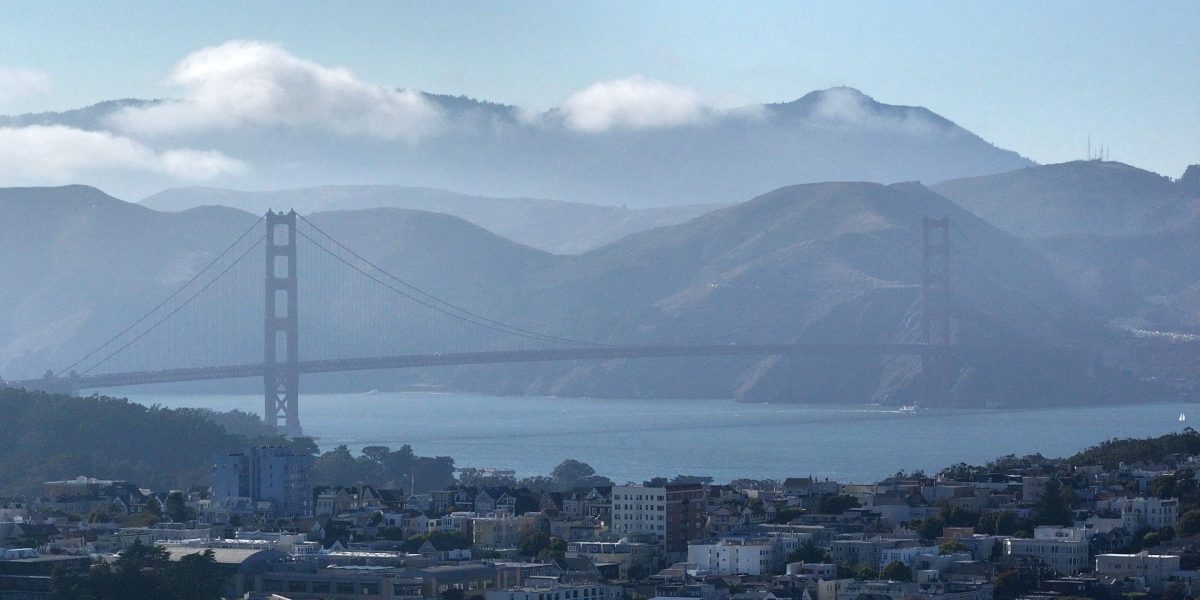
San Francisco has spent years trying to recover from the pandemic-era exodus that emptied offices, battered downtown businesses, and sent parts of its housing market into a slump.
But now the city has a very different problem: The AI boom is bringing workers, money, and demand for housing faster than the market can absorb them.
OpenAI and Anthropic have dramatically expanded their footprints in the city. The two companies have each leased roughly 1 million square feet of office space over the past two years. OpenAI is now the city’s second-largest office tenant behind Google, while Anthropic ranks fourth. The move-ins from these companies are bringing jobs—and in turn, workers—to the city. According to data from Comprehensive.io, a website that tracks tech jobs, San Francisco makes up over 40% of all AI-related open job positions in the U.S.
The result is a market increasingly split between people getting extraordinarily rich from AI and everyone else trying to find somewhere to live. Average asking rents in the San Francisco metropolitan area have climbed more than $1,000 since last year to $4,600 a month, according to Zillow Rentals Data. This has pushed San Francisco above New York as the most expensive major rental market in the country, according to TurboTenant. The vacancy rate has fallen to roughly 3.7% according to real-estate company Avison Young, while competition for apartments in desirable neighborhoods has become intense.
“I feel like rent is like the biggest expense, and it wouldn’t make sense to pay $4,000 a month just on rent,” Alan Wang, a software engineer at Meta, told Fortune. “I wouldn’t be able to save on something like retirement or just paying off past debts.” Wang currently lives in San Mateo County, just south of San Francisco’s metro area due to the current market prices.
The squeeze isn’t limited to renters. San Francisco’s median home price reached roughly $1.72 million in June, according to market data from Redfin, while luxury properties have experienced an even more dramatic resurgence. San Francisco single-family home prices rose 17% year-over-year, according to real estate brokerage company Compass’s market outlook report for this month.
Wang—a self-proclaimed “tech bro”—believes standard tech employees, even with their above-average wages, are still being priced out of the city.
He told Fortune his near-$200,000 salary currently pays for his apartment at roughly $2,100 a month in his current living situation—his slice of the cost for the space he shares with a roommate, with the total rent sitting at $4,600.
“Even with a big tech salary and other debts you have to take care of, it’s very unrealistic to stay there this year,” Wang said. “I ended up just renewing at my current place, which was still not the cheapest since the rent went up 9.9%.”
And increasingly, the people driving demand for housing in San Francisco—and bidding on the higher prices—aren’t traditional Silicon Valley executives. They are a new class of AI employees whose compensation can include enormous salaries and equity stakes in companies such as OpenAI and Anthropic. And the wealth can be staggering.
A Redfin analysis estimated that, in all, current and former OpenAI employees could theoretically have about $135 billion in post-tax equity if the company reached its expected valuation, while Anthropic employees could have another $63 billion. Together, that represents purchasing power equivalent to nearly one-third of the San Francisco metro area’s housing stock by value.
The phenomenon is already showing up on the ground. Some buyers are offering more than $1 million over asking prices, while renters have reportedly offered landlords months or even a year’s rent upfront to beat competition. One recent listing even offered the possibility of accepting shares in OpenAI or Anthropic as payment.
Just this month, a 12-acre estate in Hillsborough—just south of San Francisco—sold for more than $70 million to a buyer revealed to be the cofounder of xAI, the AI project that led to Elon Musk’s GrokAI agent. The sale was one of the most expensive home transactions in the town’s history—with Musk selling his Hillsborough home for $30 million in 2021.
One of the biggest concerns, Wang said, is how San Francisco is not a city built for density.
“I think it’s a little tricky, especially in SF, since there’s not as many skyrises to live in, like New York,” he said. “There’s not as much property, and all the property is very small.”
The city itself is on the smaller side, with San Francisco County making up roughly 46.7 square miles—making it the smallest county in California. This highlights the housing crisis, however, as the population sits at more than 826,000 since 2025. That makes the county the 13th most populated in the state.
San Francisco’s own planning department says the city’s zoning rules historically limited the types of housing that could be built and constrained where new housing could go. Much of the city’s recent housing construction has been concentrated in eastern neighborhoods, while northern and western neighborhoods have seen relatively little growth.
In December 2025 the city signed The Family Zoning Plan into law, expanding the areas where denser housing can be built. San Francisco also pursued permitting reforms and other efforts intended to make housing construction faster and more predictable.
There is also a push to convert underused office space into housing. San Francisco’s office vacancy rate was 34.4% in the final quarter of 2025, according to a 2026 city resolution, even as the city faces a mandate to add tens of thousands of homes.
The San Francisco Housing Authority did not immediately respond to Fortune’s request for comment.
Joshua Hong is a News Fellow at Fortune covering breaking news.