
The bond market is sending CEOs a blunt message: Borrowing costs are going to go up | Fortune
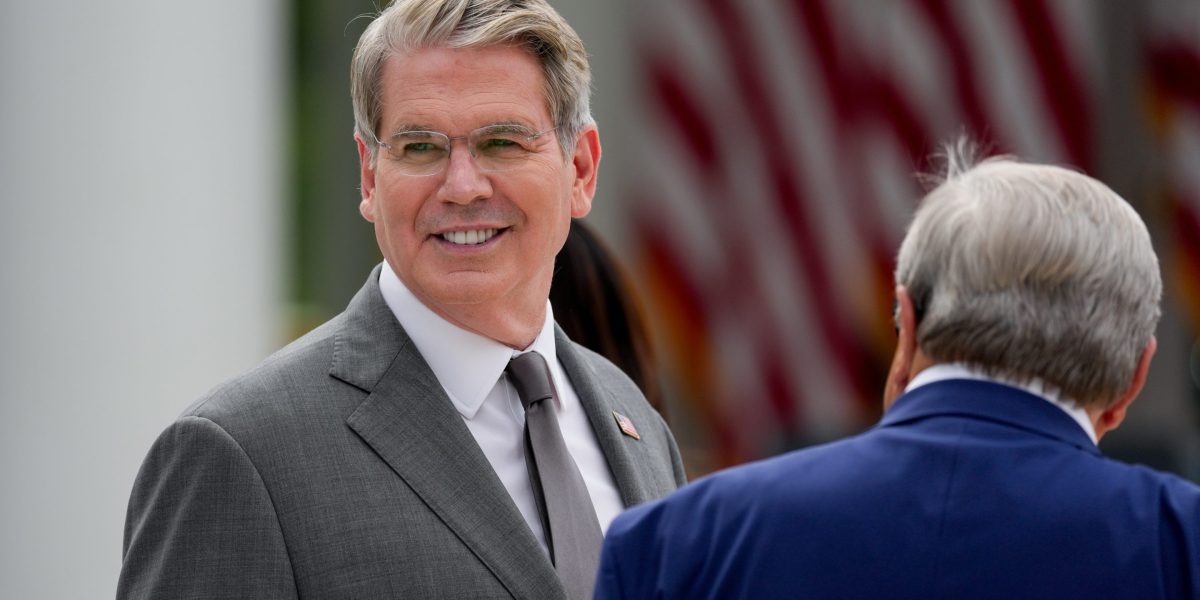
Good morning. The era of cheap money is officially over. The bond market, not the Fed, is giving the clearest signal to CEOs that their borrowing costs are going up. U.S. Treasury Secretary Scott Bessent’s $4 billion buyback plan for longer-dated government debt managed to calm bond markets for barely a day before we saw another sell-off, pushing up the yield on the 30-year Treasury. With the U.S. national debt now topping $40 trillion, few seem to share Bessent’s view that “we can grow our way” out of the fiscal burden.
To some extent, skittish bond markets are another example of growing risks—and costs—in the U.S. economy. It’s even more likely that the Fed will raise interest rates when it meets again in September. Higher yields mean Washington is now paying close to $3.2 billion a day in interest on the debt. It raises the mortgage rates that are weighing on consumers and builders like KB Home, which CEO Rob McGibney recently spoke about in this column.
Other implications to think about? First, the Trump Administration’s fiscal policy. Lower taxes and regulatory burdens have certainly helped to fuel corporate spending, with the Treasury department reporting that business investment rose nearly 10% in the first half of the year. But there are trade-offs to every decision. The evaporating tariff windfall was a $200 billion hit to this year’s budget. Add in an atmosphere of overall uncertainty, America’s record level of debt and deep concern over this administration’s commitment to ethics and rule of law. They point to higher borrowing costs in the longer term and other sources of friction for leaders.
And then there’s AI spending. Companies like Alphabet, Amazon, Meta, Microsoft and Oracle are issuing record amounts of debt to fund AI infrastructure. There’s been about $500 billion in AI-related debt issuance so far this year, according to Goldman Sachs. Alphabet raised almost $32 billion in debt in 24 hours in February, including a 100-year bond. As with the equity markets, the gap between the hyperscalers and the rest of corporate America is widening. Yes, investors are starting to distinguish between the platforms and the infrastructure around them, between proven cash flows and promises that have yet to materialize. But they’re gravitating to the same haves and have-nots of the equity markets, which means tech giants are likely to continue driving up costs and tightening credit for other companies—especially in the current climate.
Contact CEO Daily via Diane Brady at [email protected]
Walmart has received nearly $3 billion in tariff refunds and says it will reinvest the money in lower prices, particularly in groceries and general merchandise. The retailer has more than 11,000 items on “rollback,” its term for temporary price reductions, as higher gas prices and more cautious consumers weigh on traffic.
Supermicro’s board says it found no evidence that current members of senior management knew about the alleged chip smuggling scheme tied to cofounder Wally Liaw, who has pleaded not guilty to charges of unlawfully diverting Nvidia hardware to China. But the issue isn’t over; the company still faces a federal grand jury subpoena, a request for documents by the U.S. Securities and Exchange Commission, and a parallel Taiwan investigation.
Office of Personnel Management director Scott Kupor, a key architect of the Trump administration's return-to-office push, admitted in an audio recording reviewed by Fortune that he filmed one of his “Federal Friday” videos against a blank wall because he feared criticism for appearing to work from home. "I was in my bedroom," Kupor said, explaining that he sought "a plain corner with a white wall" so his house would not be recognizable.
S&P 500 futures are up 0.3% this morning. The last session fell 0.9%. South Korea’s KOSPI is up 0.9%, Japan’s Nikkei 225 is down 0.3%, while Hong Kong’s Hang Seng Index rose 1.2%. Vietnam’s VN-Index jumped 2.0%. India’s NIFTY 50 is flat, while the STOXX Europe 600 is up 0.1% in early trading. Bitcoin continues its rise to above $78,000.
Exclusive: Venezuela, sick with hyperinflation, engages the ‘money doctor’ Steve Hanke for a dose of dollarization medicine by Shawn Tully
Airwallex expands from cross-border payments to autonomous finance—though president Lucy Liu says it’s still ‘not the best time’ for an IPO by Nicholas Gordon
Moderna co-founder is a billionaire once again at $1.7 billion—he once turned down 20 high-paying job offers to ‘have more of an impact on the world’ by Emma Burleigh
Today's edition of CEO Daily is curated and edited by Joseph Abrams, Jason Ma, Nicholas Gordon, and Lee Clifford.