
The FBI’s Bin Laden unit had an "oh, s***" moment, 3 weeks before 9/11
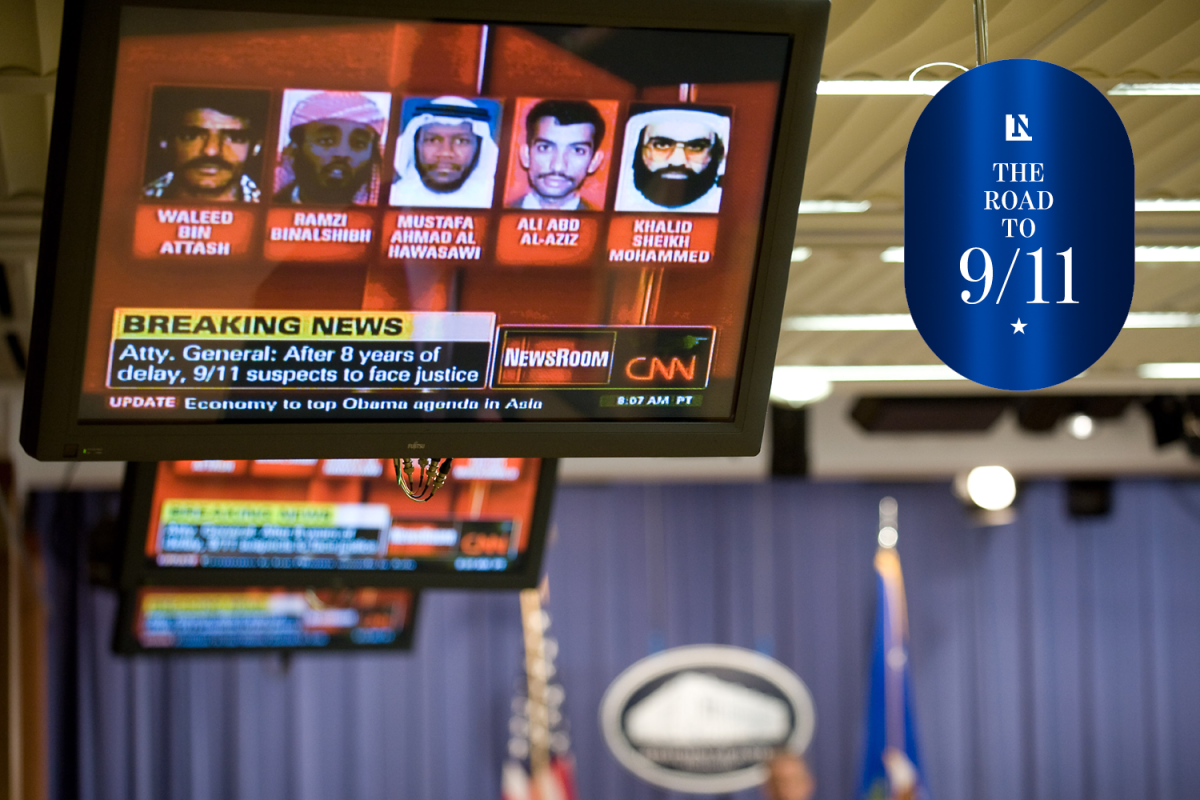
In this series, Newsweek maps the road to 9/11 as it happened 25 years ago, day by day.
Yesterday: The 9/11 Commission wrote that Said Bahaji had "no personality and limited knowledge of Islam." But three of the 9/11 hijackers attended his wedding.
August 21, 2001: In doing research to determine who were the planners and supporters behind the attack on the USS Cole in October 2000, Margaret Gillespie, an FBI analyst detailed to the CIA Counterterrorist Center (CTC), read a 15-month-old cable from the Bangkok station.
It reported that Khalid al-Mihdhar and Nawaf al-Hazmi had traveled from Thailand to the United States on January 15, 2000.
The two were connected to Walid Mohammed bin Attash ("Khallad"), then considered to be a planner of the Yemen attack.
Coincidentally, the CIA had tracked al-Mihdhar from the UAE to Malaysia, and then from Malaysia to Thailand while he was traveling with bin Attash, and the Agency requested that Thai intelligence ascertain where the two went.
Thai intelligence reported back to the CIA on March 5, but no one at the CTC took any notice of the report, the January operation long forgotten.
Gillespie made an inquiry with U.S. Customs to determine if the two were still in the United States, discovering that the two stated their destination as the Sheraton Hotel in Los Angeles, and that Khalid al-Mihdhar had left the U.S. on June 10, 2000, reentering on July 4, 2001, and evidently not departing since.
The conclusion she drew was that the two "known" al-Qaeda operatives were still in the U.S.
The next day, Gillespie met with Dina Corsi, an analyst within the FBI's bin Laden unit, and al-Mihdhar and al-Hazmi were put on the terrorist watchlist on August 24. Corsi met with the bin Laden unit head, Rodney Middleton, who later said that for Corsi, it was an "Oh, s***" moment.
They agreed that the Bureau needed to open an investigation to find al-Mihdhar. The I-49 squad in the New York field office was assigned to track down the al-Qaeda member, but the Justice Department Inspector General later found that they "did not treat it like an urgent matter."
The Top Secret Joint Inquiry into Intelligence Community Activities before and after the Terrorist Attacks of September 11, 2001, tried to unravel what happened, excusing CTC because it "could not keep pace with the amount and scope of incoming intelligence reporting."
The March cable from Thai intelligence was marked "information only" and thus was ignored; no one in the "overworked" CTC could remember seeing it, the Inquiry found.
The former CTC Chief told the Joint Inquiry that had anyone taken notice of the incoming cable, the two would have been watch-listed. "It should have been done. It was not," he testified behind closed doors.
He excused his center by saying that some 150 people were watch-listed in March 2000. He revealed that there was also a second cable on March 6 from the field that called attention to Nawaf al-Hazmi's travel to the United States.
The final tragedy, still not sufficiently explored, is that the various analysts at the FBI and CIA made a fatal mistake in confusing Khalid al-Mihdhar, Khalid Sheikh Mohammed, and "Khallad," mixing together various pieces of evidence from reporting that confused the identity and activities of each individual.
Thus there was information in the system that referred to each, but analysts confused the names and had al-Mihdhar as a USS Cole plotter rather than Khallad, and a Khalid recruiting people and even pilots in the United States but not identifying him as KSM.
Khallad was identified before 9/11 (even if he was confused with al-Mihdhar), but KSM—the mastermind and controller of the planes operation—evaded any attention, even though he had been indicted, had been watch-listed by the FBI, and had been the subject of a rendition by the CIA.
Tomorrow: Minneapolis field office agents were rebuked for seeking information. "Things work much better when our agencies are communicating HQ to HQ," the CIA said.