
The Iranians have Trump right where they want him and suggest he seek 'a dignified exit' | Fortune
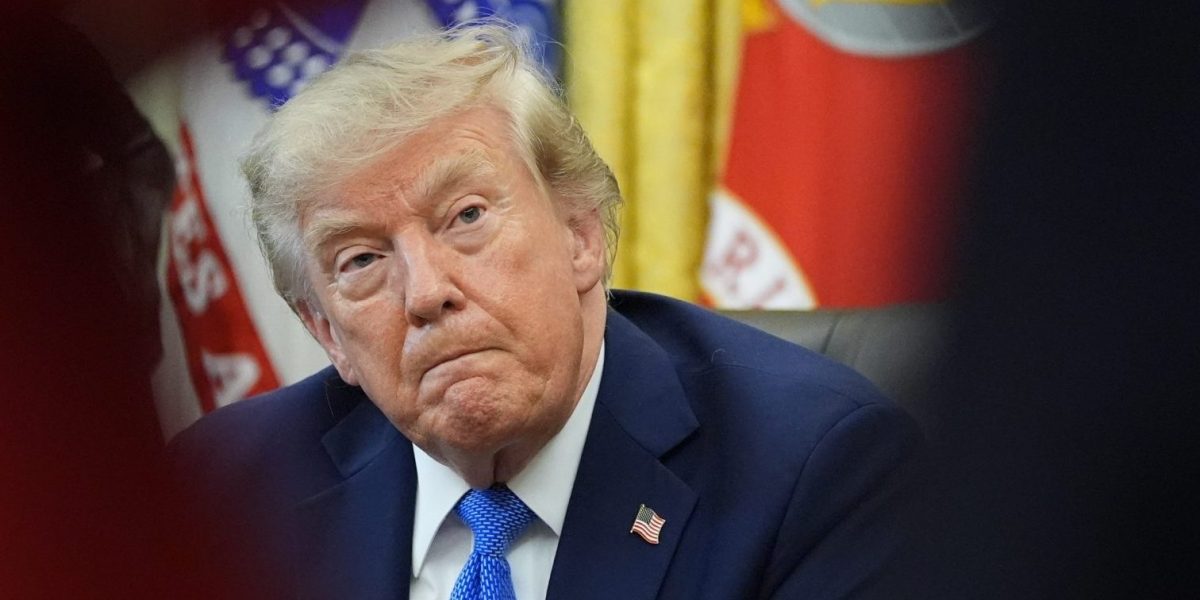
The bond market is currently pricing risk correctly, according to Johns Hopkins economist Steve Hanke—and what it’s pricing in is ugly. In an interview with Fortune’s Nick Lichtenberg, Hanke argued that President Trump has inadvertently mixed what he called “a deadly cocktail” for Treasuries, and the result is a bond selloff that has already pushed yields past the informal threshold Treasury Secretary Scott Bessent has been trying to defend.
Hanke said, “the bond vigilantes have come out of hibernation” in reference to the investors who have served as the scourge of administrations for decades, selling government debt en masse to punish what they see as reckless fiscal or monetary policy, ultimately driving yields higher until policymakers change course. As yields rise, so do the interest rates on a range of consumer credit products, such as mortgages and car loans, making the cost of borrowing more expensive for everyone.
Bessent has said he wants the 10-year yield to carry a “3 handle”—meaning below 4%—and multiple reports describe a widely understood marker around 4.5% on the 10-year and 5% on the 30-year as his upper red lines. The problem: the 10-year is at 4.696%, and the 30-year is at 5.284%. The latter hasn’t been that high since roughly 2003.
Fed chairman Kevin Warsh has declined to give the market “forward guidance” and investors have responded to that uncertainty by selling off U.S. bonds. “The rise in the term premium and bear steepening of the curve following Warsh’s first two FOMC meetings could indicate that the Fed’s credibility is being tested,” Alpine Macro’s Bassam Nawfal said in a note. However, he forecasts that incoming inflation data will be soft and thus stop the Fed from raising rates further this year.
In Iran, President Trump appears to be locked into a war he can neither win nor lose, according to Alpine Macro chief geopolitical strategist Dan Alamariu. The chart below shows that the higher gasoline prices go, the worse Trump’s poll ratings become. Trump can’t abandon the war with Iran because “American voters don’t like presidents that lose wars,” Alamariu said in a note. But if he continues the conflict, Iran can simply maintain the lockdown on the Strait of Hormuz, keeping gas prices high and Trump unpopular with U.S. voters.
“Iran's ascendant IRGC-dominated hardliners say they will not reopen Hormuz without controlling the Strait. Tehran also demands reparations, an end to sanctions, and a U.S. military exit from the region. These are terms of capitulation Trump cannot accept. The unpopular war and higher gasoline prices cost him, but a chaotic Middle East retreat would be worse,” he said.
Expect Iran to refuse a peace deal until after the midterms are over, Alamariu predicts.
Indeed, negotiations with Iran are at a standstill, Trump said yesterday. “There are no talks or conversations going on, or scheduled, with the Islamic Republic of Iran,” he posted on Truth Social. He also insisted that “The Hormuz Strait is open and operating.”
However, only six vessels transited the Strait on Tuesday and two ships were attacked by unknown entities in recent days. The Strait remains effectively shut.
Meanwhile, the increase in the price of oil is offsetting Iran’s economic losses from the war. The country made $7.5 billion in foreign currency sales of oil in the first four months of the year, the semi-official Fars news agency said—50% more than the year before.
Take this with a pinch of salt but … Iranian parliament speaker Mohammad Baqer Qalibaf announced a “new regional order” in the Gulf region, in which “the interference of foreigners and extra-regional actors in the region’s equations is rapidly decreasing. American forces are seeking a dignified exit.”
Stocks were down across all the world’s major indexes this morning as traders grimaced at the unending siege in the Strait of Hormuz and bond investors pushed up the risk premium on debt issued by the governments of the U.S., U.K., France, Germany, and Japan. Tech stocks led declines—the Nasdaq 100 closed down 1.68%; futures were flat this morning. Meta lost 4.45% after testimony began in a federal trial over whether its algorithms are harmful to children. It recovered a little, 0.33%, in premarket trading.
Unitree shares debuted in Shanghai today, where they surged by around 630%. The robot maker’s IPO raised around $900 million at a valuation of $9 billion. The Hangzhou-based startup is probably China's most prominent robotics company—its videos of dancing and leaping robots frequently go viral—and is leading the way in the country's overall dominance in the production of humanoid, quadruped, and industrial robots, Fortune’s Nicholas Gordon tells me.
Unitree is now valued at $66 billion, lifting it far above both domestic and foreign competitors like China's UBTech and the U.S.'s Figure AI. [Photo: Julien de Rosa via Getty Images.]
Inside the $8 billion cybersecurity acquisition that rescued ServiceNow from the ‘Saaspocalypse’ - Lily Mae Lazarus
Tesla asked Las Vegas for 5,000 robotaxi permits. Sin City gave it 10, capped the speed at 45 mph, and banned airport trips - Catherina Gioino
USC just shattered its fundraising record by nearly $100 million—thanks partly to the billionaire family behind the Houston Texans - Sydney Lake
The IRS is scrutinizing how UnitedHealth moved money through foreign subsidiaries—and whether it underpaid taxes - Tatiana Sataua
Strait of Hormuz chaos has incentivized China to use an alternative trade route: a 3,400 mile frozen Arctic channel dubbed the ‘Ice Silk Road’ - Sasha Rogelberg
Princeton’s ‘AI Snake Oil’ author says the real fear isn’t thinking machines—it’s that AI exposes who already knows how to think - Nick Lichtenberg
Nelson Peltz might take Wendy’s private following six straight quarterly sales declines as customers flee its poor franchise models and bad marketing - Tatiana Sataua
Morgan Stanley’s Lisa Shalett and her team produced this amusing chart showing year-over-year percentage growth in tech capex, compared with the same for the dotcom bubble era. Lo and behold, the two lines follow each other! The good news is, we’ve got about three more years of this until we need to worry.
The estimated combined revenues of Anthropic and OpenAI, “more than the combined trailing-12-month revenues of software giants SAP, Salesforce, and Adobe,” according to ARK Invest’s Jozef Soja.
“Anthropic and OpenAI have increased their [annual revenue run-rate] to a level approaching the ~$150 billion annualized run rate of Microsoft’s Productivity and Business Processes segment, and exceeding the revenue from Windows and the Microsoft Office suite of products, which launched 43 years ago in 1983,” he said in an email.
Roland Busch, the CEO of Siemens, has a rule for his email inbox: he doesn’t like it if there are more than 100 messages in there. “I try to keep my inbox below 100. If you have more than 100 emails in your inbox, you lose the overview of what’s actually on your plate,” Busch said. “I accomplish this by answering messages quickly and using a few words.”
Jim Edwards is the executive editor for global news at Fortune. He was previously the editor-in-chief of Business Insider's news division and the founding editor of Business Insider UK. His investigative journalism has changed the law in two U.S. federal districts and two states. The U.S. Supreme Court cited his work on the death penalty in the concurrence to Baze v. Rees, the ruling on whether lethal injection is cruel or unusual. He also won the Neal award for an investigation of bribes and kickbacks on Madison Avenue.