
TPS migrants told apply to stay or leave US, offered more than $2,000 help
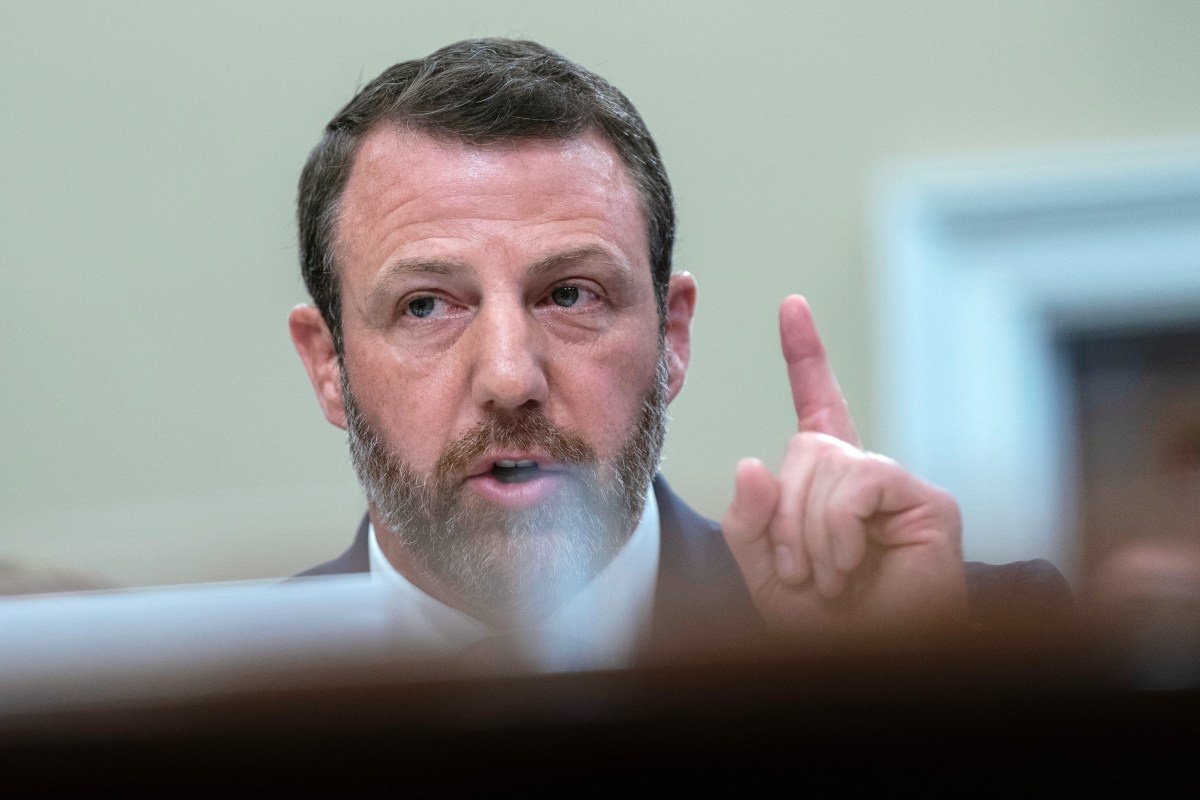
Department of Homeland Security (DHS) Secretary Markwayne Mullin has said that migrants in the U.S. on Temporary Protected Status (TPS) will be offered a plane ticket and more than $2,000 if they self-deport.
Mullins said in an interview with CNN's State of the Union on Sunday that migrants on TPS should either apply for permanent status or "we'll help you get back to your country."
He added: "We will actually give you a plane ticket plus roughly $2,100 to help you reestablish when you get there. But temporary status…is NOT permanent status."
The approach has drawn concern from some Republicans, including Ohio Governor Mike DeWine, who has warned that ending Haitian TPS could hurt jobs and local economies in his state.
The debate comes after the Supreme Court on Thursday issued a ruling that will allow the Trump administration to end temporary legal protections for migrants from Haiti and Syria, clearing the way for DHS to move ahead with deportations affecting hundreds of thousands of people: around 350,000 Haitians and about 6,000 Syrians.
On Customs and Border Protection (CBP)'s HOME: Assistance to Voluntarily Self-Deport website, the financial incentive has been listed at exactly $2,600. DHS confirmed via email to Newsweek that the department is offering $2,600 to migrants who self-deport, an initiative that first came into place in January 2026.
Financial incentives for voluntary departure are not new, but the scale and structure of the current DHS program mark a significant expansion of previous efforts.
According to the CBP HOME website, the agency provides "cost-free travel" and a cash payment to eligible migrants who agree to leave the U.S. voluntarily, along with assistance arranging their departure.
The program also offers additional benefits, including the possibility of avoiding fines or enforcement action while preparing to depart.
Migrants who register for voluntary self-deportation may also be temporarily de-prioritized for detention by Immigration and Customs Enforcement (ICE), allowing them to make travel arrangements and organize their return more orderly.
These incentives are designed to encourage migrants to leave without undergoing formal removal proceedings, which can involve detention and legal penalties.
DHS has also previously said that these incentives could reduce costs of deportation by 70 percent, as it currently costs an average of $17,121 to arrest, detain, and remove an undocumented migrant.
After Mullin's announcement on Sunday, several conservative commentators have taken to the social media platform X to call on him to "rescind" the decision to allow migrants on TPS to apply for permanent status in the U.S.
Conservative commentator Nick Sortor, who has more than 1.5 million followers on X, wrote on the platform: "Respectfully, Mr. Secretary: DO NOT give them the opportunity to file for a visa or permanent residency from America They’ve had YEARS to do it. Revoke TPS IMMEDIATELY and make them apply for re-entry from their HOME COUNTRY!"
Gregory Bovino, former Border Patrol commander-at-large, known for leading aggressive immigration raids under Trump, wrote on X: "I guess Republicans want to lose the midterms…. Promising mass deportations won big. Then DHS says long-term TPS Haitians can now apply for permanent residence? Huh? That's not enforcement, that's the old 'temporary means forever' filter that got us in this situation to begin with…Americans want removals, not more loopholes. Ignore the base that elected you and watch enthusiasm evaporate by 2026. Deliver the promise or lose the House."
Laura Ingraham, a conservative television host, reshared Mullin's interview with CNN, and commented: "What?!"
Seeming to respond to these comments, Mullin took to X to say: "Let me be ABUNDANTLY clear: Temporary Protected Status is just that: TEMPORARY. Democrats tried to turn this into a defacto amnesty program. President Trump put a STOP to it. If you are in the country without status, you are here illegally. Illegal aliens have two choices—they can either accept a $2,600 stipend and a flight home to self deport, or they will be removed."
Conservative political strategist and attorney Mike Davis reshared Mullin's post saying it was a "better answer," but that "it wasn’t 'ABUNDANTLY clear' when you went on a liberal network earlier today and talked about 'permanent residency' for these third-world invaders we have fought for years to expel."
Newsweek has contacted DHS outside of regular working hours via email for comment.
Temporary Protected Status is a humanitarian designation granted to nationals of certain countries experiencing armed conflict, environmental disasters or other extraordinary conditions.
It allows eligible individuals to remain in the U.S. for a limited period (either for 6, 12, or 18 months at a time) without fear of deportation.
However, TPS does not provide a pathway to permanent residency or citizenship on its own. As Mullin emphasized in his remarks, the status is inherently temporary and subject to change based on conditions in recipients’ home countries and U.S. policy decisions.
The Supreme Court’s recent ruling effectively removes a key legal barrier that had prevented the administration from ending protections for some TPS beneficiaries, particularly those from Haiti and Syria.
The U.S. had first provided TPS to Haitians after a devastating earthquake in 2010, and to Syrians after civil war began in 2012, according to Reuters.
This ruling has sparked concern as the U.S. State Department has placed both Haiti and Syria under Level 4 travel advisories, deeming them unsafe for Americans to travel to for any reason, due to risks of crime, conflict, terrorist activity and other concerns, raising the question of whether the department should be sending migrants from these countries home if it remains unsafe.
With that decision, DHS is now moving forward with plans that could require large numbers of migrants to either adjust their immigration status or leave the country.
The U.S. Supreme Court’s decision allowing the Trump administration to end Temporary Protected Status for Haitians and Syrians could have consequences far beyond the roughly 356,000 migrants immediately affected, immigration advocates and legal analysts say.
Advocacy groups say the decision could clear the way for the administration to terminate TPS protections for migrants from additional countries, potentially affecting more than 1 million people.
"Not only is this decision catastrophic for the 1.3 million TPS holders who are established members in our communities, but also for the 2.3 million U.S. citizen family members with loved ones who have TPS," United We Dream, a nonprofit immigrant advocacy group said in a press release.
Healthcare industry groups and immigrant advocates warn the Supreme Court’s decision could significantly disrupt the U.S. healthcare workforce because TPS holders are heavily represented in nursing homes, hospitals and home healthcare jobs.
Policy group FWD.us estimates more than 189,000 Haitian TPS holders participate in the U.S. workforce and contribute nearly $6 billion annually to the economy through wages, taxes and consumer spending.
“This is an awful harbinger for what we expect this administration to try to do for other TPS designations. Hundreds of thousands of people who have lived here for decades now see heartbreaking chaos ahead," FWD.us President Todd Schulte said in a news release.
“The economic damage will be felt far beyond these families," he added.
The warnings have added to concerns from governors, healthcare operators and business groups that ending TPS protections could worsen existing labor shortages, particularly in eldercare and long-term care facilities already struggling to recruit workers.
“Unless TPS is extended immediately, the responsibility for these disruptions to senior care will rest with the Trump administration and the Republican-controlled Congress, as American seniors and their families face the sudden loss of beloved caregivers who have bathed them, fed them, and kept them company for years,” Rebecca Shi, CEO of American Business Immigration Coalition Action said in a press statement.
Legal challenges against those moves may now face steeper hurdles after the Supreme Court’s ruling limiting judicial oversight of TPS decisions.
Update 6/29/26, 3:24 a.m. ET: This article has been updated with additional information.