
Trump administration tightens visa rules for foreign students
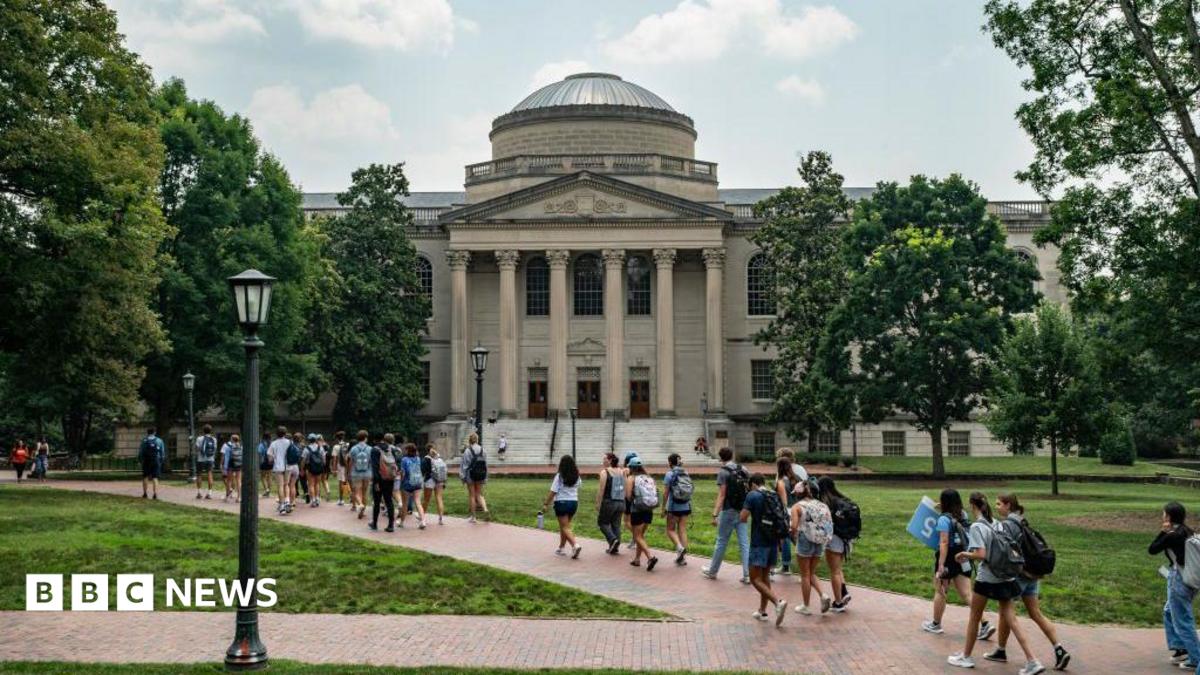
Critics called the new rules "misguided and unnecessary"
The Trump administration has given final notice of plans to implement stricter rules on foreign students, including preventing them from staying in the US for more than four years unless they get permission from the federal government.
The ability to switch programmes and transfer between universities and colleges will also be restricted. Until now, higher education institutions had the power to grant visa extensions.
The policy, which comes into effect in September, "combats rampant visa abuse, and strengthens national security through regular vetting", the Department of Homeland Security said.
The Association of International Educators described the new rules as "misguided and unnecessary".
Before now, foreign students on F-1 visas and J-1 exchange visas were admitted to the US under "duration of status", which meant they could remain in the country for as long as it took to finish their degrees. The new rules will put a time limit on that stay.
Homeland Security Secretary Markwayne Mullin said: "For decades, foreign students have been admitted into the US indefinitely, allowing thousands to abuse our immigration system by perpetually enrolling in courses to avoid having to leave the US."
While most US undergraduate programmes are typically four years, graduate level programmes such as doctorates typically take longer to complete.
Most international students are enrolled in graduate level courses, especially those in the science and technology fields.
Those courses typically require more time to complete and publish research. Funding shortfalls for research and personal circumstances can also often lengthen the study period.
Under the new rules, foreign students will also now have 30 days to pack up and leave after graduation or change to a different visa category - down from the previous 60-day grace period.
NAFSA: Association of International Educators, a non-profit that advises schools on foreign student enrollment, criticised the new rules.
Its chief executive, Fanta Aw, said the new policy "injects uncertainty, bureaucracy, and fear into a system that has long worked effectively. It is a solution in search of a problem."
The new rules are part of a broader approach by the Trump administration to reduce the number of foreign students and restrict immigration to the US.
The administration has sought to cap the number of foreign students at some elite colleges and moved to revoke the visas of students who have been critical of US foreign policy.