
Trump's foreign policy: Strongmen on speed dial, allies and partners on notice
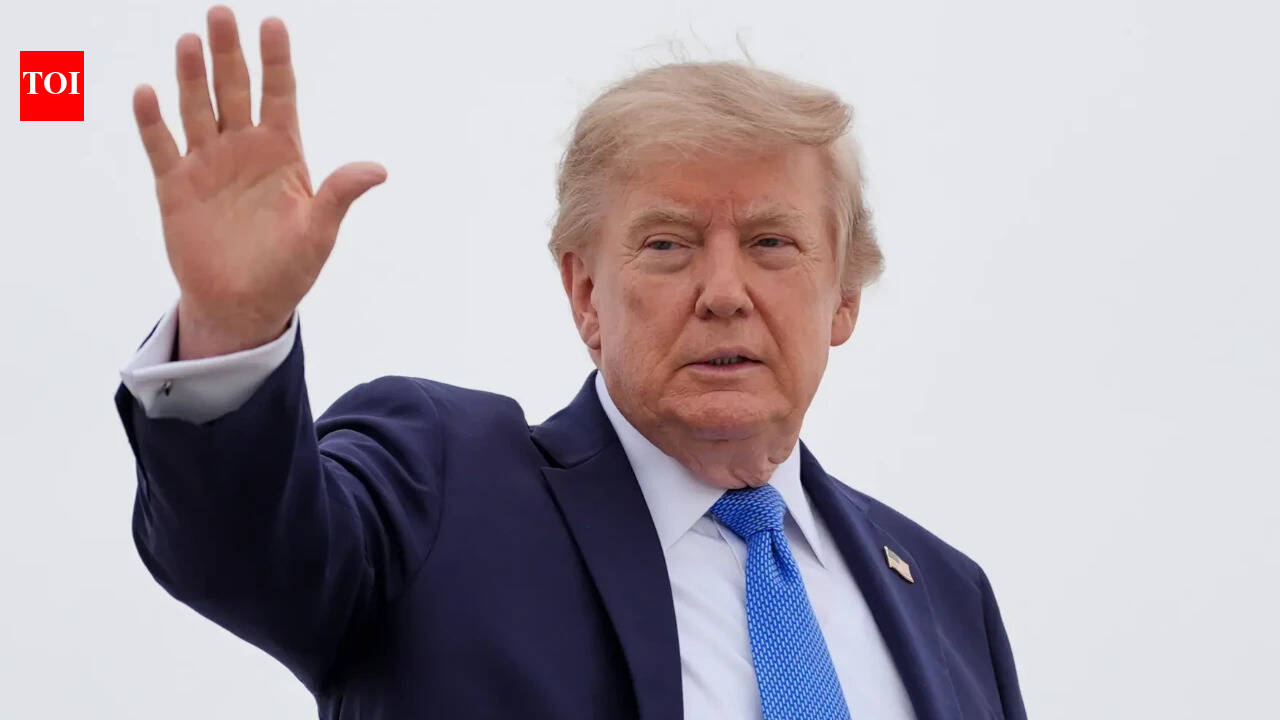
TOI correspondent from Washington: Forget bombing Iran to end it as a civilization, US President Donald Trump on Sunday dropped bombshells on America's allies and partners, including India, to send a disquieting message: good ties with Washington may no longer guarantee its support in return.Within hours of each other, Trump warmly endorsed a new defence pact linking Saudi Arabia, Pakistan and Turkey while ordering a substantial reduction in US-South Korean military exercises, explicitly invoking his “very good relationship” with North Korean dictator Kim Jong Un.
Taken together, the moves suggest a foreign policy increasingly organized around personal relationships, immediate transactional demands, and affinity for strongmen rather than the institutional logic of long-standing alliances.“Very happy to see” Saudi Arabia, Turkey and Pakistan sign the Mecca Joint Defence Agreement, Trump wrote on Truth Social, praising it as a step toward countries defending themselves “in a more meaningful way.” The pact commits the three to regard an armed attack on one as an attack on all and envisages deeper military cooperation.For India, the optics are particularly uncomfortable despite the much ballyhooed personal rapport between Trump and Modi.
Pakistan’s military chief Asim Munir has cultivated an unusually close relationship with Trump and his family on the strength of a crypto outreach; Saudi Crown Prince Mohammed bin Salman and Turkish President Recep Tayyip Erdogan have likewise established strong personal channels with the president. Trump’s enthusiastic embrace of a pact involving Pakistan therefore contrasts sharply with Washington’s traditional effort to deepen India’s role as a democratic counterweight to China.The Mecca pact is not explicitly directed against India, and New Delhi has responded cautiously, saying it is studying its implications for national security and regional stability.
Nor does Trump's endorsement amount to abandoning India. But the symbolism is unmistakable: Washington is applauding a new security architecture that is concerning to India even as he has virtually turned his back on Quad and unloaded against BRICS.The South Korea decision is even more startling. On Sunday, Trump said he had ordered Defense Secretary Pete Hegseth to “substantially reduce” the annual Ulchi Freedom Shield exercises, which began Monday and involve about 18,000 South Korean troops.
Trump complained about their cost, Seoul’s refusal to participate in US military action against Iran and, most revealingly, their supposed hostility toward a North Korea that he described as “unthreatening and respectful” because of his “very good relationship” with Kim.The irony is difficult to miss.
South Korea is a treaty ally; North Korea is widely seen as a kooky nuclear-armed dictatorship that has supplied Russia with weapons and troops for its war in Ukraine. The exercises are designed precisely to maintain readiness against Pyongyang and now include training for drones, cyberwarfare, electronic warfare and GPS disruption.Richard Fontaine, president of the Center for a New American Security, called the administration's Asia policy increasingly incoherent, warning that excessive inconsistency could encourage countries to accommodate potential adversaries rather than rely on America.
Victor Cha and Andy Lim of CSIS had earlier identified the underlying problem: Trump evaluates allies through transactional metrics -- defense spending and trade balances -- creating pressure for greater payments while threatening diminished security commitments.The pattern extends well beyond Asia. Neighbors Canada and Mexico has been subjected to extraordinary pressure from Trump, while European allies have faced tariffs, troop withdrawals and repeated questions about the value of NATO.
Several foreign-policy analysts have expressed alarm at the developments, describing them as an increasingly transactional and damaging approach to America's traditional alliance system.Trump's defenders argue that this is not abandonment but burden-sharing: uncertainty is supposed to force allies to spend more on their own defense.
MAGA activist Laura Loomer, a fringe element who is now an influential voice in Washington, offered precisely that kind of justification, arguing that South Korea should have helped Trump with Iran and that America's alliances depend on the unique personal authority Trump commands abroad.Yet that defense inadvertently makes the central problem clearer: if alliances and partnerships depend on personal ties with one president, they cease to be that in the traditional sense.
The danger is not merely that Washington may lose friends; it is that friends may conclude they need insurance against Washington itself.Foreign policy mavens say that is the paradox of Trump's “America First” diplomacy : by making American protection conditional and personal, he may encourage allies from Seoul to New Delhi to Ottawa to Brussels to become more self-reliant and less dependent on America.
Once allies and partners learn that lesson, they warn, rebuilding trust may prove considerably harder than destroying it.Catch the latest World News and Live updates. Download the TOI app.