
Trump threatens Iran with more bombing as U.S. missile stockpiles decline, the Strait of Hormuz slams shut, and there’s no endgame in sight
Stocks were broadly up in Asia today, especially in the tech-heavy South Korea market, as the Dutch semiconductor company ASML reported better-than-expected quarterly results and raised its guidance. U.S. futures are up this morning after the government reported an unexpectedly tame inflation number yesterday. And the price of oil declined, despite the worsening situation in the Gulf.
After the U.S. consumer price index (CPI) came in unexpectedly low at 3.5% yesterday, Wall Street became almost unanimous in its view that the Fed will not hike interest rates this year. Here are some of their takes:
“We're in an investment cycle unlike anything we've seen before,” according to Ohsung Kwon and his team at Wells Fargo.
Billionaire Richard Branson says copying his 5 a.m. morning routine won’t make you successful—and will just cause ‘more burnouts than breakthroughs’ - Orianna Rosa Royle
The $124 trillion Great Wealth Transfer is more than just cash: More U.S. businesses are now being inherited than bought, BofA finds - Sasha Rogelberg
‘Close to as good as it gets’: Jamie Dimon just offered another warning on bubbly markets as Wall Street had a monster quarter - Mia Osmonbekov
Mitsubishi takes over $7.5 billion in U.S. natural gas fields from Aethon, deepening Japanese bet on LNG and the AI boom - Jordan Blum
An SEC email address mix-up is causing confusion and threatening to disrupt its proposal to scrap quarterly reporting requirements - Amanda Gerut
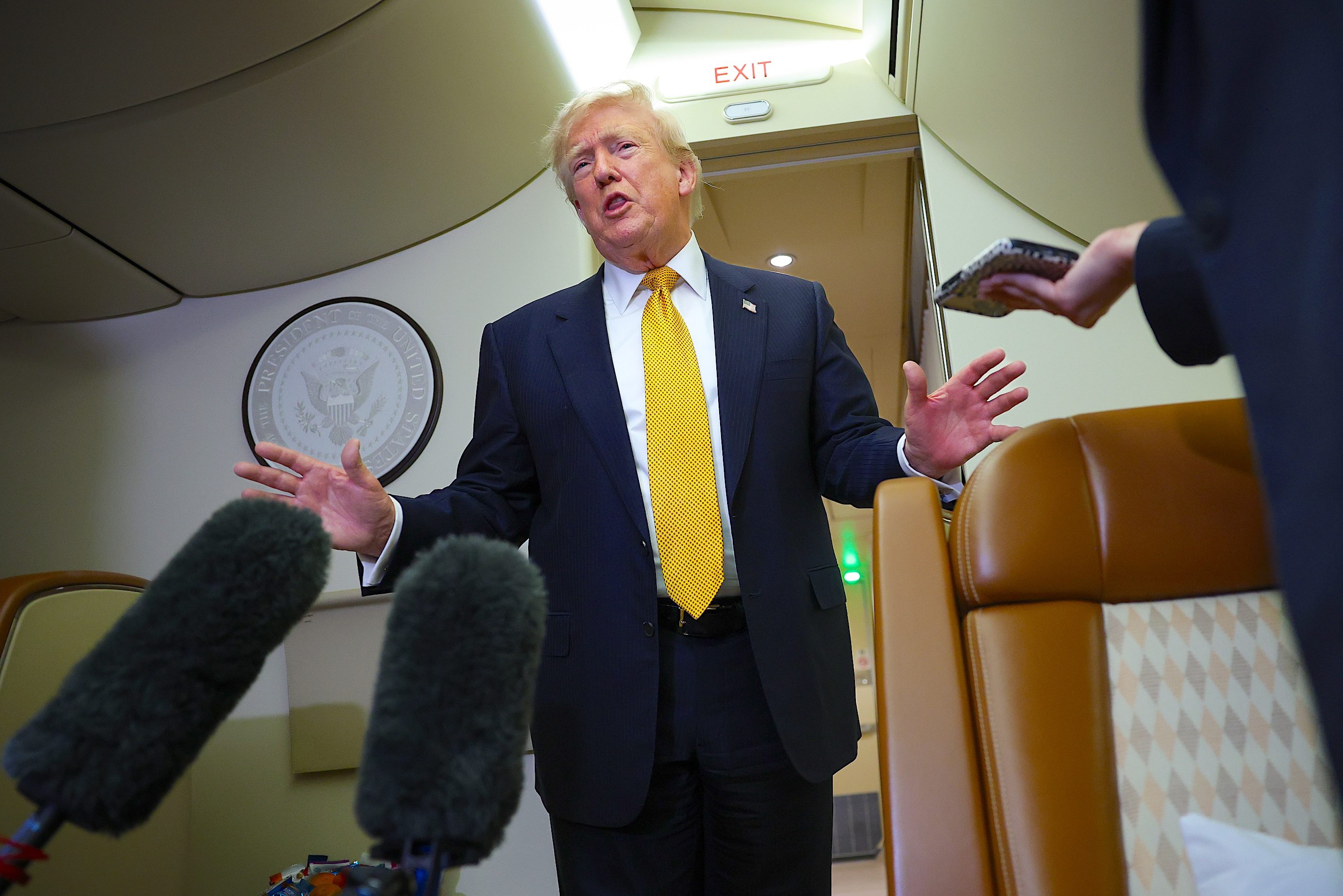
President Trump made new threats against Iran yesterday, telling Fox News, "Next week it gets really bad for them. We're going to knock out all their power plants. We're going to knock out all their bridges unless they get to the table and negotiate."
In the past 24 hours, U.S. forces hit dozens of targets on Iran’s Gulf coast. In response, Iran struck U.S.-linked sites in Jordan, Kuwait, and Bahrain.
The hostilities came after the president did a swift U-turn on his Monday threat to impose tolls of 20% on cargo transiting the Strait of Hormuz. Instead, he said yesterday on social media, the U.S. will reimpose a blockade on Iranian ships, and demand “MASSIVE” trade and investment deals in the U.S. from foreign shipping companies wanting to use the Strait.
Shipping through the Strait fell to a two-month low, according to Reuters. Not a single LNG tanker has made it through the strait since July 11, according to Kpler, the ship-tracking firm.
Iran has managed to sneak some ships through the waterway, however. Nine of the 11 boats that made it through the strait prior to the reimposition of the U.S. blockade went via the Iran-approved course on the north side, Reuters said. Three of them were empty tankers entering the Gulf. It is becoming more difficult to track shipping as captains turn off their transponders and go dark in hopes of avoiding Iranian drones.
U.S. forces escorted 800 ships through the Strait over the past two months, The Wall Street Journal said. Expect that rate to decline in the coming days.
The WSJ notes: “The U.S. is facing shortages of interceptors that are critical for knocking out incoming Iranian missiles, making it dicier for Trump to stretch the clock.” Military Watch Magazine says the same thing: It would take a year of production to replace the Patriot air defense missiles expended in the last few months. But because defense contractors are also committed to serving foreign clients, deliveries might not actually happen for four or five years. “The situation is considerably worse when assessing stockpiles of interceptors for the THAAD air defence system, Tomahawk cruise missiles, or GBU-57 bombs,” MWM says.
Notably, the WSJ, the New York Times, and the Financial Times all have heavy analysis pieces on their front pages today, all saying roughly the same thing: Observers can't fathom Trump’s strategy on Iran and can’t see a way out of the conflict for the U.S.
Iran appears to have Trump in perpetual check: The bombing has not worked thus far; the Tehran regime remains in place; Iran has the ability to close the Strait anytime it wants; there is no agreement on curbing Iran’s nuclear program; and the price of gasoline in the U.S. remains a painpoint for Americans.
If President Trump was hoping to throw tacks onto the road in front of the Chinese economy, it didn’t work. China's GDP was up 4.3% in Q2, which is considered disappointing over there but in the West would be regarded a blockbuster print.
China’s exports increased 27% to a 53-month high in June, ING’s Lynn Song said in a note. They were up 19.4% the month before. This chart shows that after a brief hiatus caused by Trump’s “Liberation Day” tariffs, China’s exports to the U.S. have already returned to positive territory:
Unauthorized immigrants make up nearly 6% of the U.S. workforce, according to Matthew Martin at Oxford Economics. “But their share of the workforce is at least double the national average in dozens of industries. The private-households subsector is by far the most dependent on undocumented labor; it includes maids, nannies, personal care aides, and outdoor workers such as gardeners,” he said in an email to UnHerd.
The consensus among analysts for year-on-year growth in earnings per share among the S&P 500 in Q2, according to a note from Piper Sandler’s Michael Kantrowitz. In Q1, EPS growth was 21%. Kantrowitz also noticed that analysts have recently become more bullish in their expectations as the year ticks by.
This chart shows how, in the past, analysts would start the year optimistic and then reduce their expectations as the months go by. Now, however, analysts move their estimates upward as we head toward December.
If you haven't yet paid attention to Apple’s lawsuit against OpenAI, in which the iPhone company accuses Sam Altman’s people of stealing its corporate secrets, now is the time to treat yourself. Its allegations are explosive. Apple claims one of its ex-employees, Chang Liu, joined OpenAI in January 2026 but failed to return a work-issued laptop. He then exploited a bug in Apple’s security software to use that laptop to download dozens of Apple’s confidential hardware-related files. Apple also claims Liu used a former colleague’s Apple-issued work computer to get into its corporate network.
Both of these acts, it should be noted, are textbook definitions of computer hacking, which is a crime in the U.S. (Sips tea.) OpenAI did not respond to the allegations when reached by UnHerd but it has said elsewhere it “has no interest in other companies’ trade secrets.”
To be clear, Apple does not specifically accuse anyone of breaking criminal law in its suit, although it does allege its information was “stolen.” That’s why Elon Musk was dragging Sam Altman on X the other day by suggesting the latter could only visit Musk’s data centers “if your parole officer approves.”