
Trump weighs ‘massive attack’ on Iran as Tehran’s chokehold on oil gets tighter
Alphabet made history on Wednesday, booking its most profitable quarter in corporate history—$112 billion in profit, the first 12-figure quarterly profit in history. Revenues in Google’s cloud computing business, the core of the company, soared 82%.
Because for the first time in the company’s history, Alphabet became cash flow negative, UnHerd’s Eva Roytburg reports. On page 12 of its earnings presentation, Alphabet revealed that it was spending more on property and equipment than it was taking in from its operating activities, leaving it with $5.9 billion in negative free cash flow.
At least six firms cut their price targets for Alphabet in response, including Piper Sandler (to $395), UBS (to $379) and D.A. Davidson, whose $350 target was one of the most bearish on the Street.
U.S. stocks took a sharp step down yesterday with the S&P 500 falling 1.21%. Asia followed suit and all the major indexes there saw losses this morning. But as the sun rose over Europe so did the mood of investors, who bid up stocks in the U.K. and the Stoxx 600 index in early trading. Likewise, U.S. futures ticked up a little this morning, suggesting that some investors think yesterday’s cull was overdone.
It’s likely going to be a record year for IPOs as measured by market cap, and the number of IPOs has only grown since 2020. But, Goldman Sachs asks, is the upturn in IPOs a sign that the stock market is heading into a bubble? (Look at the numbers for 1999 and 2000 in the left-hand chart below if you want to understand why older investors remain traumatized by the dotcom bubble and its IPO insanity.) The bank asked Prof. Jay Ritter, the University of Florida’s “Mr IPO,” and Owen Lamont, a senior vice president at Acadian Asset Management for their thoughts:
Meet SLB: The $70 billion oil services giant poised to cash in on AI data centers and the post-Strait of Hormuz oil exploration boom - Jordan Blum
‘You just hired a million bad employees’: How the brief tokenmaxxing era delivered the opposite of what it promised - Nick Lichtenberg
‘The demographic dividend of the last 40 years is ending’: J.P. Morgan says the world is running out of the two things that kept interest rates down - Eleanor Pringle
Turns out Dead Internet Theory was right: AI agents are eating the Web, growing by nearly 8,000% and rewiring the Internet’s business model - Mia Osmonbekov
European travel platform Omio raises $10 million and buys Rail Europe as it chases Asia’s tourism market - Nicholas Gordon
The Trump Administration hit 60 countries with a new set of trade tariffs at 10-12.5% yesterday, citing Section 301 of the Trade Act of 1974, which allows the U.S. to penalize countries it believes practice slavery. The countries targeted include the U.K., Mexico, the E.U., Japan, Taiwan, and South Korea.
The U.S. conducted a 13th night of attacks on Iran in the last 24 hours, targeting “Iranian military command centers, drone storage facilities, communication networks, coastal surveillance sites, and maritime capabilities,” according to Centcom.
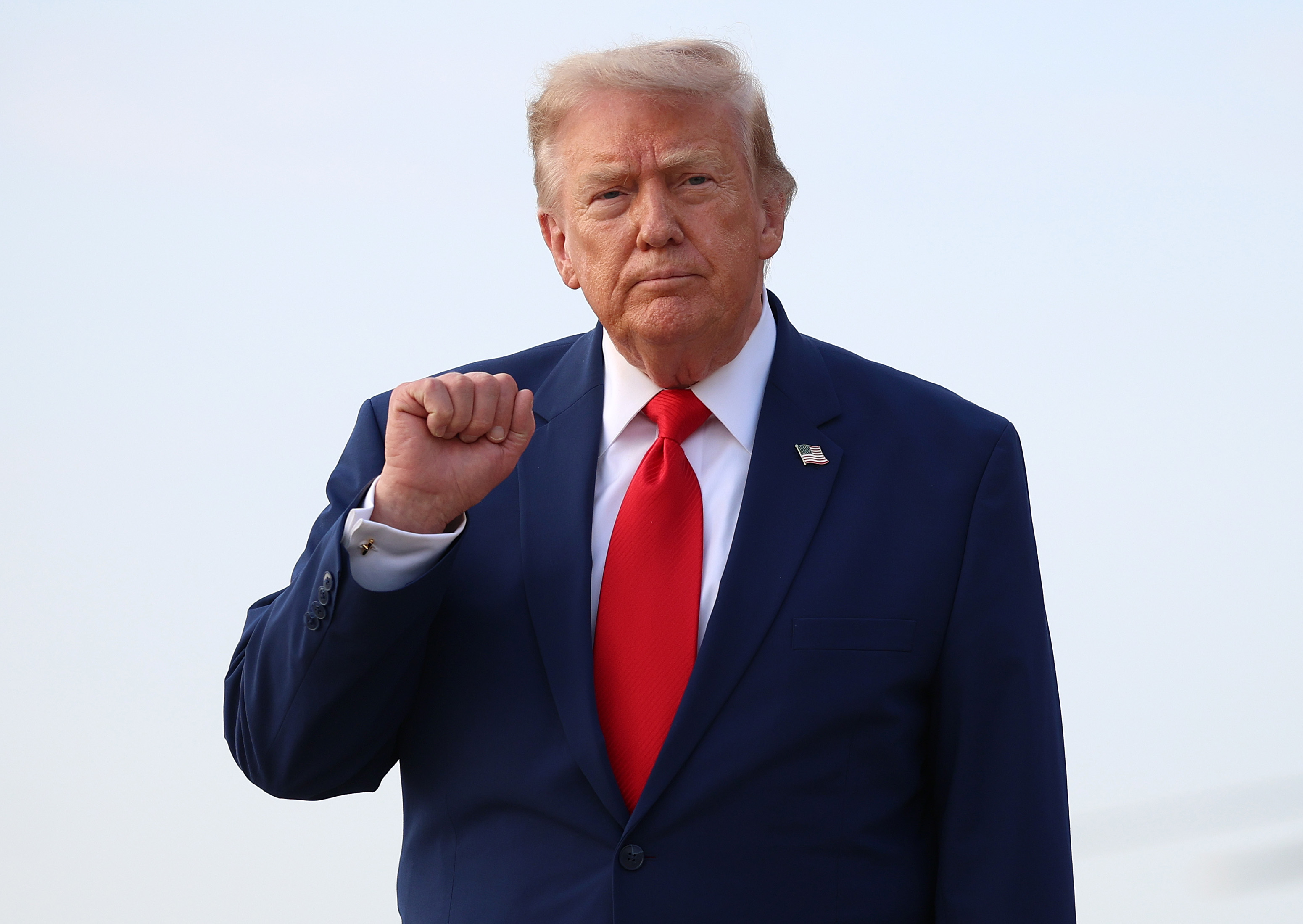
It may be just a curtain-raiser for something bigger, President Trump told Axios: “I am considering a massive attack. Bigger than ever before. I am close to making a decision. We are all set for it,” he said.
The president also made further threats to Iran and its Houthi proxy group on social media.
Behind the scenes, Iran rejected a ceasefire offer from the U.S., delivered to it via the president of Iraq, according to the NYT.
These charts from Apollo Global Management’s Torsten Slok, Rajvi Shah, and Shruti Galwankar show just how important the straits of Hormuz and Bab al Mandeb are to the global oil trade—and how little of it is making it out of the Gulf. Of the 78.4 million barrels per day that usually transits one of Earth’s eight major maritime chokepoints, the Hormuz and Bab al Mandeb comprise 29.5 million, or 38% of seaborne supply.
In some months of the war, exports from Iraq and Kuwait were reduced to zero, according to Wood Mackenzie, the energy consultancy. Although Saudi Arabia had diverted some oil from the Strait of Hormuz through its 746-mile Aramco pipeline, that pipe exits into the Red Sea—which has now been blocked by the Houthis at the Strait of Bab al-Mandab.
“For months, the market treated Yanbu as the answer to Hormuz risk,” WM’s Ian Solis said in an email this morning. “The problem is that Yanbu has its own chokepoint. If Bab al-Mandeb comes under sustained disruption from a declared Houthi naval blockade, Asia stands to lose a major crude supply artery. What looked like diversification was in reality a shift from one strategic bottleneck to another.”
The closure of the Bab al-Mandeb would force ships to sail via the Cape of Good Hope—adding nine days to journeys between Europe and Asia:
The fact that an OpenAI model escaped a secure environment and hacked a rival company even though OpenAI believed it had walled it off from the internet is the stuff of sci-fi nightmares. It may yet be the tipping point at which humanity becomes seriously uncomfortable with allowing AI to be autonomous.
Some of us, however, are apparently pretty relaxed about letting AI do its thing. Specifically, the young.
This chart from Deutsche Bank shows which demographics are comfortable letting AI trade stocks for them. “Americans up to 34 years old are happy giving AI responsibility for automatically executing trades on their account by a ratio of 10:1. In the UK, the same age group is happy with AI by a ratio of 3:1. The ratio falls as people age,” according to analysts Luke Templeman and Galina Pozdnyakova.
The increase in fatal car crashes in the dark morning hours that occur after the “spring forward” change of the clocks—a night in which people lose on average 40 minutes of sleep, according to the epidemiologists Katie Sharkey and Katrine Wallace.
Japanese Prime Minister Sanae Takaichi set off a firestorm on social media when she said, “Today’s holiday felt like such a true blessing—finally getting a full five hours of sleep for the first time in ages,” Takaichi wrote on X in a post that’s garnered over 35 million views. “Ever since taking office as prime minister, zero-to-three hours has been the norm.”
For Takaichi, 65, the lack of sleep and working “from early morning until late at night” is something she believes is a point of pride rather than a cause for concern, reports UnHerd’s Preston Fore.
Opposition lawmaker Toru Kunishige warned that chronic sleep deprivation, “impairs judgment— much like a state of intoxication—and could pose a risk to national crisis management.” Indeed, she once summoned staff to a meeting at 3 a.m. because her fax machine had broken—which doesn’t sound like the act of a leader functioning on all cylinders.
There’s another possibility. The late British prime minister Margaret Thatcher infamously slept only four hours per night, and some have speculated she was able to maintain that punishing level of wakefulness because she had an unusual gene mutation.