
Tyneside comedian asks why men don't talk about using weight-loss drugs
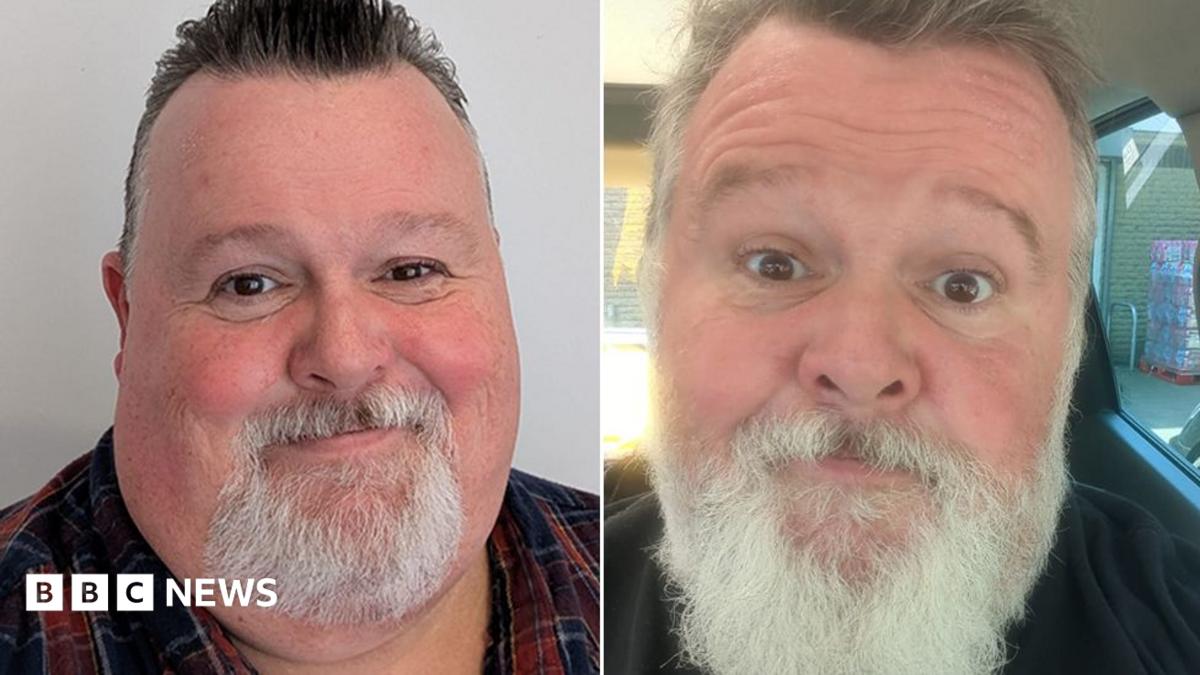
I have always been a big lad. From being a child I was what you would call "well nourished".
When I started edging towards showbiz in my twenties - getting into wrestling, acting and comedy - my size became part of my act. But, as I've got older, my weight has become anything but a laughing matter.
At 53, tipping the scales at more than 35st (222kg), I started having health complications. It became apparent my family were worried about me.
But, at my size, exercise was difficult. I'd reached "circus attraction" level and had to make a choice.
I know people who have taken weight-loss injections and had good results. That said, they're not cheap, they can have side effects - some serious - and they may not mix well with some medications.
Also, although there is little official data on this, some experts are worried men using them are not talking about it, either with their GP or publicly.
After losing more than 8st myself, I wanted to find out why that is.
A recent study estimated, external 1.6 million adults in England, Wales and Scotland used weight-loss drugs in 2024-25, most buying them privately, and the North East has the highest adult obesity rates in England.
My wife Becky told me any medication has side effects. But she was less concerned about future risks than she was about losing me now. Being as big as I was posed a greater risk, in her mind.
A wave of guilt and shame washed over me. This isn't just about me. I've got a wife, four kids and my parents to think about.
It seems to me women talk about this stuff openly. They discuss what they take, side effects, how much they've lost and how to keep it off.
I know plenty of men who are taking these drugs. Comedians work antisocial hours and eat junk. You'd be surprised how many of us are overweight. We also overshare.
But I find most men don't talk about it and I can understand that.
For the first two months I took Wegovy, I was really reluctant to tell anybody. I felt weak for needing it, even though I'd already lost 5st (32kg) by dieting before I started taking it.
When I've told other men I'm taking a weight-loss drug, they're often more than happy to share that they're taking it too. Earlier this year, on my Facebook page, I asked men to tell me their experiences. About 20 responded publicly. More than 70 messaged me privately.
I mostly heard from people with positive experiences. Some asked me where to get it. Most, like me, had bought theirs through private pharmacies after conversations with friends or family, but hadn't told many people they were doing it.
When we meet in the pub - drinking diet cola - Barry, from Chester-le-Street, says he reached 25 stone last year at the age of 50.
"At one point I was on the verge of 50-inch-waist pants," he says. "It was getting harder and harder to find clothes."
He'd exercised a lot when he was younger but was now struggling to do that.
"I just realised I had to change now," he says.
He tells me he'd tried diets in the past which worked for the first stone and then "stagnated". That was part of the reason he didn't tell people, he says. He was worried the jabs might not work.
On a night out with work friends, one said to him "don't take this the wrong way, Barry, but you've become a massive unit". Then another told Barry he'd been taking Mounjaro.
"I bought my first month's worth - lost a stone," he says. "Same again next month." He's dropped from 25st (158kg) to 19st 5lb (122kg). It's expensive, he says, but the benefits are "worth every penny".
Barry tells me he wasn't keen to talk about using the drug initially, but says once he saw results he did mention being on it to workmates and discovered that "half the office are on it".
Other men who responded to my post said they had been put off by stories of side effects - including burps, nausea and digestive problems - but thought again when the women in their lives took the injections and started seeing results.
Some said they did have side effects, with one feeling tired and a bit queasy "almost like nerves" when he first started but adding he felt that was worth it for the results he saw.
Iain has lost 4st 7lb (29kg) and thinks more men are starting to be honest about using "the jabs"
Iain, from Stirling, who's also a comedian, said older men in jobs that involve being on the road and eating junk food often find the jabs make a huge difference, but still don't want to talk about it, "as if it's a cheat's way out".
When he mentions being on Mounjaro on stage, no-one in the audience will say anything, but they will "come up afterwards and be like...so am I", he says.
Josh, from Stoke-on-Trent, says men and women definitely approach taking weight-loss drugs differently.
"Women talk about it more but that's because women talk about their weight more full stop," he says.
"Men don't go to the shop and go 'ooh you've lost weight' - it just doesn't happen."
Even after he had lost 7st (44kg), only three men he knew appeared to have noticed, he said.
Jack Birch, who researches public health and obesity at Newcastle University, says there is growing academic interest in how men and women approach using weight-loss drugs differently. Traditionally, he says, men "almost need a bit of a scare" to start trying to shed the pounds, seeing it as something private and shunning the more social approach some women prefer, like slimming clubs.
But keeping weight-loss jabs secret can lead to problems, he says. Medical professionals need to know how people are using the jabs and managing any side effects and "men are generally less likely to seek medical advice, or leave it longer".
Side effects can include nausea, vomiting, constipation, diarrhoea and, more rarely, gallbladder or kidney problems and depression. The drugs are not recommended in pregnancy and NHS guidance, external outlines other health considerations.
GP Paul Evans works in Gateshead, an area he says has a "massive", longstanding problem with weight, and where more than a third of adults are classed as obese, external.
Evans believes increasing numbers of his male patients are taking weight-loss drugs but are reluctant to admit it, even to medical professionals.
"I do wonder whether there's that shame that actually resorting to something pharmaceutical to assist you is somehow wrong, and the proper 'male' way to do it is to basically just work yourself harder in the gym," he says.
GP Paul Evans says he believes a significant number of men are using weight-loss drugs, but aren't necessarily telling their doctors
Recently, I did my first standup routine in years containing zero fat jokes. Fat-free, if you like. But I know there's still a long way to go and you have to commit to change your whole lifestyle.
For some, this means moving more and requires a change in mentality around exercise.
For Evans, as a doctor, the key is not keeping secrets, especially when it comes to side effects "because they can be serious".
And, he says, "there shouldn't be a sense of shame".
Additional reporting by Jane Downs, North East Investigations.
Follow BBC North East on X, external, Facebook, external, Nextdoor and Instagram, external.
If you have taken weight-loss drugs and would like to share your story, please contact us on the form below.