
Ukraine
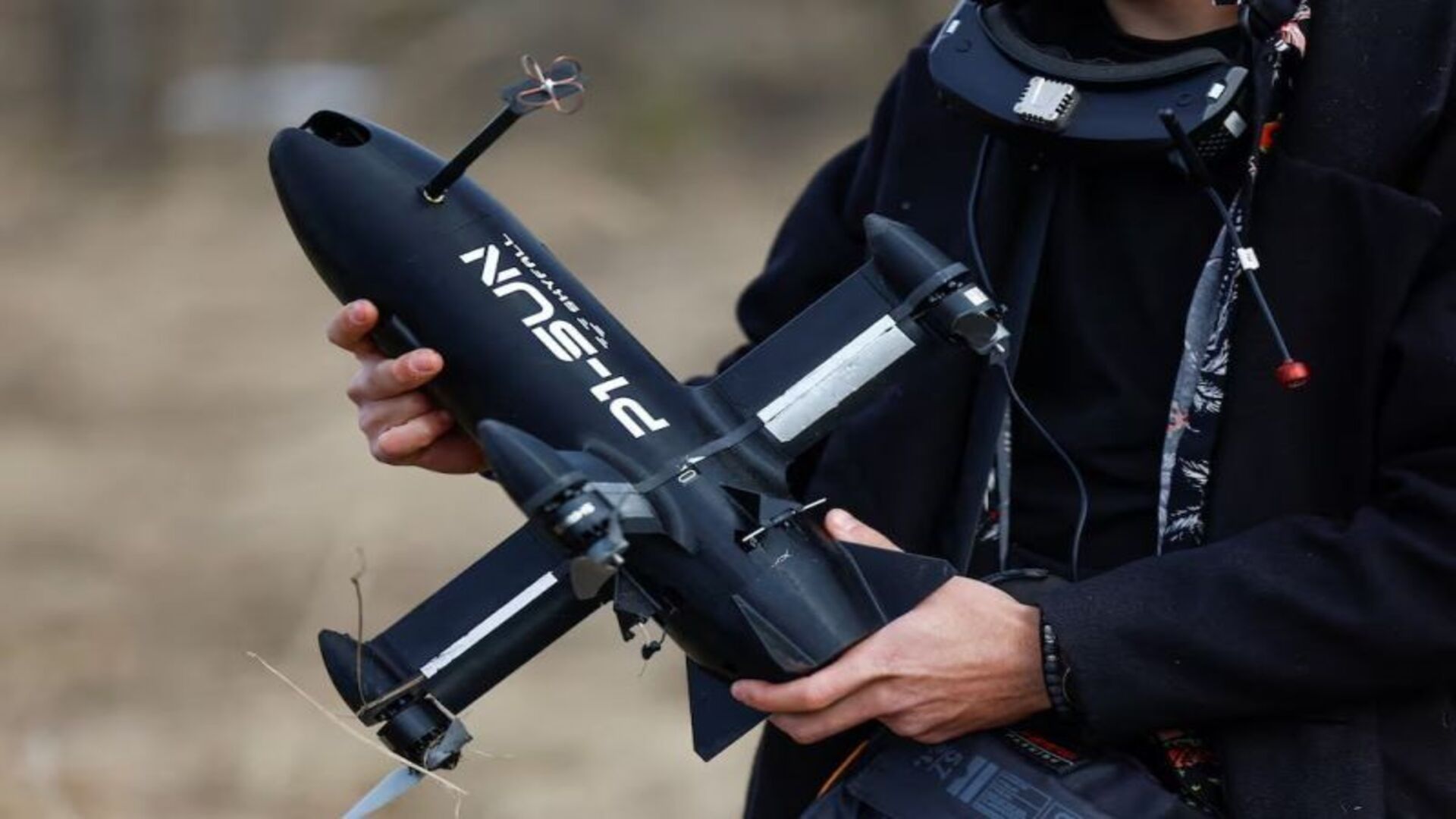
Ukrainian drone manufacturer SkyFall has unveiled the P1-SUN Jetkiller, an upgraded interceptor built to counter Russia's jet-powered Shahed attack drones.
The new model made its public debut at the recent Farnborough International Airshow in the United Kingdom.
According to Reuters, the Jetkiller reaches a top speed of 370 km/h, up from 310 km/h on the standard P1-SUN.
Russia has begun fitting some Shahed attack drones with jet engines instead of propellers, allowing speeds of up to 500 km/h, which significantly narrows the window Ukrainian air defenses have to detect and intercept incoming drones.
Yurii Cherevashenko, a senior Ukrainian Air Force commander, told Reuters that 15% to 20% of Russia's current Shahed drones already carry jet engines.
A SkyFall company representative revealed that development of the P1-SUN Jetkiller began roughly three months before its Farnborough Airshow debut.
During its combat trials, the Jetkiller reportedly shot down more than a dozen jet-powered Shahed drones before entering serial production.
The company plans to begin full serial production of the Jetkiller in August 2026, following the completion of its combat testing.
Ukraine's rapid interceptor development points to mounting pressure to counter increasingly fast Shahed drone variants across the front.
SkyFall says its current production capacity allows for as many as 50,000 interceptor drones to be built every single month.
The original P1-SUN, introduced in November 2025, has reportedly destroyed more than 5,500 Russian drones, according to SkyFall.
The threat posed by low-cost attack drones was a major point of discussion throughout this year's entire Farnborough Airshow event, with several companies displaying new counter-drone systems, including European missile maker MBDA and US firm Lockheed Martin.
Ukrainian developer General Cherry is finalizing a faster version of its Bullet interceptor capable of exceeding 400 km/h in tests.
The company has set a long-term goal of eventually reaching speeds of up to 500 km/h with its future variants.
British-Ukrainian company Firebolt Engineering recently confirmed the first known combat interception of a jet-powered Shahed drone using its Griffen system.
Firebolt says the Griffen, designed as a lower-cost alternative to conventional air defense missiles, can exceed 350 km/h in flight.
The system is now entering expanded production as Ukrainian and allied firms continue racing toward ever-faster interceptor drone designs overall.
Air defense officials have not said whether Griffen or Bullet interceptors will reach serial production on a similarly large scale.
The rapid pace of interceptor development suggests Ukraine views drone speed as essential to countering fast-evolving Russian aerial threats overall.
Whether production claims from multiple manufacturers hold up under sustained wartime conditions remains difficult to verify independently at this stage.
Follow TechRadar on Google News and add us as a preferred source to get our expert news, reviews, and opinion in your feeds.
Efosa has been writing about technology for over 7 years, initially driven by curiosity but now fueled by a strong passion for the field. He holds both a Master's and a PhD in sciences, which provided him with a solid foundation in analytical thinking.
Please logout and then login again, you will then be prompted to enter your display name.