
Ukraine Drones :How Russia is trying to beat Ukraine’s drones: Camouflage cargo, jam Elon Musk's Starlink | - The Times of India
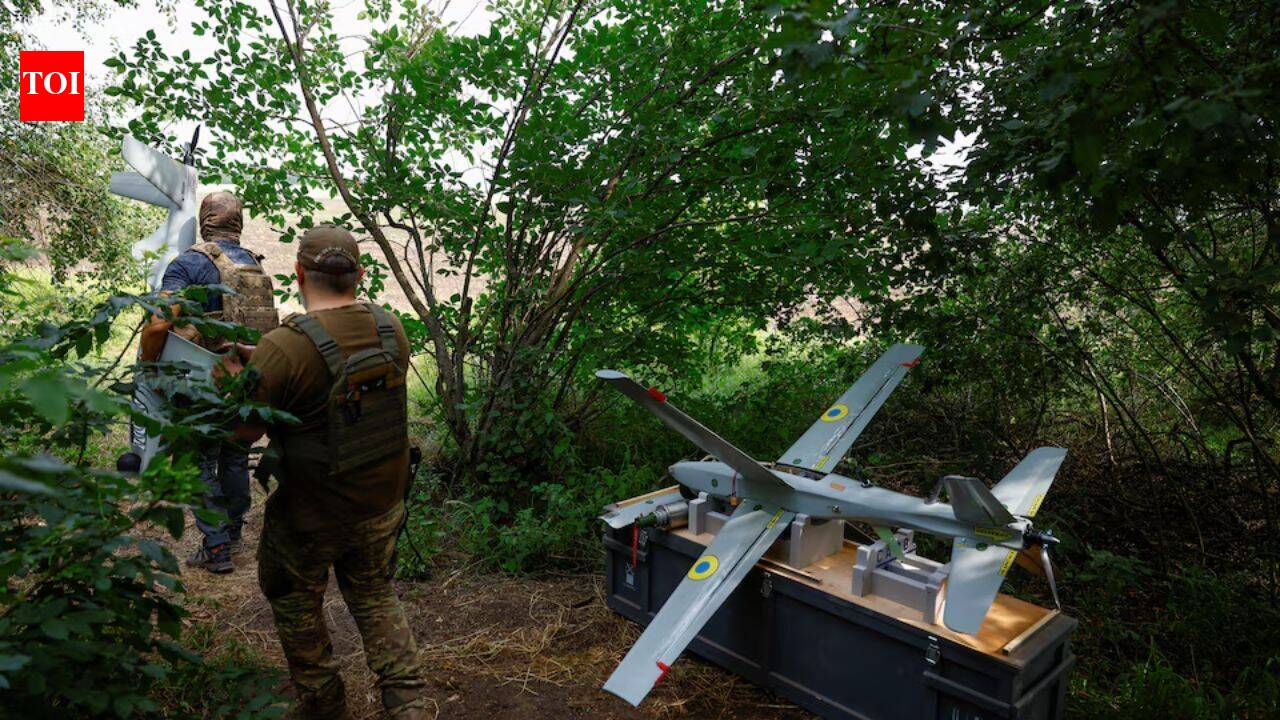
Russia is stepping up efforts to disrupt Elon Musk’s Starlink satellite internet network as it tries to counter Ukraine’s mid-range drone strikes.According to a Reuters, Russian forces are using a mix of camouflage, changes in transport tactics and powerful electronic warfare systems to make it harder for Ukrainian drones to locate and hit fuel supplies, logistics hubs, command centres and other military targets.Starlink has become a key part of Ukraine’s battlefield network.
Ukrainian drone units use it to maintain communication with some drones that can strike targets dozens of kilometres behind Russian positions. These strikes have helped Ukraine attack supply lines, fuel storage facilities, air-defence systems and command posts, including in Russian-occupied Crimea.Russia is now trying to blunt that advantage.
Ukrainian commanders and pilots told Reuters that Russian forces have installed jamming devices near towns and military facilities, including systems capable of interfering with Starlink links.One such system is called Volna-Kupol-Garant. Serhii Beskrestnov, an adviser to Ukraine’s defence ministry, told Reuters that Russia is deploying the system to destabilise Starlink connectivity across an area of about 20 sq km.
He said around 10 such systems had been detected so far.How satellite jamming worksRussia’s approach is based on ground-based electronic warfare. Instead of attacking Starlink satellites directly, jammers emit powerful radio-frequency interference aimed at disrupting the communication link between a Starlink terminal and satellites in low-Earth orbit.The goal is to overwhelm or degrade the signal that allows the terminal to send and receive data.
This can lead to slower connectivity, higher latency or a complete loss of link in the targeted area.Because such jamming is localised, it can be used to shield specific military positions, logistics hubs or critical infrastructure from Starlink-enabled Ukrainian drone operations. What is Volna-Kupol-Garant?Volna-Kupol-Garant is a ground-based Russian electronic warfare system designed to interfere with Starlink satellite communications.
It is reportedly produced by Russkiy Kupol, a company based in Russian-occupied Simferopol in Crimea.Unlike older electronic warfare systems that primarily target radio communications or GPS signals, Volna-Kupol-Garant is designed to disrupt satellite internet links. That makes it significant in the Ukraine war, where Starlink has become central to battlefield communications, drone control and real-time targeting.The system uses directional antennas to emit powerful interference in the frequency range used by Starlink user terminals.
In effect, it tries to flood the communication channel with noise, making it harder for the satellite and terminal to maintain a stable link.The system is reportedly mounted on multiple trailers carrying steerable antennas. Ukrainian officials say it can affect Starlink connectivity over roughly 20 sq km, with an effective range of up to 16 km.Why it mattersFor Ukraine, Starlink has been one of the technologies that helped make relatively cheap drones more precise and effective.
For Russia, disrupting that link offers a way to protect supply lines, fuel depots, command posts and other high-value targets without necessarily shooting down every incoming drone.But the system also creates a new target. Ukrainian drone units are trying to locate and destroy Volna-Kupol-Garant systems because knocking them out can reopen the communication link for Starlink-enabled drones.The contest underlines how the war is becoming a battle of networks as much as weapons.
Drones, satellite internet, electronic warfare and counter-drone systems are now locked in a constant cycle of adaptation, with both sides trying to preserve their own battlefield connectivity while degrading the other’s.