
Ukraine military to get DragonFire-style drone-killing lasers within months
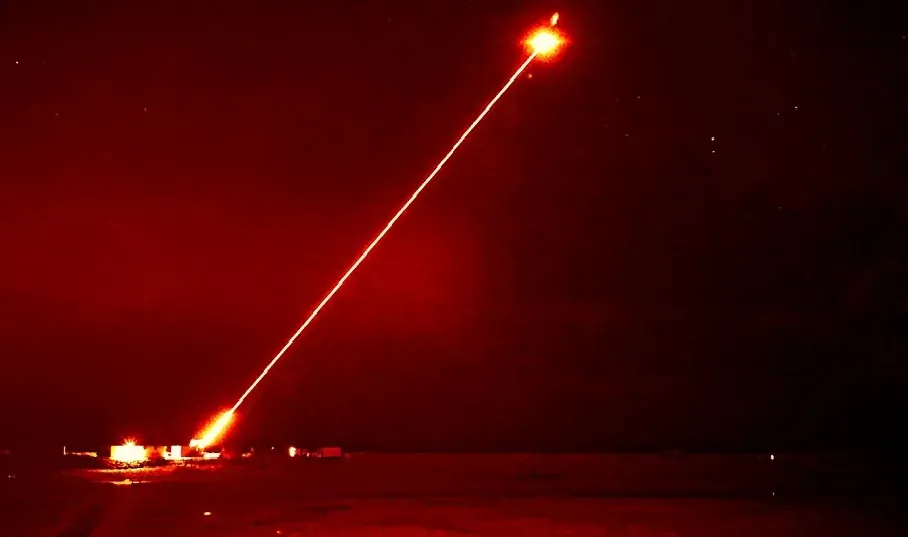
Ukraine could field combat lasers against aerial targets within two to three months, according to Brigadier General Andrii Lebedenko, the deputy commander-in-chief of the Armed Forces of Ukraine.
Teams within the Armed Forces and private Ukrainian defense companies are developing the systems, and a prototype called Tryzub, or Trident, is undergoing trials at proving grounds.
General Lebedenko said the technology can already shoot down FPV drones and is already working against Shaheds, and that within two to three months Ukraine would have systems capable of hitting aerial attack weapons better than machine guns can.
Tryzub has been publicly discussed for about 19 months, and the disclosed performance has moved in an unusual direction.
In December 2024, Vadym Sukharevskyi, then commander of the Unmanned Systems Forces, told Interfax that Ukraine had become roughly the fifth country in the world to possess a laser weapon and could shoot down aircraft at altitudes above two kilometers, though Ukrainian reporting of the quote notes that "aircraft" was understood to mean drones.
In April 2025, he presented the system publicly with a larger set of numbers: drones and cruise missiles engaged out to three kilometers, helicopters and fixed-wing aircraft to five kilometers, and sensor dazzling to ten kilometers.
Then, in May 2026, the manufacturer disclosed what the hardware actually does. Celebra Tech, the Ukrainian company behind Tryzub, said the trailer-mounted configuration destroys FPV drones at 800 to 900 meters and reconnaissance UAVs at around 1,500 meters, with work continuing toward Shahed-class interception at ranges approaching five kilometers. The company also said the system had entered final testing and that roughly 15 people were working on it.
Ten weeks later, Lebedenko said the laser was already downing FPVs and already working against Shaheds, without giving specific ranges. If Celebra Tech's stated range claims hold, they still paint a much more sobering picture of Tryzub's capabilities.
The appeal of directed energy in a war that has tilted toward cheap, expendable systems rather than expensive, high-end ones is obvious. The binding constraint, however, is atmospheric.
A laser needs a clear optical path, and fog, rain, snow, smoke, and battlefield dust all attenuate the beam. Autumn and winter in eastern Ukraine supply all of those, so a system arriving on Lebedenko's timeline would meet its least favorable operating conditions almost immediately, which could be why the specs are downplayed by the manufacturer versus those being presented in public.
Even as it continues its focus on its drone defenses, Ukraine is expanding its drone supply from domestic and foreign sources in parallel as it looks to score wins on a front line that has arguably slowed as the conflict enters its fifth year.
Follow TechRadar on Google News and add us as a preferred source to get our expert news, reviews, and opinion in your feeds.
Rahim Amir is a UAE-based tech writer who enjoys building PCs as much as he enjoys writing about them. He has been professionally writing about PC hardware since 2023, focusing on buyer’s guides, hardware reviews, and sponsored content and features related to tech.
Having built hundreds of gaming PCs and being an avid gamer in his spare time, Rahim tends to have stronger opinions about hardware than most. This is particularly on display when he gets his way with powerful, but minimalistic RGB builds even as Small Form Factor (SFF) PCs come a close second.
Please logout and then login again, you will then be prompted to enter your display name.