
Ukraine sanctions ‘Masha and the Bear’ over alleged Russian propaganda
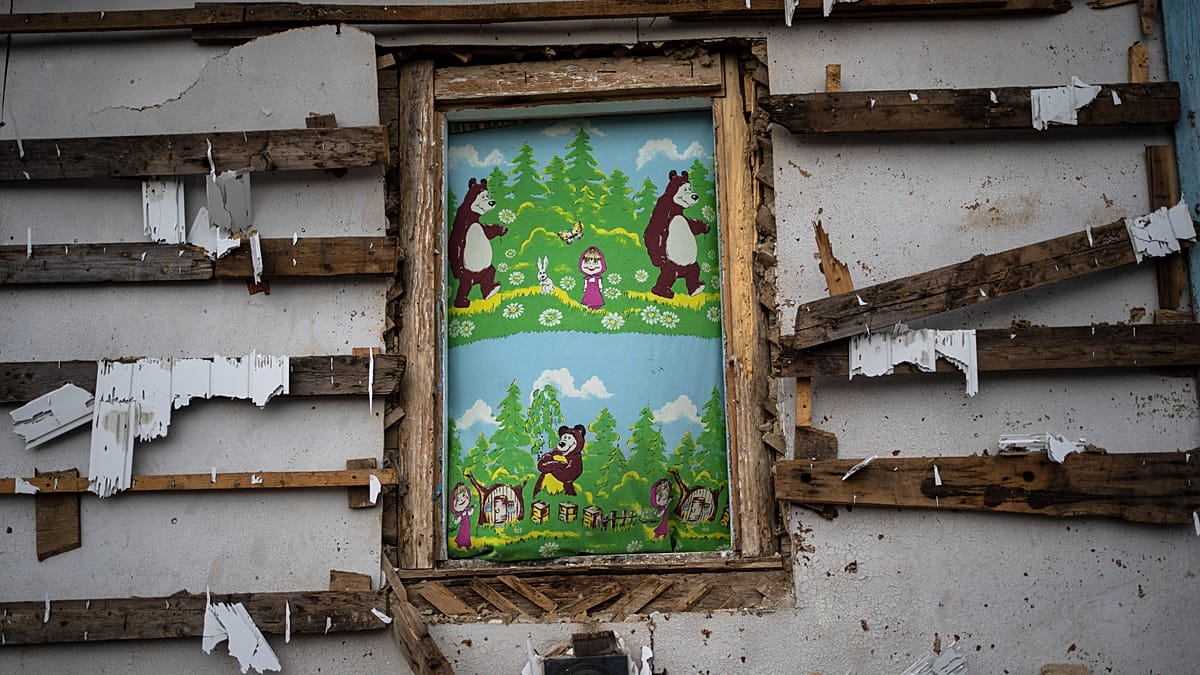
Ukraine imposed sanctions on the creators and distributors of Masha and the Bear, Russia’s most popular children’s cartoon, accusing the series of spreading pro-Kremlin narratives under the guise of entertainment for children.
The measures were included in a new sanctions package signed by Volodymyr Zelenskyy, targeting Russia’s military-industrial complex, senior officials and companies Kyiv accuses of supporting Moscow’s war effort.
Five Russian citizens and four organisations involved in the production and distribution of Masha and the Bear are on the sanctions list, including Animaccord, the studio behind the series, as well as its founder and chief executive and several of the cartoon’s principal creators.
“The programme spreads pro-Russian narratives disguised as children’s content,” Zelenskyy’s office said, describing it as a threat to Ukraine’s national security.
The sanctions include asset freezes and restrictions on commercial activity and the use and distribution of copyrighted material in Ukraine, allowing access to “Masha and the Bear” to be restricted or banned on YouTube and other platforms.
The Kremlin condemned Kyiv’s decision on Friday.
Dmitry Peskov, Vladimir Putin’s spokesperson, said the decision to target the children’s programme “shows the ugliness of the Kyiv regime”.
Loosely based on a Russian folk tale Masha and the Bear, the cartoon show follows the adventures of a small girl and a retired circus bear living in the forest.
First released in 2009, it has since been translated into tens of languages and attracted an enormous international audience in over 100 countries on YouTube and streaming platforms.
Its success has been particularly striking on YouTube, where episodes have accumulated billions of views. For example, an episode called “Recipe for Disaster” became one of the platform’s most-watched videos, with over 4.6 billion views.
The cartoon’s enormous reach has also attracted scrutiny over the use of Russian and Soviet military imagery in programming aimed at preschool children.
In one episode, Masha appears in a hat associated with the NKVD, the Soviet secret police and security agency. During the era of Joseph Stalin, the NKVD conducted a widespread campaign of political terror, and was in charge of running the gulags.
In another episode, the little girl is shown wearing what appears to be a tank-crew hat and a Soviet-era uniform.
Ukrainian authorities have argued for years that this helps normalise Russian and Soviet symbols among young audiences.
Concerns in Kyiv predate Russia’s full-scale invasion in 2022.
In 2017 a commission of Ukraine’s State Film Agency considered a request to ban the cartoon over allegations that it contained Russian propaganda narratives.
The issue resurfaced last year. In August 2025, Masha and the Bear ranked as the most popular children’s YouTube channel among Ukrainian viewers.
Two months later, Ukraine’s National Police called for sanctions.
The debate has since spread beyond Ukraine.
Earlier this summer, over 50 British MPs wrote to UK Culture Secretary Lisa Nandy urging streaming platforms to remove the cartoon, arguing that some episodes exposed children to Russian and Soviet military imagery.
The lawmakers pointed in particular to images of Masha in military-style clothing that Animaccord’s English-language social media account had also used.
They argued that the material was “actively normalising Soviet military iconography for a global audience of young children”.
Animaccord has strongly rejected allegations that the programme serves as Russian propaganda.
Ukraine said it would now seek to have its latest sanctions mirrored by international partners, potentially widening their effect beyond the country.