
US-Iran strikes threaten peace deal: Full timeline of violation claims
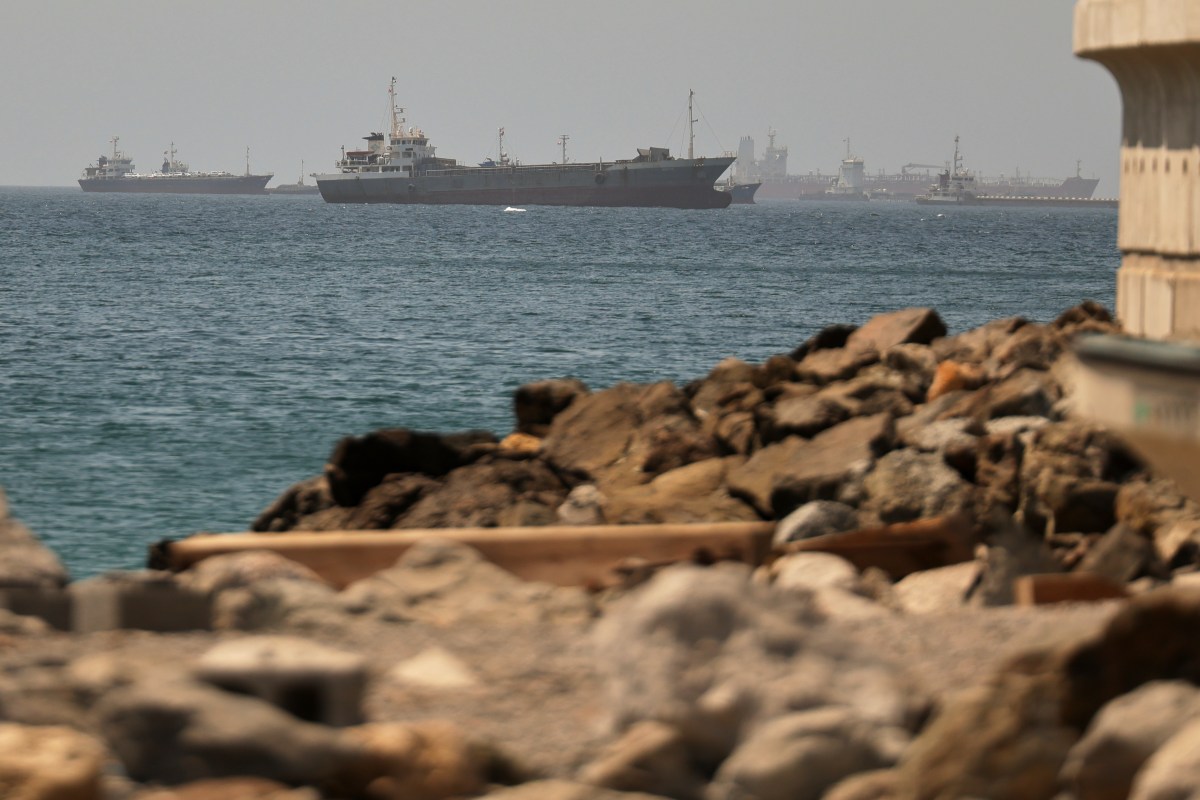
President Donald Trump says the U.S. will hold a meeting with Iran on Tuesday in Doha, Qatar after both countries agreed to halt days of tit-for-tat strikes around the Strait of Hormuz.
The resumption of hostilities on the weekend had threatened the 'memorandum of understanding' secured by Trump just two weeks ago, which aimed to reopen the critical international shipping lane.
Both sides launched strikes after accusing the other of violating the deal. On Friday, the U.S. hit Iranian military targets in after Iran attacked container ships attempting to move through the strait.
Iran then responded on Sunday with missile and drone strikes targeting U.S. installations in Kuwait and Bahrain.
Trump writing on Truth Social said "Iran has requested the meeting" but Iranian officials are yet to confirm the meeting.
As of Monday morning, Iran's deputy foreign minister, Kazem Gharibabadi, had said the Doha talks had not been confirmed to discuss "technical" issues of the deal.
If talks go ahead, they will focus first on reopening the strait - which Iran has said it still wants to control and charge fees for post the 60-day truce period set up for peace talks. The Trump administration has repeatedly said this would be unacceptable.
On Saturday, an Iranian drone struck a Panama-flagged vessel and the U.S. military responded by targeting Iranian military surveillance infrastructure, communications systems, air defense sites, drone storage facilities and mine-laying capabilities.
The Islamic Revolutionary Guards Corps (IRGC) then threatened U.S. bases in the region in a statement that was followed by drone and ballistic missile attacks on Sunday targeting the U.S. Fifth Fleet Naval Base in Bahrain and the Ali Al Salem Airbase in Kuwait.
The weekend's escalations come less than two weeks after Trump and Iranian President Masoud Pezeshkian signed a 14-point memorandum of understanding designed to end the conflict and establish a 60-day negotiating period for sanctions, the strait, and Iran's nuclear program.
A snag to the agreement stating fighting must end on all fronts, lies in the conflict in Lebanon. Israel and Lebanon signed a framework deal last week to end the fighting between Israel and Hezbollah, the Iran-aligned group which entered the war on March 2 by launching rockets into Israel in support of Tehran. But Hezbollah rejected the deal signed by the Lebanon government.
Israel has continued attacks into Lebanon, reporting Monday that it struck three Hezbollah command centers following wht it said were violations of the ceasefire agreement.
Since the agreement was signed, Washington and Tehran have repeatedly accused each other of breaking its terms. The U.S. says Iran violated the deal through attacks on commercial shipping and regional targets, while Iran argues successive American strikes have undermined the diplomatic process.
Iranian strikes might be part of a move by Tehran to dissuade the Gulf states from resisting Iranian control over the strait, the Institute for the Study of War (ISW) said.
"Iran may have intended for its strikes to signal to Gulf states that Iran will respond with force to any Gulf opposition to its control of the strait, amid recent Gulf resistance to Iranian management of the waterway," the Washington, D.C., think tank said.
Below is a timeline of the competing claims made by both sides since the agreement took effect.
President Donald Trump and Iranian President Masoud Pezeshkian signed a 14-point memorandum of understanding intended to end months of fighting. The agreement committed both countries to halt military operations, reopen the Strait of Hormuz, begin lifting the U.S. naval blockade and negotiate a broader peace agreement within 60 days.
Within days of the agreement taking effect, renewed fighting between Israel and Hezbollah threatened the deal. Tehran argued the memorandum required military operations to stop "on all fronts, including Lebanon," and warned the continued Israeli offensive undermined the agreement, according to the Associated Press. U.S. officials maintained the peace process remained on track despite the violence.
Iran accused Washington of failing to implement key provisions of the agreement, pointing to the continuing U.S. naval presence and ongoing disputes over shipping through the Strait of Hormuz. Tehran warned it would continue asserting control over the waterway until its concerns were addressed. U.S. officials rejected Iran's characterization and said maritime traffic remained open.
The Singapore-flagged container ship Ever Lovely was struck by what British maritime authorities described as an "unknown projectile" while transiting the Strait of Hormuz near Oman. Two U.S. officials told Reuters they believed Iran was responsible, while Singapore's Maritime and Port Authority said the vessel suffered minor damage to its bridge but all 21 crew members were safe. The attack prompted the International Maritime Organization to suspend its vessel movement process through the strait.
The U.S. military launched retaliatory strikes on Iranian military infrastructure, including drone facilities, surveillance systems and air defenses. U.S. Central Command said Iran "had a chance to honor the ceasefire agreement" but instead attacked commercial shipping, while Trump accused Tehran of violating the memorandum.
Iran rejected Washington's account and said the American strikes themselves breached the agreement. Tehran argued the U.S. had resumed military operations instead of resolving disputes through the diplomatic mechanisms established under the memorandum and warned continued attacks could derail negotiations.
The U.S. carried out another round of strikes on Iranian military targets after Trump said Iran had violated the agreement again. Iran responded with missile and drone attacks targeting Bahrain and Kuwait, while warning the peace process could come to a "complete halt" if Washington continued military action. Both sides continued to insist the other was responsible for undermining the agreement. Speaking the same day, Araghchi said Iran had “no interest” in allowing its leverage over the strait to erode, adding that continued attempts to reroute ships without Tehran’s approval risk further escalation.
The Strait of Hormuz has emerged as one of the biggest sticking points in the U.S.-Iran peace process because Washington and Tehran fundamentally disagree over who should control shipping through the strategic waterway.
Under the June 17 memorandum of understanding, Iran agreed to use its "best efforts" to ensure the safe passage of commercial vessels through the strait while demining the route and restoring normal maritime traffic. The agreement also envisioned commercial shipping resuming without charges during a 60-day transition period.
But the two sides have since offered sharply different interpretations of how that should work. The United States and its Gulf allies have backed a U.N.-supported shipping corridor running close to Oman's coastline, arguing it provides the safest route while mine-clearance operations continue. Iran has objected to vessels using that corridor without its approval, insisting it retains authority over navigation through the strait and warning ships not to transit the route without Tehran's permission.
The dispute came to a head after the Singapore-flagged cargo ship Ever Lovely was struck while sailing near the Strait of Hormuz. U.S. officials blamed Iran for the attack and described it as a breach of the memorandum, while Tehran denied responsibility and has continued to argue that subsequent U.S. airstrikes—not its actions—represent the real violation of the agreement.