
Violence has infected our politics
“An attack on one politician is an assault on our democracy itself.” So said Zia Yusuf at the emergency press conference he called on Wednesday (15 July) to discuss MPs’ security.
Reform’s home affairs spokesperson is right. There are no two ways about it, no equivocating to be done. It was an assault on our democracy when the Labour MP Jo Cox was shot and stabbed on her way to a constituency surgery, ten years ago, by a neo-Nazi. It was an assault on our democracy when the Conservative MP David Amess was murdered, again while seeing constituents, six and a half years ago, by an Islamic extremist. The death threat against Nigel Farage that resulted in an arrest yesterday (15 July) was an assault on our democracy. And it is an assault on our democracy that crimes against MPs recorded by the police have doubled since 2019, while reports of death threats against our elected representatives have tripled.
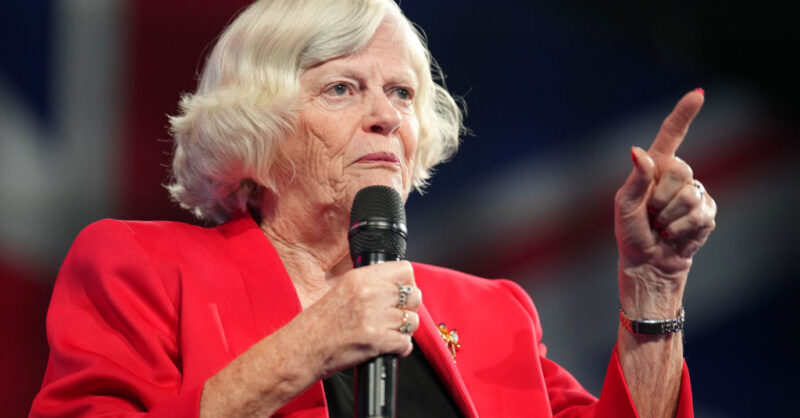
This harrowing backdrop was of course not the context for Yusuf’s press conference. He was speaking in the wake of the death of Ann Widdecombe, a former Conservative minister turned Reform spokesperson, killed last Wednesday. The case has been handed over to counter-terrorism police, who have referred to it as a “targeted attack” and are investigating potential political motivation. The 28-year-old man arrested at the weekend on suspicion of murder has been rearrested on terrorism charges. At this point, everything else to do with the case is speculation.
What is not speculation is the rising threat to politicians. As Keir Starmer noted it in his final PMQs just half an hour after Yusuf finished speaking, the brief 11 years during which he has been in parliament have now seen the killings of three serving or former MPs. The risk has been painstakingly documented since Jo Cox was killed, with the most recent update, the government’s response to the Speaker’s Conference on the security of MPs, candidates and elections, published just four months ago. It emphasises that the murders of Cox and Amess were not “isolated tragedies”, adding that “the last general election, over half of candidates faced abuse or intimidation, and nearly all MPs have experienced it”.
That report, and others before it, details the climate of hostility faced by those in public office. Attacks do not happen in a vacuum. The deluge of online vitriol aimed at our representatives is not harmless just because it occurs on the internet. Nor is it detached from real-world consequences. Death threats do not have to be fulfilled to have an impact – on the receiver’s sense of safety, their behaviour, their willingness to engage with the public. Hate-filled rants that encourage other users to see MPs as less than human have a radicalising effect on those who read them, even if the author has no intention of personally escalating beyond a keyboard.
Even Reform, in the past so cavalier about “hurty words”, now seems to agree with that. In his press conference, Yusuf attacked other politicians for criticising the party with language that amounts to the incitement of “lethal violence”. Language like “poisonous bigot”, “sick and depraved”, “lunatics who deserve their extinction”, “sick arsonists” or “traitors”, decrying his opponents as “the greatest threat to the Britain we love”, warning “we must stand up to them before it’s too late” and that “a reckoning is coming”.
Of the above terms, which are acceptable free speech and part of robust political debate, and which are recklessly inflammatory? It’s worth asking, because three of them were cited by Yusuf as evidence of the abuse Reform figures face from their fellow politicians, while the rest are the words of Yusuf himself. Challenged on this double standard in the Q&A section, Yusuf neither apologised nor promised to temper his language in future, but responded that he thinks the comments against Reform are “in a different category”.
A different category – because when it’s our side it doesn’t count. That goes for Reform suddenly decrying the toxic climate on social media that so many of their top figures have happily leaned into just as much as the left-wing voices who preach kindness yet respond with glee when it’s their opponents in the crosshairs. The Tories didn’t want to talk about far-right extremism when Jo Cox was killed. Labour didn’t want to talk about Islamist violence when a man stabbed David Amess. Both preferred to think of the killers as lone wolves, removed from the political atmosphere that incubated them.
And Nigel Farage didn’t seem to remember either Cox or Amess when he claimed last week to be “the most physically and verbally attacked public figure or politician of modern times”. One wonders if he remembers once branding the murder of Jo Cox an “isolated horrific incident” and professing outrage when others tried to place it in the context of the escalating tension surrounding the Brexit campaign. Or is violent rhetoric only any issue when its targets are on the right?
It may be the case that Reform politicians are particularly vulnerable to political violence, given their views at the fringes of the ideological spectrum, although so far the party has offered no evidence of it. Nigel Farage receives hundreds of death threats, but so does Diane Abbott. Indeed, the decade of research into parliamentary security since Jo Cox was murdered has found that female and ethnic minority MPs receive the overwhelming brunt of abuse, far more than their white male counterparts. Much of that abuse comes from supporters of Reform. Until the death of Ann Widdecombe, no Reform figure seemed to care, nor cautioned that we needed a calmer, more respectful political discourse. When Rachel Reeves was harassed and sworn at during a visit to a petrol station a few months back, Farage’s said he’d like to buy the man a pint. No prizes for guessing what Reform’s reaction would be if a left-wing heckler accosted Richard Tice or Lee Anderson and a Labour MP made a similar offer.
Still, the issue of the threats faced by public figures is real. Reform’s sudden proposal of 24/7 security for every MP is both unaffordable and impractical if we want our elected representatives to have one foot in the real world, and it wouldn’t have saved Ann Widdecombe, who left parliament in 2010. Far cheaper and more far-reaching would be a truce, a commitment made by all parties – their MPs, their officials, every one of their spokespeople – to stall the coarsening of our politics, ensure that robust criticism never bleeds into abuse or incitement whoever it is aimed up, and to hold their own supporters to account if the line is crossed. No more talk to traitors, no more calls for revolution. A bit more civility, more empathy, more respect. That doesn’t fit the Reform brand at the moment. But political violence doesn’t pick sides, and a climate where politicians are seen as fair game has horrific consequences – for everyone. If Farage and Yusuf want to feel safer as public figures in Britain – if they want to safeguard our democracy – the fightback starts with them. And it starts with all of us.