
Watch a
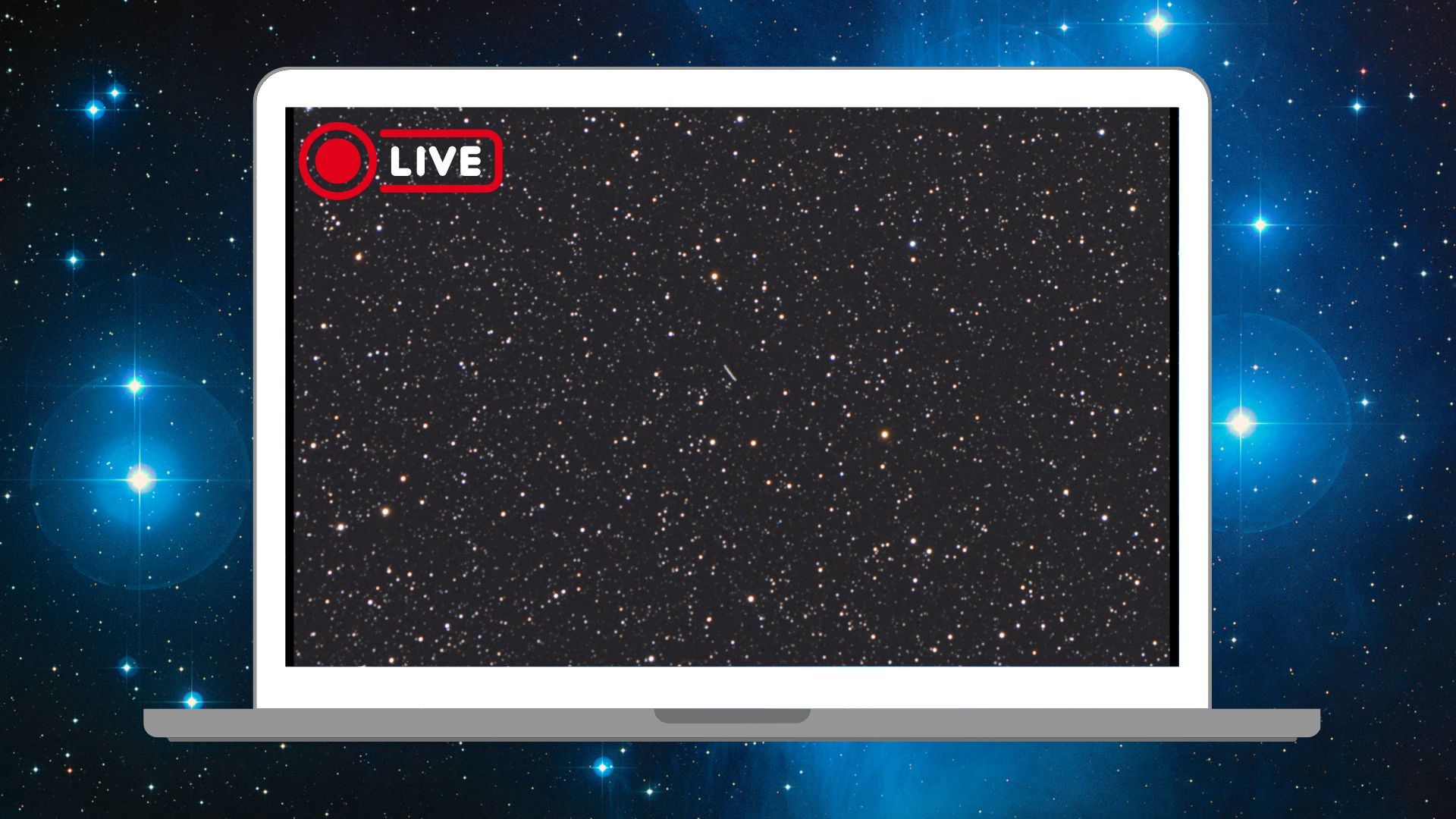
A giant asteroid roughly the size of a skyscraper will pass within seven lunar distances of Earth on June 27. Here's how to watch the rare flyby during two livestreams on June 26 and June 27.
The Virtual Telescope Project will host two YouTube livestreams starting at 7 p.m. EDT (2300 GMT) on June 26 and 27, before and after asteroid 1997 NC1's closest approach to Earth. Each event will feature live views of the asteroid captured by a suite of robotic telescopes in Manciano, Italy, weather permitting.
The Celestron NexStar 4SE is ideal for beginners wanting quality, reliable and quick views of the night sky. Check out our Celestron NexStar 4SE review for more.
"While this encounter is absolutely no cause for concern, it will be a very important and interesting opportunity," Virtual Telescope Project founder Gianluca Masi said in a press release sent to Space.com. "An asteroid of this size comes this close roughly once every ten years, becoming bright enough to be easily visible through small telescopes while it crosses the starry sky."
The asteroid designated 152637 1997 NC1 will make its closest approach to Earth at 7:16 a.m. EDT (1116 GMT) on June 27, when it will pass 1,594,339 miles (2,565,839 kilometers) from our planet, whipping by at 19,879 mph (31,992 km/h), according to NASA.
With an estimated diameter of 1,443 feet (440 meters), 1997 NC1's size and potential to pass close to Earth during future orbits have led to it being designated as a potentially hazardous asteroid by NASA. However, it will pose zero risk to our planet, or the moon during this week's flyby.
A pair of 10x50 binoculars or a small 4-inch telescope should be enough to reveal the asteroid as a point of light shifting through the stars of the constellation Ophiuchus on the night of the close approach, according to Masi.
1997 NC1 will reach a peak brightness, or magnitude of +10 at 8 p.m. EDT on June 27 (0000 GMT on June 28), marking an ideal time to observe the wandering asteroid. Magnitude is the scale used by astronomers to measure the apparent brightness of an object in the night sky. The lower the number, the brighter the object!
The streams will occur shortly before World Asteroid Day — an annual United Nations-backed event held on June 30 to raise awareness of the threat posed by potential asteroid strikes. The date was chosen to coincide with the anniversary of the Tunguska impact of 1908, when an asteroid exploded over Siberia, flattening millions of trees in an 830 square mile (2,148 sq km) area.
Please logout and then login again, you will then be prompted to enter your display name.
Anthony Wood joined Space.com in April 2025 after contributing articles to outlets including IGN, New Atlas and Gizmodo. He has a passion for the night sky, science, Hideo Kojima, and human space exploration, and can’t wait for the day when astronauts once again set foot on the moon.