
Water quality, quantity a concern as America's drought intensifies
It’s almost magic. You twist the faucet handle and clear, clean water flows right from the tap. A necessity of modern life, running water is nonetheless easy to take for granted. Increasingly, many people in the United States face water scarcity and water quality issues, problems that are be getting much worse.
The U.S. Geological Survey ‘s National Water Availability Assessment estimates that “nearly 30 million people live in areas where available surface-water supplies are limited relative to water use.” The calculation warns that approximately 8 percent of the country is vulnerable and could face water shortages in the future.
Dr. Edward Stets, a researcher at the U.S. Geological Survey worked on the National Water Availability Assessment. In a one-on-one interview with Newsweek, he explained that groundwater depletion, drawing more from wells than can be replenished by nature, is a major reason for potential water shortages. Perhaps most famously, this has been an issue with the High Plains Aquifer, which spans about 174,000 square miles across eight states: South Dakota, Nebraska, Wyoming, Colorado, Kansas, Oklahoma, New Mexico and Texas.
Stets explained that despite the frequent references, the Ogallala Aquifer is a formation within the High Plains aquifer, not another name for the High Plains aquifer.
Intensive withdrawals from the High Plains Aquifer started back in the 1950s as technological innovations allowed water to be pumped from the reserve, said Stets. In the decades since, declines in the water level have been measurable in many – but not all – parts of this water-bearing underground formation.
Compounding declines in the High Plains Aquifer, “There is also an ongoing mega drought in the Western United States,” said Stets. “This year, in particular, has been very dry in the West.” Snow accumulation in mountainous areas is “very low, and they’re looking at probably … low water availability this summer in many areas in the West,” he added.
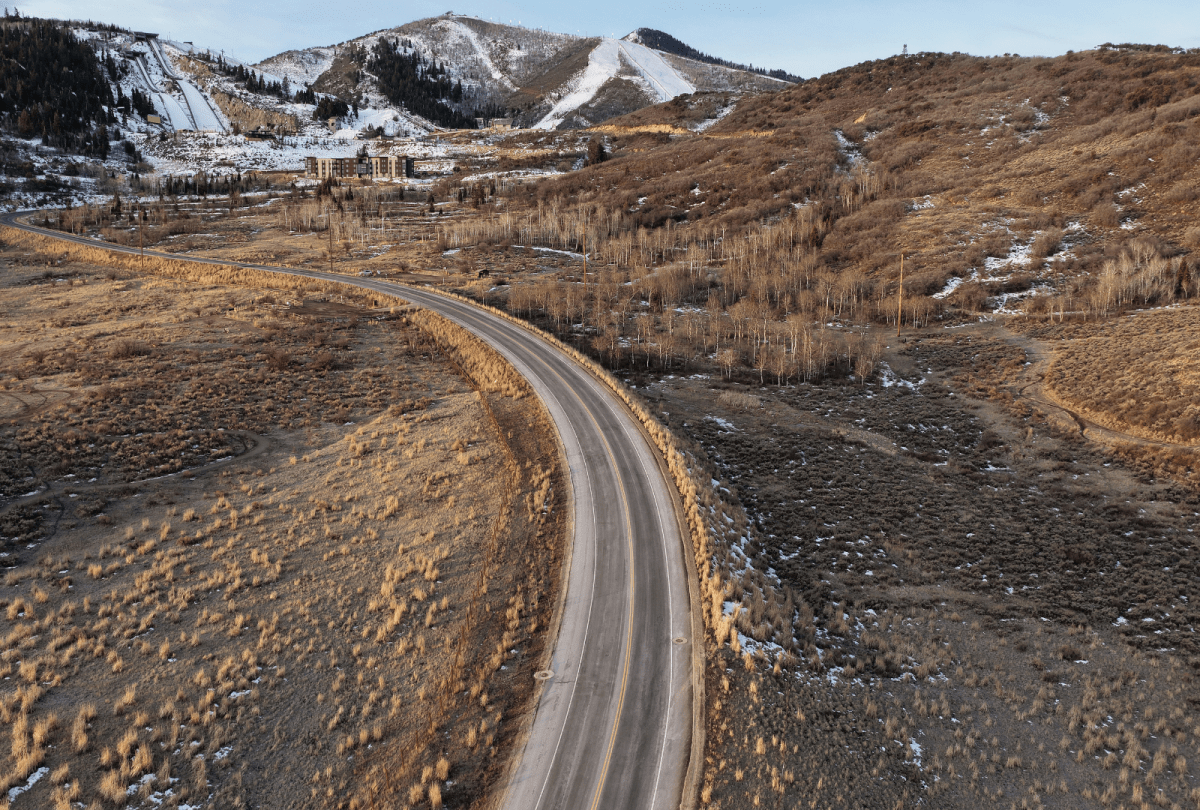
Much of the West saw snowfall totals for the year measured at their lowest in 20 years. Washington, Oregon, Colorado, Utah, Arizona and New Mexico were particularly hard hit. Alta Ski Area, just southeast of Salt Lake City, in Utah, receives an average of 543 inches of snowfall each winter. "In the past several winters, we've seen a dramatic vacillation between snowfall totals. We've witnessed the largest snowfall total ever recorded at Alta, followed by the lowest, just three winters later," a spokesperson for the resort told Newsweek.
Since the record high amount of snowfall during the 2022-2023 ski season (903 inches), Alta has received a waning amount each year, with just 321.5 inches falling during the 2025-2026 season, the lowest amount of snowfall in 45 years.
Low snowfall amounts don't just affect skiers--they affect the local economy. "A number of Utah resorts were forced to cease operations somewhat earlier than is normal in 2026 due to the anomalous winter. In conjunction with a lack of snowfall, warming temperatures have the potential to reduce snowmaking capacity. November 2025 was unseasonably warm in Utah, which negatively impacted every resort attempting to utilize their snowmaking infrastructure. There were very few nights in November of 2025 in which snowmaking was feasible due to the warm temperatures. As such, we were all forced to wait until natural snowfall arrived in early December and temperatures finally dropped low enough for efficiency in snowmaking," the Alta representative said.
They continued: "At this point in time, patches of snow remain on the mountain, but the melt-out is occurring much earlier than normal and the run-off is subsiding. This is the case across most of the Mountain West."
The High Plains region of the Midwest is also showing elevated water stress, particularly Northern Texas, said Stets. According to the U.S. Drought Monitor, more than 60% of the country is facing some level of drought.
Unfortunately, water availability is not the only issue; quality is a big concern, too. “In surface water,” explained Stets, “probably the most widespread issues are nutrient concentrations. And those can affect human health and certainly ecosystem health.” So-called anthropogenic pollution, or manmade contamination includes things like fertilizer and pesticide runoff, livestock manure or industrial waste products.
Compared to anthropogenic pollution, geogenic pollution occurs naturally. “This is metals, things like arsenic and lithium and sodium concentrations may be too high in groundwater,” explained Stets. “That’s actually the more common problem in groundwater,” he added, though manmade contamination is an issue, too.
Despite these problems “overall, the U.S. has been blessed with a vast amount of freshwater resources,” said Stets, though they are not evenly distributed. The Great Lakes ecoregion holds about 90 percent of the freshwater in the U.S. national forests and grasslands to hold around 20 percent of the country's fresh water according to the National Oceanic and Atmospheric Administration.
How we manage declining freshwater reserves in the coming years is a major concern without a solution. “It’s hard to say what exactly we can do,” said Stets. “Certainly, we’ve dealt with being able to thrive in places that don't have a lot of water,” he added, "There are examples of this all over the world, but changes will have to be made if water supplies continue to decline.”