
What does the Defence Investment Plan means for the south of England?
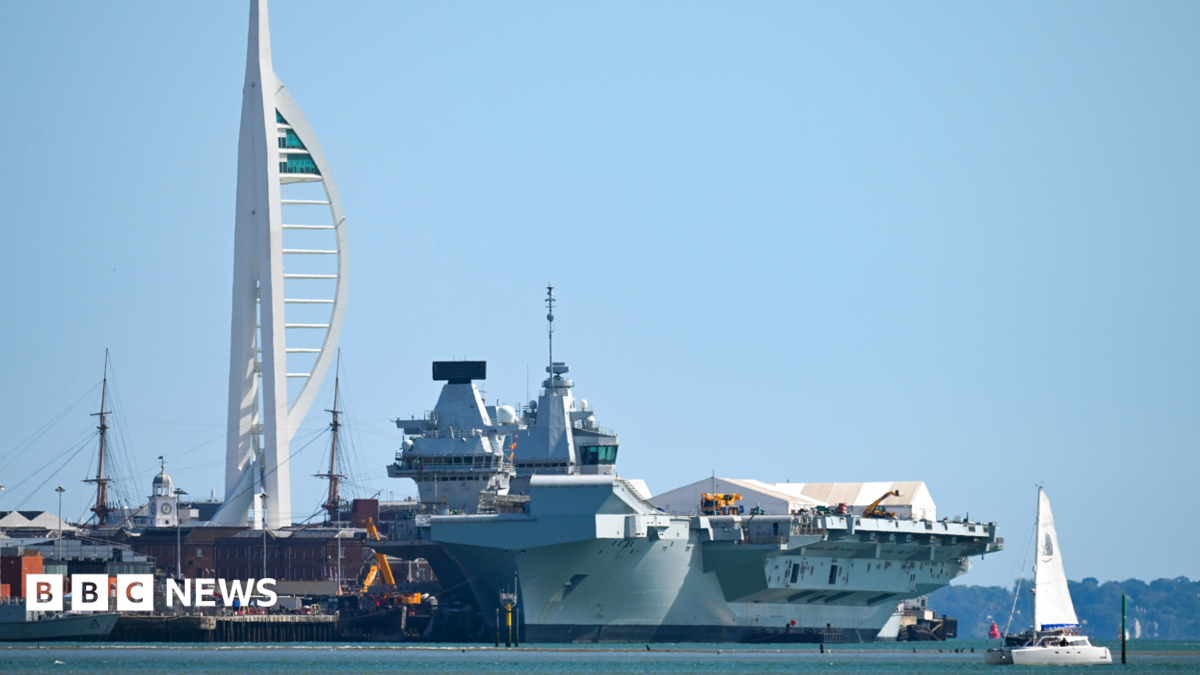
Military forces and defence industries in the south of England are set to undergo what the prime minister described as a "generational change" after publication of the long-delayed Defence Investment Plan (DIP).
The DIP includes £5bn to increase the armed forces' use of drones and autonomous weapons, with a "hybrid navy" making use of uncrewed vessels.
Announcing the plan at a Berkshire drone factory, Sir Keir Starmer said it would keep Britain "safe and secure long into the future", while critics suggested it fell short of what was needed.
Naval expert Dr Matthew Heaslip, of the University of Portsmouth, said the increase in the use of drones and uncrewed vessels was "perhaps the next big evolution in naval technology".
Speaking at drone manufacturers Malloy Aeronautics in Maidenhead, Berkshire, the prime minister said the new emphasis on drone and autonomous systems was building on the lessons learned from Ukraine's war against Russia.
He outlined plans for a "hybrid navy," which he said would mean that when British frigates move to intercept a threat to British interests, like a Russian ship, "they will do so with outriders, uncrewed ships above and below the surface".
Plans to replace the fleet of Portsmouth-based Type 45 destroyers have been scrapped.
Instead, investment will now go towards six new Common Combat Vessels, which the MoD said would be capable of "coordinating uncrewed systems in the air, on the surface and under the sea to deliver more resilient air defence".
Dr Heaslip, senior lecturer in naval history, said a mix of crewed and uncrewed vessels "does seem to be the direction of travel of things across the world".
He said the DIP would likely mean "a variety of forms of investment" in Portsmouth's naval base.
"Some of this is conventional and so there is already a lot of money going into improving the facilities in Portsmouth so they can repair ships quicker. You can physically see that when you look at the dockyard.
"But with the introduction of new technologies, there'll be more support on shore - because if it's an uncrewed vessel it'll only be maintained when it goes into the dockyard.
"That may well yield some very good, well-paid, high-skilled jobs for the local community," he added.
However he said the speed of the investment "does seem to be a little on the modest side".
"It doesn't reflect the reality of a very dangerous world we live in," he added.
Starmer also announced investment in "renewing" the UK's nuclear deterrent would include spending on new Dreadnought submarines, a new sovereign warhead and 12 F35-A jets capable of carrying nuclear weapons.
The new Dreadnought submarines will see four boats replace the current Vanguard class from the 2030s, while Starmer announced plans to buy nuclear-capable jets at last year's Nato summit in The Hague.
It will see upgrade work continuing at Atomic Weapons Establishment (AWE) sites in Aldermaston and Burghfield in Berkshire.
Some of the money for the nuclear deterrent will also form part of a decade-long £26bn overhaul of naval bases, including Portsmouth, dubbed "Project Royal Oak".
Speaking before the prime minister's speech, former Bournemouth East MP and defence minister in the Conservative government Tobias Ellwood said the DIP "falls seriously short" for being prepared for potential conflict.
"When you look beneath the surface, we are cutting our army and air force capability and our surface fleet.
"We are doing things on the cheap and sliding down the Nato spending list. This is almost farcical from our traditional role of being a leader in Europe.
"It will be watched very carefully by our adversaries who will no doubt take advantage of the fact there are massive gaps in our capability to defend ourselves."
The prime minister said the government's plans equated to the "highest sustained increase" since the Cold War.
Overall, defence expenditure is expected to increase to £80bn a year by 2029. Earlier this month, the Treasury and No 10 agreed a £13.5bn funding increase, well short of the £28bn the MoD wanted.