
What happens if rebel Catholics defy Pope Leo
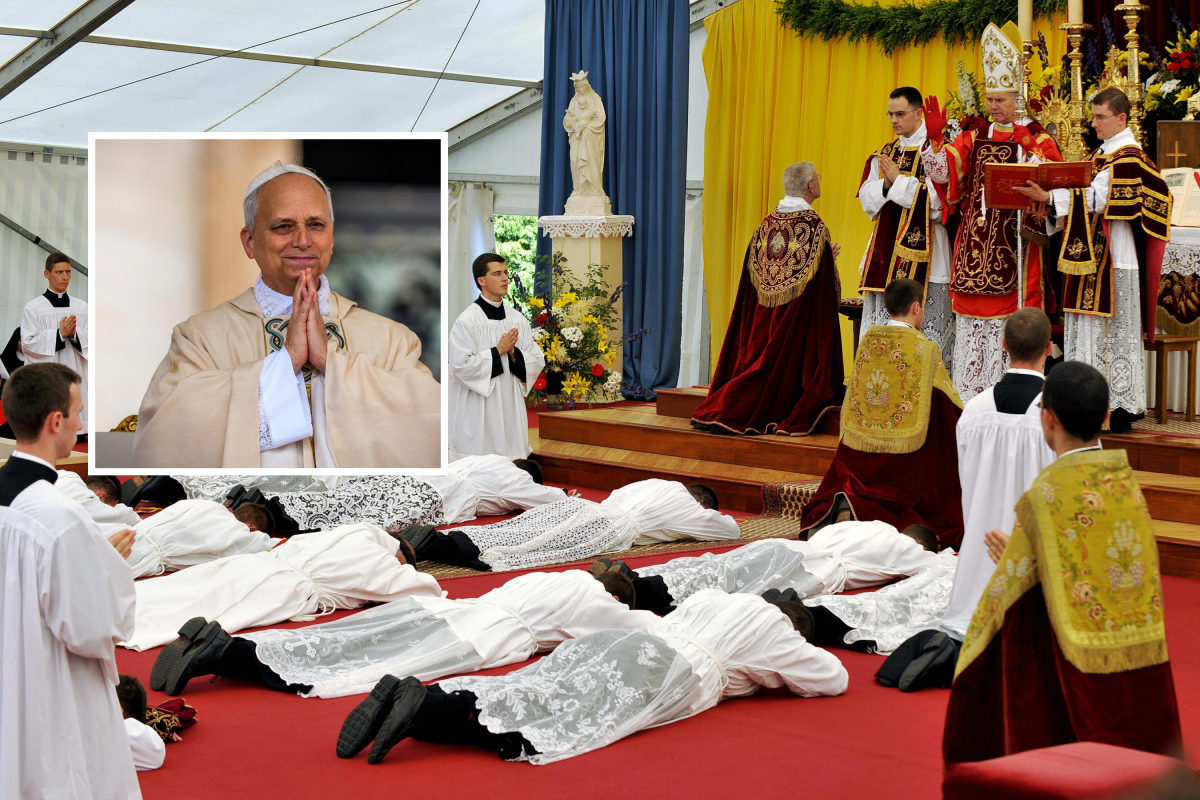
A traditionalist rebel Catholic group is days away from triggering one of the most serious penalties in the Catholic Church: excommunication. The Society of St. Pius X (SSPX) is planning to consecrate four bishops in defiance of Pope Leo XIV, raising the prospect of the biggest rupture between Rome and the group in decades.
The SSPX, a breakaway ultraconservative priestly fraternity that has spent decades at odds with the Vatican over theology, announced in May that it plans to consecrate four priests as bishops on July 1.
However, in the Catholic Church, bishops cannot be consecrated without the pope's approval. Bishops are responsible for leading the church and maintaining communion with Rome, making unauthorized consecrations one of the most serious breaches of church authority.
The Vatican's head of discipline, Cardinal Víctor Manuel Fernández, warned the SSPX last month that going ahead with its plans would constitute "a schismatic act," which would entail "excommunication established by the law of the church."
The warning has not deterred the SSPX, which went on to announce the names of the four priests it plans to make bishops:
SSPX Superior General Davide Pagliarani said in a letter to Leo that while members "have no other desire than that of living and being confirmed in the Roman Catholic Faith," they would "rather die than renounce" their traditionalist principles.
On Friday, the SSPX revealed the episcopal coats of arms of the four "future bishops" it plans to consecrate, in the most recent sign yet that it intends to proceed despite Vatican warnings.
Leo himself spoke out about the feud for the first time earlier this month, telling reporters that the SSPX was making its own decision to be excommunicated. "If they make that choice, I am sorry, but we must move forward," he said.
The SSPX declined to comment further. Newsweek has contacted the Vatican for comment via email.
Besides the breaking of canon law, not excommunicating the SSPX is an "ever-losing PR battle," Catholic theologian Grant Kaplan of Saint Louis University, told Newsweek, adding, "That makes the Vatican look quite bad."
He argued that ordinary Catholics who adhere to Rome's authority would wonder why the SSPX is seemingly able to persist in what they see as open rebellion against the Vatican.
The SSPX believes the Holy See has been out of step with what the church should be since it introduced reforms in the 1960s, after the Second Vatican Council, carrying out more than 50 years of modernist "errors that are destroying Catholic faith and morals."
Pagliarani has also argued that the consecrations are necessary for practical reasons. As the SSPX is growing, it needs more than its two existing bishops, both of whom are approaching their 70s, for the group to continue.
Excommunication is the Catholic Church's most severe ecclesiastical penalty, but it is intended to encourage repentance rather than permanently expel someone from the faith. Described as "medicinal" in canon law, it is designed to bring someone back into communion with the church.
The "church really only just declares excommunication," Kaplan said. "It's never pushing people out. It's just simply affirming that you've pushed yourself out."
Historically, excommunication carried significant social consequences because communities were smaller and everyone knew who had been cut off from the church, Kaplan said.
Today, it primarily means someone is barred from receiving the sacraments—such as Holy Communion, confession and marriage—until they repent.
Choosing to receive the sacraments, which Catholics believe are the "means of salvation," despite being excommunicated would be "a further condemnation upon yourself" and "extremely frowned upon," Kaplan said.
For many committed SSPX members, however, the practical impact may be limited as the fraternity is expected to continue celebrating Mass and administering the sacraments despite the excommunications.
The split may be more significant for what Kaplan described as "moderate SSPX members"—those who believed the fraternity remained within the bounds of the Catholic Church despite its irregular status
"I imagine most of them will probably dig their heels in, but I imagine some of them will think, The game is up, and join a traditional Catholic parish," Kaplan said.
While the Vatican has not said exactly who would be excommunicated if the Society of St. Pius X proceeds with the July 1 consecrations, church law provides a clear guide.
Under Canon 1383 of the Code of Canon Law, both the bishop who consecrates another bishop without a papal mandate and the person receiving the consecration incur automatic, or latae sententiae, excommunication.
The Vatican applied that principle in 1988 after the SSPX's founder, Archbishop Marcel Lefebvre, consecrated four bishops without the approval of Pope John Paul II. In a decree issued the following day, the Congregation for Bishops declared that Lefebvre, the four newly consecrated bishops and the co-consecrating bishop, Antônio de Castro Mayer, had all incurred automatic excommunication.
Notably, the decree did not excommunicate ordinary SSPX priests or lay Catholics who attended SSPX chapels. Instead, it warned the faithful not to support what it described as a schismatic act.
If the July 1 ceremony goes ahead as planned, this means the four priests named for consecration would be excommunicated. The society has not publicly identified who will perform the consecrations.
If the SSPX goes ahead with its consecrations and Leo follows through on his warnings, Rome will likely publish a letter signed by the pope and Vatican secretaries and "communicated in the most formal way that they could possibly communicate anything," Kaplan said.
"It has been a kind of torturous path for the Vatican because they don't want to excommunicate them," he added.
The Vatican has spent decades trying to reconcile with the SSPX, most notably in 2009, when Pope Benedict XVI lifted the excommunications of the surviving bishops consecrated in 1988.
"I think Francis did not have the patience for them and now Leo is sort of continuing Francis' line," Kaplan said.
Meanwhile, the SSPX believes it is "holding down the fort until the Catholic Church disentangles itself from all these bad modern ideas," Kaplan said.
Leo said earlier in June: "Certainly, division among Christians is always a painful point, but they refuse to accept certain fundamental elements of the Church, starting with various points of the Second Vatican Council. If they make that choice, I am sorry, but we must move forward."
Contact Newsweek editors on this story: Tobias Meyjes and Shakeema Edwards.