
What other US reflecting pools do that Lincoln Memorial doesn’t
The algae bloom that spread across the Lincoln Memorial Reflecting Pool after President Donald Trump’s renovation has turned one of Washington’s most photographed landmarks into a case study in how difficult it is to keep monumental water features clear.
The pool, which sits between the Lincoln Memorial and the Washington Monument, has faced renewed scrutiny since its multimillion-dollar resurfacing was completed at the start of June.
Within days of being refilled, the water appeared green, and crews were seen cleaning algae from the pool. Just a few days later, the newly finished “American flag blue” coating began to peel, adding to ongoing issues.
But managers of other reflecting pools around the country suggest the challenge is also intensely practical: clear water is not a one-time result of construction, but something maintained daily through constant intervention.
Newsweek contacted managers of reflecting pools across the U.S., who consistently pointed to round-the-clock upkeep rather than design or construction as the key to keeping water clear.
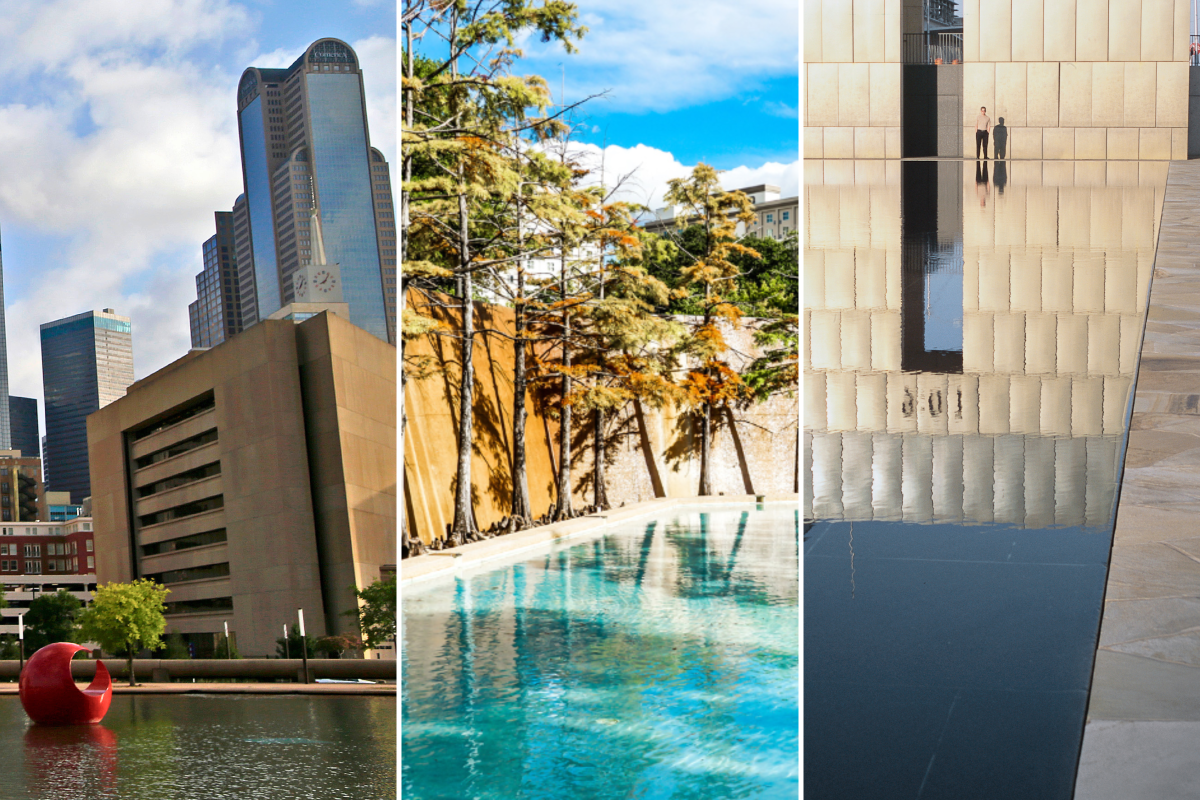
The Oklahoma City National Memorial and Museum manages the reflecting pool at the Outdoor Symbolic Memorial that was opened in 2000 to honor the 168 lives that were lost on April 19, 1995 at the Alfred P. Murrah Federal Building.
A spokesperson for the Oklahoma City National Memorial Trust told Newsweek: “All outdoor water features are unique, but one thing they have in common is that they have complex needs and require consistent effort to maintain their appearance.”
Meanwhile, at Dallas City Hall Plaza, Facility Services said an assigned pool technician reports to the City Hall fountain for six hours a day, seven days a week, to test and maintain free chlorine, combined chlorine, alkalinity, pH, calcium hardness, cyanuric acid and phosphate levels. The city said phosphates should be kept at zero because they contribute to algae growth, and added that the fountain is brushed daily, which it described as “very important.”
Dallas officials said the filtration system operates 24 hours a day and uses high-rate sand filters with capacity for 500,000 gallons. Chlorine and muriatic acid are fed automatically through a control system based on probe readings, while other chemicals are adjusted manually as needed.
Together, that level of staffing, monitoring and continuous filtration highlights the intensity of maintenance required to keep even relatively contained reflecting pools clear.
The city also said environmental conditions make the work harder. “Heat, rainfall, unsheltered, and wildlife such as ducks are a major factor to maintaining water clarity and therefore it is important to maintain the water chemistry parameters in check,” the spokesperson in Dallas told Newsweek.
Fort Worth officials described a similar maintenance burden at the Fort Worth Water Gardens’ “Quiet” Reflecting Pool, which holds roughly 82,500 gallons of water and operates on a recirculating system moving about 550 gallons per minute to maintain water movement and support filtration.
That scale is far smaller than the Lincoln Memorial Reflecting Pool, underscoring how much harder it is to achieve the same level of control in Washington.
“Routine maintenance includes vacuuming, brushing, and filter cleaning twice a week, with additional touch-up cleaning performed prior to special events,” a spokesperson told Newsweek. “To manage algae growth, the system utilizes a chlorine generator that maintains chlorine levels between 1 and 3 parts per million. Other water chemistry parameters, including pH, alkalinity, calcium hardness, and stabilizer levels, are monitored regularly and adjusted manually as needed.”
During warmer months, additional cyanuric acid is sometimes added to reduce ultraviolet degradation of chlorine. Heavy rain can also dilute treatment levels and alter pH and alkalinity, requiring staff to test and rebalance the water after significant rain events.
Taken together, those responses point to a common formula: constant circulation, tightly controlled chemistry and frequent physical cleaning, adjusted quickly as weather and environmental conditions change.
Christopher Lowe, senior lecturer in marine biology at Swansea University, previously told Newsweek: “When nutrients, light and temperature are all high, algae can reproduce extremely quickly.”
The Lincoln Memorial Reflecting Pool is far larger than many local reflecting pools and has long had algae problems. Its latest renovation, ordered as part of Trump’s push to beautify Washington ahead of the country’s 250th anniversary celebrations, included resurfacing the basin with a blue coating and installing treatment technology.
Within days, however, the first problems emerged. By June 14, the water had turned green, and by June 18, the blue coating itself was peeling away from the pool floor.
In recent days, pictures appeared to show the pool looking "clear" again, but federal officials have said they are continuing to treat the water and carry out maintenance work. A June 24 court filing from National Park Service Deputy Director Frank Lands states that officials plan to begin draining the reflecting pool after Independence Day to carry out repairs and assess damage to its lining.
The experiences of other U.S. reflecting pools suggest that no single renovation is likely to prevent algae without sustained, labor-intensive upkeep.
Instead, their responses suggest the central challenge is whether that level of continuous maintenance—often involving daily monitoring, 24-hour filtration and rapid chemical adjustments—can realistically be applied at the Lincoln Memorial Reflecting Pool’s scale.
A Department of the Interior spokesperson told Newsweek: "Unlike under Obama and Biden, the National Park Service is actually maintaining the beautifully completed Reflecting Pool." They added that they are using “nanobubble ozone technology” alongside hydrogen peroxide, which they said is “actively killing algae, pathogens and contaminants” without harming wildlife.
The department also argued that algae issues have affected past renovations, framing the current problems as part of a longer-running challenge.
Contact Newsweek editors on this story: Rebecca Flood and Emma Lee-Sang.
Update 06/29/26 10:15 a.m. ET: This story was updated with comment from the Department of the Interior.