
What Scrapping the Nickel Could Mean for Future of Cash
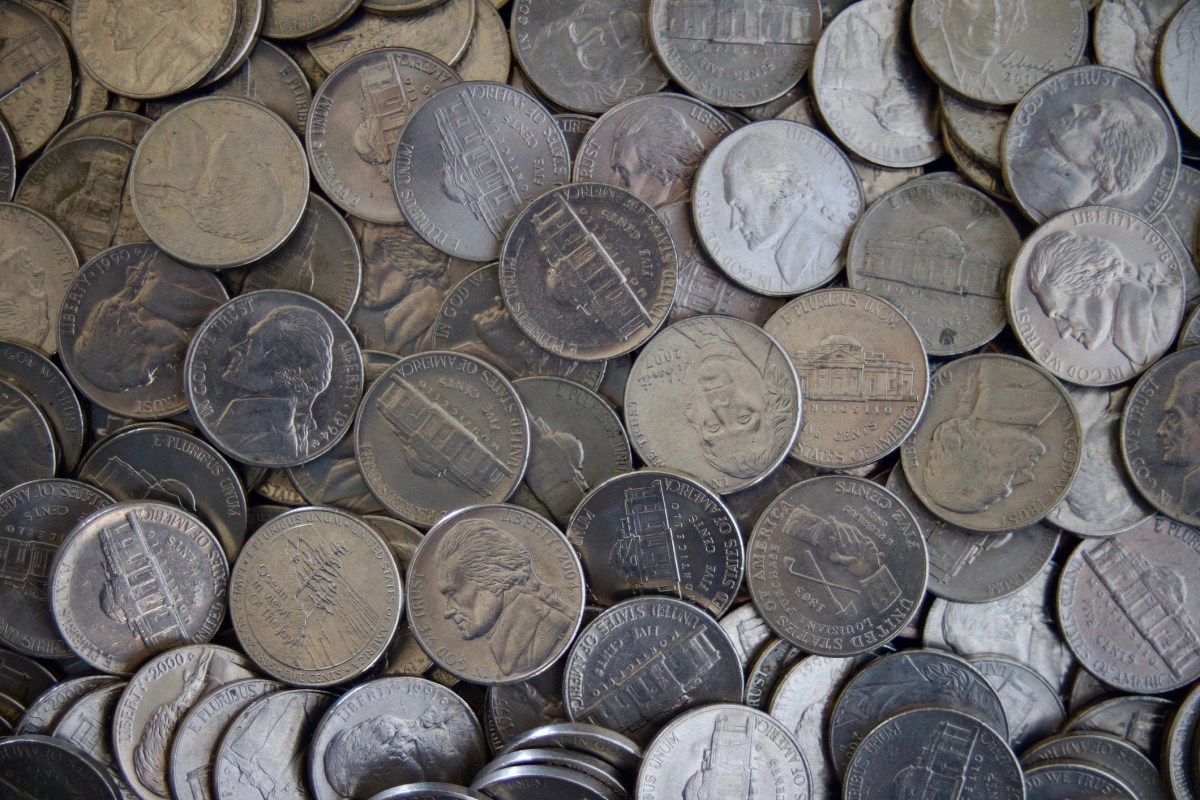
America's smallest coins are becoming increasingly expensive to keep in circulation, and with penny production now over, attention is turning to whether the nickel could be next.
The nickel has been part of American pocket change for 160 years. Introduced in 1866, the copper-and-nickel coin is worth five cents, or one-twentieth of a dollar, and has carried Thomas Jefferson on its face since 1938.
But now, the future of one of the country's longest-running coin denominations is coming under scrutiny as the U.S. rethinks the role of small change. The Mint stopped producing pennies for general circulation in November 2025, ending a 232-year run after rising production costs and changing consumer habits made the one-cent coin increasingly difficult to justify. Existing pennies remain in circulation, but the decision has left the nickel as the smallest denomination still being regularly produced.
Ending production of the five-cent coin would save the government money: the U.S. Mint spent 13.31 cents to produce and distribute each nickel in fiscal year 2025, meaning it cost more than two-and-a-half times its face value. But scrapping it would also represent a more consequential change to physical money, making the dime the smallest unit available for settling most cash transactions.
That could accelerate an emerging divide in the U.S. payments system. Card and electronic purchases can still be settled to the exact cent, while cash purchases would increasingly depend on rounding. The result would not necessarily be the end of cash, but a version of it that is less precise, and potentially less convenient, than its digital alternatives.
Cash use has declined dramatically in recent decades, but it's still far from disappearing. The Federal Reserve reported this month that cash accounted for 14 percent of consumer payments in 2025. Four in five consumers had used it during the previous 30 days and 90 percent said they intended to continue using cash.
The question comes as Washington is already wrestling with the future of cash. Congress is considering ways to make the nickel cheaper to produce rather than eliminate it, while separate bipartisan legislation seeks to protect consumers' ability to pay with cash at brick-and-mortar businesses.
The final circulating U.S. penny was struck in Philadelphia on November 12, 2025, ending a 232-year production run. Existing pennies remain in circulation and legal tender, but the federal government is no longer manufacturing new ones.
Its disappearance has already made the nickel more important. Without enough pennies to provide exact change, retailers can round cash totals to the nearest five cents. The bipartisan Common Cents Act, separate versions of which have both passed the House and the Senate, seeks to establish a federal framework for that process.
A Federal Reserve Bank of Richmond analysis estimated that eliminating the penny alone could impose around $6 million a year in net rounding costs on consumers. If the nickel were eliminated too and cash transactions were rounded to the nearest dime, the estimated cost could rise to nearly $56 million annually.
By comparison, producing 202 million nickels generated a $17.7 million loss for the Treasury in 2024.
“No business would deliberately manufacture a five-cent product for substantially more than five cents indefinitely, and government shouldn’t pretend that arithmetic doesn’t matter," Dmitri Maxim, a Certified Management Accountant and founder of Marpole.ai, told Newsweek. "But currency isn’t a normal product — it’s infrastructure. So the question isn’t simply whether the Mint loses money on each nickel. It’s whether the nickel provides enough value to the cash economy to justify that subsidy. With cash use declining, that argument becomes harder to make every year.”
The Federal Reserve recently reported that adults aged 55 and over made an average of 10 cash payments a month in 2025, compared with two among those aged 18 to 24. Rural consumers made nine, against six among people in urban and suburban areas. Households earning below $25,000 made seven cash payments a month, compared with five among households earning more than $150,000.
The Federal Deposit Insurance Corporation (FDIC) has separately found that 66.2 percent of unbanked households relied entirely on cash rather than prepaid cards or nonbank online payment services.
For those consumers, eliminating another denomination would mean experiencing rounding more often without necessarily having the same ability, or desire, to avoid it by switching payment methods.
“That’s the strongest argument for caution. The average impact might be tiny, but averages can hide who actually bears the cost. Someone making dozens of cash purchases every month is much more exposed to rounding than someone tapping a credit card for everything,” Maxim said.
“We also shouldn’t turn efficiency into exclusion. As America becomes increasingly cashless, policymakers have to remember that digital payments require access to banking, technology and financial infrastructure that isn’t equally distributed. The goal should be making the payment system cheaper without making participation in the economy more expensive for people who still depend on cash.”
The issue is increasingly showing up in Congress beyond coin production. The Payment Choice Act of 2025 would generally require brick-and-mortar retailers to accept cash for in-person transactions of $500 or less and prevent them from charging cash-paying customers a higher price. The bill remains in the House Financial Services Committee.
There is international precedent suggesting it could.
New Zealand stopped issuing its five-cent coin in July 2006 and demonetized it that November, leaving 10 cents as its smallest coin. The Reserve Bank of New Zealand had concluded that the denomination had become increasingly unnecessary and that the effect of removing it on prices would be negligible. It simultaneously redesigned other coins using cheaper materials.
Americans, however, appear resistant to taking that step. A YouGov survey conducted November 13 to 16, 2025, among 1,090 U.S. adults found just 24 percent supported eliminating both the penny and nickel so the dime became the smallest coin, while 58 percent opposed it. Among people aged 65 and older, opposition reached 70 percent. Opposition to removing both denominations had risen from 48 percent in February 2025.
For now, Washington appears more interested in making the nickel cheaper instead of eliminating it.
The Senate passed its version of the Common Cents Act by unanimous consent on August 7, after the House approved companion legislation in July. Because the chambers passed separate bill numbers, another House vote is still required before the measure can reach the desk of President Donald Trump.
The legislation would allow the five-cent coin to be made with an inner layer of zinc and an outer layer of nickel if testing shows that the change lowers production costs while minimizing disruption to vending machines and other equipment.
A separate proposal, introduced by Republican Representative David Schweikert of Arizona in February 2025, would go considerably further, suspending production of both pennies and nickels for 10 years and requiring the Government Accountability Office (GAO) to study the effect of rounding cash payments to the nearest dime. It has not advanced beyond its House referral.
“If you can redesign the nickel so it costs materially less to manufacture without disrupting vending machines, coin-counting equipment and the broader payments infrastructure, that’s the obvious intermediate step. Before eliminating something, first ask whether you can manufacture it more intelligently,” Maxim said.
The future of cash may therefore be determined less by whether Americans abandon it altogether than by how much infrastructure the country is willing to maintain for those who continue using it. The penny's end reduced the precision of cash to five-cent increments. Losing the nickel would increase that gap, and turn a debate about an expensive coin into a broader decision about what Americans should be able to expect when they choose to pay with physical money.
Contact Newsweek editors on this story: Ben Kelly and Cristina Diciu.