
What Went on at This Meeting of Powerful Central Bankers Won't Ease Your Mind About an AI Bubble
Central bankers are some of the most powerful people in the world, and we should all pay attention to what they’re saying and hearing. With that in mind, I have troubling news.
According to Reuters’ Wednesday report from the European Central Bank’s annual meeting in Sintra, Portugal, AI is being talked about like a thousand-mile-wide UFO hovering above Europe. According to Reuters, nearly every time anyone had a conversation, AI came up.
Quotes collected by Reuters from scared and/or excited central bankers—along with experts who attended the event—are, well, chilling when taken all together. I’ve extracted the choice artifacts so they can be more easily dug up and studied after the dust settles.
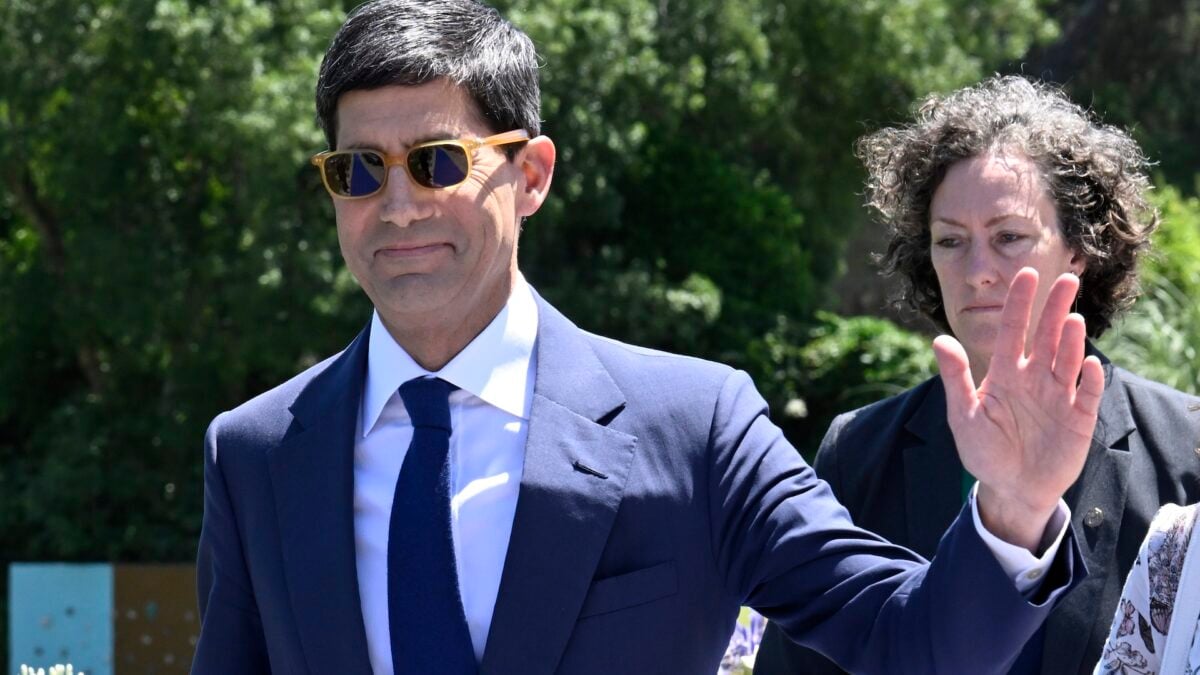
Crypto-loving U.S. Federal Reserve Chairman Kevin Warsh played the role of cheerleader, or perhaps bubble-inflator. “This is the biggest time of consequence to each of our economies, I think, in our lifetime,” Warsh said, and added, “Who knew when the internet was born that the internet was going to create a million and a half jobs as Uber drivers? We are in the first to second inning of this revolution.”
Richard Tiffany “Tiff” Macklem, Governor of the Bank of Canada also compared what’s happening now to the rise of the internet—but in a laudatory way. “The internet proved to be better than anybody imagined, created whole new businesses, but we still got the dotcom bubble,” Macklem said, adding a slight warning to his oddball assessment of one of the worst inventions in human history.
And Tobias Adrian, Financial Counsellor and Director of the Monetary and Capital Markets Department of the International Monetary Fund (IMF) fretted about what will happen when banks run agents that make customer-facing decisions. “How do supervisors assess those kind of agentic loan decisions? They are a little bit black box. There’s potentially a lack of explainability, and I think that is a key supervisory challenge.” Computer has been saying no for many years. Does the dawn of the agentic version of computer says no really seem like a major shift? (Honest answer: Maybe).
But according to Reuters, Itay Goldstein, Professor of Finance at the Wharton School of the University of Pennsylvania showed up with bubbles on his mind. If you think we’re in one now, just you wait, Goldstein explained.
“Something that is even more advanced and potentially more disturbing, is the ability of these algorithms to coordinate on a manipulative path of prices[…]. These algorithms indeed manage to achieve this kind of manipulation, creating bubbles leading to crashes, and this, I think, has more significant implications for financial stability.”
In this context, it’s worth reading what Canadian commentator and novelist Cory Doctorow wrote late last year about a bubble. Just after pointing out that LLMs create applications—and what he calls “plugins”—that would be seen as pretty normal in normal times, he made a similar point to Goldstein’s about an AI bubble as an economic force of nature, although he struck a slightly different tone.
The bubble itself, according to Doctorow, “wants expensive, ‘disruptive’ things: Big foundation models that lose billions of dollars every year. When the AI investment mania halts, most of those models are going to disappear, because it just won’t be economical to keep the data-centers running. As Stein’s Law has it: ‘Anything that can’t go on forever eventually stops.’”
A banker and economist named Torsten Slok of Apollo Global Management summed things up in even more eerie terms, according to Reuters, ”If AI overdelivers, it will impact financial stability. If AI underdelivers, it will impact financial stability.”
See you at the bottom of the crater, everyone.
Stay cool and enjoy the long, sunny days ahead with these gadgets to upgrade your life this summer and beyond.
Warsh's hawkish stance on Fed policy may have disappointed the crypto world, but he said Bitcoin was effectively gold for anyone under the age of 40.
AI hype has lost its luster, but a lot of AI people are super rich now.
No company is safe, Google CEO Sundar Pichai says.
He also thinks the AI bubble burst is going to make 2008 feel like "a golden age."