
Why House Republicans want to stop voters from choosing US senators
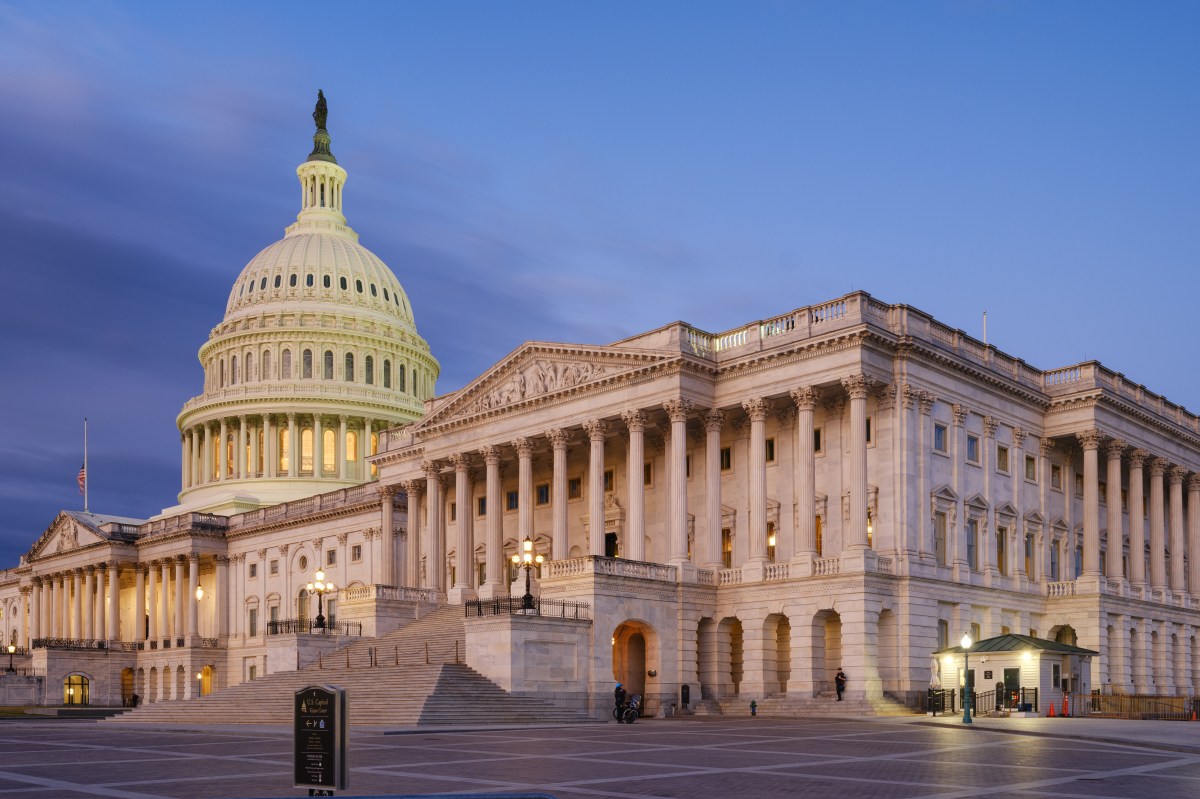
A group of Republican representatives is pushing to repeal the 17th Amendment, which gave voters the right to elect their own senators, amid a feud between House and Senate Republicans over the SAVE Act.
The push to repeal the 17th Amendment comes as House Republicans express frustration with the Senate over its inaction on the Safeguard American Voter Eligibility (SAVE) Act, a proposed bill that would upend federal elections. Repealing efforts face an uphill battle, as only a handful of legislators have signed onto the bill, but it still highlights the growing rift among Republicans.
The bill was introduced by Representative Keith Self, a Texas Republican and member of the conservative House Freedom Caucus, and so far has eight cosponsors as of Monday afternoon. It would end the direct election of senators and require that senators be selected by state legislatures.
Newsweek reached out to Self and the Senate Republican leadership via email for comment.
Self wrote in a statement that he believes the direct election of senators has “given us six-year politicians more focused on national ambitions and the institution of the U.S. Senate than on the states they serve.” Prior to the passage of the 17th Amendment in 1912, state legislatures selected senators for each state.
The Senate, he said, was designed to “protect state sovereignty and act as a check on federal overreach.”
“If senators are supposed to represent their states, then the states should choose them. Repealing the 17th Amendment will restore that constitutional balance and make the Senate more accountable to the people of Texas and every other state in the union,” he wrote.
While the House of Representatives was meant to represent the people directly, the Senate was intended to “represent the states as sovereign entities,” according to Self's statement. The 17th Amendment “disrupted” that balance and contributed to the expansion of federal power, the statement says.
Currently, Republicans control more state legislatures than Democrats.
Democrats control the state legislative process in 18 states, while Republicans control it in 28, according to the National Conference of State Legislatures. Three states are divided, while Nebraska’s legislature is nonpartisan. Republicans hold more seats than Democrats in Alaska, but there is a power-sharing agreement between Democrats and centrist Republicans.
The process of repealing an amendment is a difficult bar to clear. It would either have to go through Congress or a Constitutional Convention. If it goes through Congress, it would require support from two-thirds of both the House of Representatives and Senate; three-fourths of state legislatures would then have to repeal it.
Alternatively, two-thirds of state legislatures could call for a constitutional convention. If proposed, three-fourths of states would have to repeal the amendment.
Both paths would require not only support from the vast majority of Republicans but also from a significant number of Democratic lawmakers.
The proposal comes with the backdrop of House and Senate Republicans remaining at odds over the SAVE Act. The bill would require Americans to present documentary proof of citizenship when applying to register for federal elections in an attempt to prevent participation from undocumented immigrants.
It passed the House earlier this year, mostly on party lines, but has not garnered enough support to pass the Senate, where it would need 60 votes to clear the filibuster. Republicans have a 53-47 majority, which means they would need support from seven Democrats in addition to all Republicans. No Democrats have indicated support for the bill, and some Republicans are opposed.
President Donald Trump and some House conservatives have been sharply critical of the Senate over the SAVE Act. Self himself is among the most vocal critics of the Senate over the legislation.
“The Senate is openly defying the will of the American people by refusing to pass the SAVE America Act,” he wrote in a June 26 Facebook post.
Trump, meanwhile, abruptly canceled last week a planned signing of a bipartisan housing affordability bill, threatening to withhold his signature until lawmakers pass the SAVE Act.
Senate Republicans have said there is simply no way to pass the bill given the chamber's political reality.
Senator Thom Tillis, a North Carolina Republican, described its passage as an “impossible task” during an interview on CNN’s State of the Union, adding that the bill “simply can't be implemented in that time frame.”
“Why are we doing more things to undermine our confidence in elections, rather than getting the strong message out that will win for Republicans this year? Talk about the emergence and the rise of the Democrat Socialists of America, accept that the voting laws are going to be fundamentally what they are today, win by them,” he said.
The 17th Amendment states that the Senate “shall be composed of two Senators from each State, elected by the people thereof, for six years; and each Senator shall have one vote.”
“The electors in each State shall have the qualifications requisite for electors of the most numerous branch of the State legislatures,” it continues.
It also mandates that the executive of each state has authority to fill vacancies, provided that the “legislature of any State may empower the executive thereof to make temporary appointments until the people fill the vacancies by election as the legislature may direct.”
It was ratified on April 8, 1913, as part of Progressive Era reforms. Arguments centered around support for direct democracy, the challenges of hung state legislatures and concerns about corruption, according to the Constitution Center.
Only the 18th Amendment, which led to prohibition, has been repealed. That was in 1933.
There have been attempts to repeal the 17th Amendment in the past. In 2004, Senator Zell Miller, a Georgia Democrat, introduced a resolution that would repeal the amendment and require state legislatures to make appointments to the Senate. It failed to gain traction.
There were also calls to repeal the amendment in 2013 and 2014 following the Tea Party movement.
Senator Ted Cruz, a Texas Republican, voiced support for the proposal at an ALEC summit in 2013, according to The Dallas Morning News. He described the amendment as a “major step toward the explosion of federal power and the undermining of the authority of the states at the local level.”
Contact Newsweek editors on this story: Gabe Whisnant and Sam Wilson.