
Why people on the Isle of Man race each other in tin baths every year
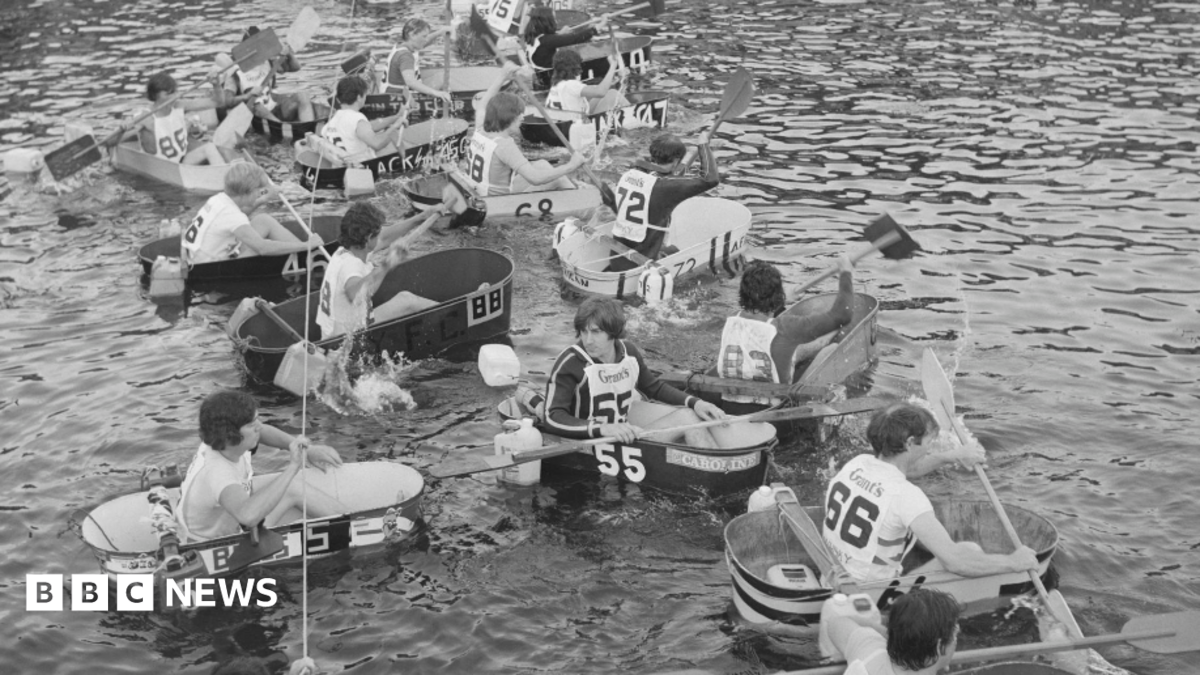
Started as a "filler" event between a carnival and an evening dance in a seaside town, the World Tin Bath Championships continue to attract a healthy entry – and large crowds to see just who will float, and who will sink.
The event, which takes place next Saturday in Castletown Harbour, has strict rules about type of baths used to create the crafts, many of which are elaborately decorated.
First organised by the Castletown Ale Drinkers Society in 1971, the event later expanded to become an event in its own right, adding a "flying contest" and more recently a snake race competition.
Former race organiser Boris Kitching, who has been involved in the event for about 35 of its 55 years, said: "It's a fun family day really. People come to turn up to see people sink and see how far man can fly."
Kitching said the popular event had survived several light-hearted "scandals" over the years, including an attempt to get two baths welded together through scrutineering, and the disqualification of a competitor who was helped back into his bath by the coastguard after sinking.
An independent judge was introduced in the 1980s to resolve any potential disputes, particularly in the best decorated bath class, he said.
"There's been a few rivalries over the years and there's still arguments that 'I was a better one, no you weren't'," he added.
Explaining the origin of the flying contest, which sees entrants launch themselves off the catwalk in the harbour, Kitching said: "It started as a rich gentleman who put up £10,000.
"I think it was for anybody could jump off the catwalk and fly around the harbour.
"We don't even know if the money's still there but nobody's actually managed to do it yet."
The organisation of the event, he said, had changed over the years, and more volunteers were being asked to come forward to help in future.
"There's health and safety, risk assessments, we've got to get road closures, permission to use the harbour, then we've got to close the roads and open the roads - and there's not that many of us," he said.
Kitching said although only about 10 or so of the entrants usually managed to avoid sinking in the harbour each year "the whole fun is the same thing".
Despite handing over the role of race organiser to another member of the team this year, Kitching admitted he would not be stepping away completely and would still be doing some "bits and bobs", adding it was "too much fun" not to be involved.
"The appeal really is we're all a good bunch of people. We like to laugh and we raise quite a lot of money," he said.
The event sees winners given the chance to nominate a local charity to receive a donation from the organisers as part of their prize.
Over its 55-year history, more than £300,000 has been handed out to local causes.