
Why some Europeans resist air conditioning, even amid deadly heat waves
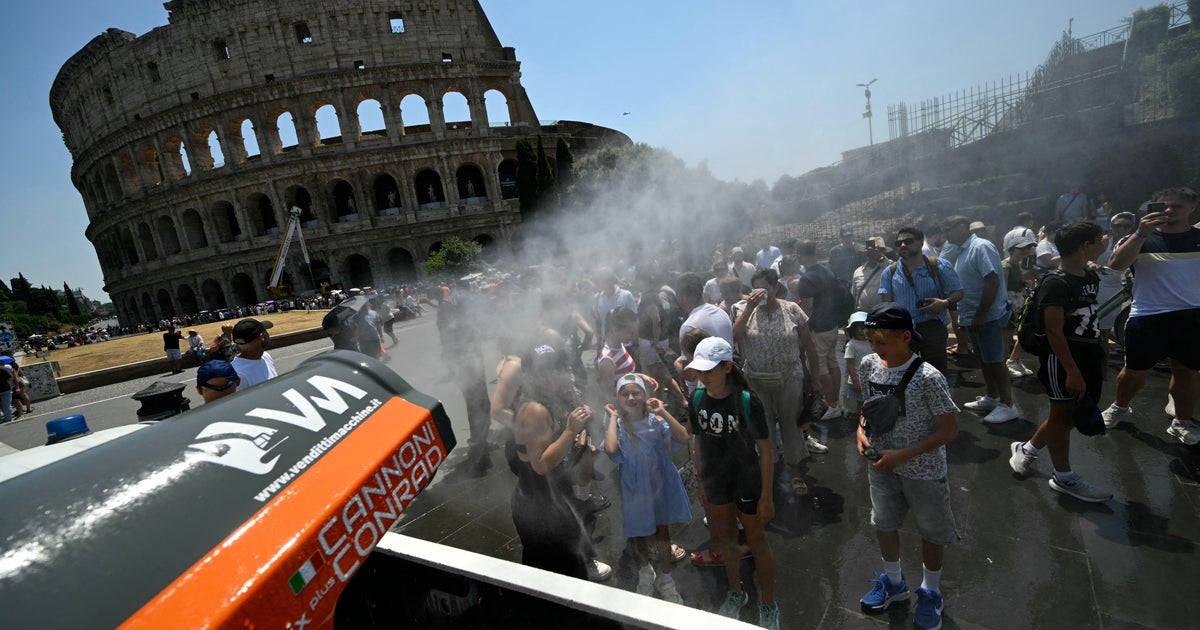
France's record heat last week has been linked to around 1,000 deaths of mostly elderly people. Heat danger is a problem being felt across Europe, which has the oldest population of any continent and is also the world's fastest-warming continent.
The continent also has more heat-related deaths per capita than anywhere else in the world, yet it has fewer hot days. According to World Health Organization Director-General Tedros Adhanom Ghebreyesus, there have been more than 1,300 heat-related excess deaths in Europe since June 21.
European officials are calling for change, but not the kind that may seem obvious — like air conditioning.
A 2007 study found that air conditioning can cut heat-related deaths by 75%, but only about 20% of Europeans have air conditioning in their homes. In the U.S., it's about 90%.
"My honest response is I don't think that should be the solution anywhere," Ine Vandecasteele, an urban adaptation expert with the European Environment Agency, told CBS News. "It is an immediate response, which can support essentially those who may be vulnerable in hospitals, or in very short term can help. But in the longer term, what happens is, installing more air conditioning actually emits more heat into our environment, so it will actually increase the speed of warming."
It's also more expensive. In Europe, energy prices are much higher than in the U.S. European governments have instead funded other ways to cool historic and densely populated cities, such as public cooling stations.
In Rome, wearable technology is distributed to monitor the elderly, who are by far the most at risk in the increasing heat. But Italy has also embraced air conditioning more than other European nations.
About 56% of all homes in Italy had air conditioning as of 2024, according to the National Institute of Statistics, and the country accounts for one-third of all electricity use on air conditioning in the European Union, according to EU data.
A recent survey in France found that one in six people said they would rather suffer for the sake of the environment. Vandecasteele told CBS News she doesn't find that surprising.
"We're not doing this for us," she said. "We're doing this for the future generations."
Frank Andrews contributed to this report.