
Why Texas is rejecting some H-1B driver's license renewals
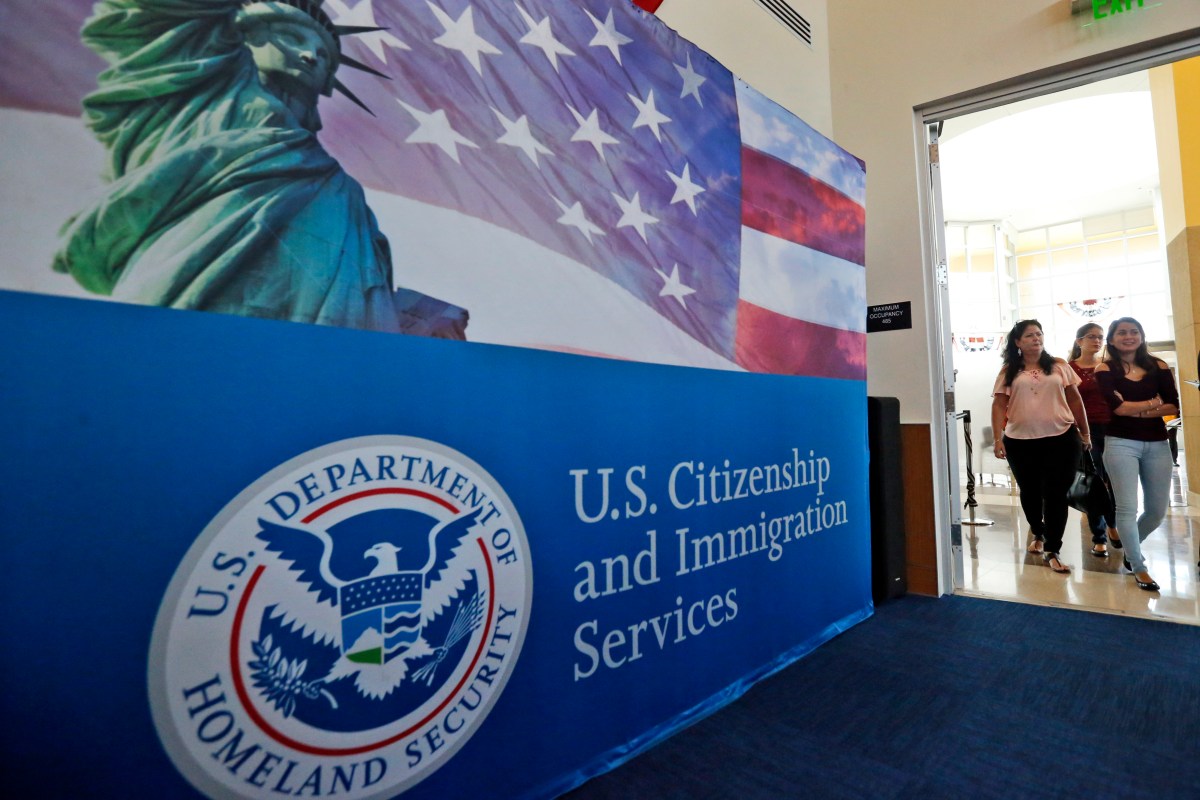
Some H-1B visa holders in Texas say they are being denied driver's license renewals because the visa stamps in their passports have expired, even though immigration attorneys say those workers may still be lawfully present in the United States.
The problem, attorneys say, appears to center on confusion over the difference between a visa stamp—the physical foil placed in a passport by a U.S. consulate—and a person's immigration status once they are inside the U.S. The distinction matters for thousands of foreign workers whose visas may have expired but whose authorized stay has been extended through U.S. Citizenship and Immigration Services (USCIS).
The H-1B visa program allows U.S. employers to hire foreign workers in specialized occupations, particularly in fields such as technology, engineering and health care.
Immigration attorney Gnanamookan Senthurjothi told Newsweek that his firm had fielded calls from affected clients in recent days, with some returning to Texas Department of Public Safety (DPS) offices to try to resolve the issue. He said the reports may reflect "informal guidance or inconsistent staff training" if similar denials were occurring across locations, but that it could also stem from individual officers misunderstanding immigration rules.
Newsweek has contacted DPS and the office of Governor Greg Abbott for comment via email.
Senthurjothi said workers with valid Form I‑797 approval notices and unexpired I‑94 records remain lawfully present, and that "a valid visa stamp is not required" to establish immigration status.
In a June 26 LinkedIn post, immigration attorney Emily Neumann described what she said was a recurring scenario facing foreign workers in Texas.
"A lawfully present worker walks into a Texas DPS office to renew a driver license and walks out denied," Neumann wrote. "The reason given is that the U.S. visa stamp in their passport has expired."
She argued that such decisions reflect a misunderstanding of U.S. immigration rules. "A visa stamp is not a status document. It is a travel document, used once to apply for admission at a port of entry," she wrote, adding that after admission, "it is the Form I-94, not the visa foil, that controls how long they may stay."
Several hard-line GOP-led states have introduced measures to limit the use of H‑1B visa workers in public-sector roles. In Texas, Abbott ordered state agencies and public universities to pause new H-1B petitions through May 31, 2027.
Nationally, the Trump administration has pursued a series of restrictions on the visa program, including a September 2025 presidential proclamation imposing a $100,000 fee on many new H-1B petitions filed for workers outside the United States, though a federal judge blocked the measure earlier this month.
The administration has also moved to replace the traditional random H-1B lottery with a wage-weighted selection system designed to prioritize higher-paid applicants.
USCIS said in May that properly submitted H-1B registrations for fiscal year 2027 fell to 211,600 from 343,981 the previous year, a decline of almost 39 percent, suggesting tougher rules and higher costs may already be reducing demand for the program.
Between fiscal years 2021 and 2026, Texas-based employers filed H-1B petitions through more than 16,000 petitioning employers, with roughly 260,937 approved beneficiaries and almost 267,949 total recipients, according to USCIS's H-1B Employer Data Hub.
Under U.S. immigration policy, a visa allows a foreign national to travel to a U.S. port of entry and request admission, but it does not determine how long they may remain in the country. That authority lies with U.S. Customs and Border Protection, and the period of authorized stay is recorded on the Form I-94, the official admission record.
Neumann said Texas rules appear to allow people to renew their licenses even if their visa stamp has expired, as long as they have a valid I-94 and other immigration documents showing lawful status.
DPS documentation similarly lists a foreign passport with a visa "valid or expired" and a valid I-94 among acceptable identification documents for applicants.
"When an applicant with a valid passport and a valid I-94 is turned away because a stamp has lapsed, the office is departing from Texas's own regulation," Neumann wrote, adding that she had asked DPS to confirm its policy in writing.
DPS guidance states that applicants must prove lawful presence and that staff must verify this information with the Department of Homeland Security before issuing a license. If that verification cannot be completed immediately, an additional review may be initiated.
That process typically relies on the federal SAVE system, which allows government agencies to confirm immigration status using records such as the I-94 or USCIS approval notices. However, immigration attorneys and applicants say delays or mismatches in the system can lead to denials or prolonged processing times.
Immigration attorney Jath Shao told Newsweek he suspected that some denials may be intentional or the result of frontline staff being tasked with applying complex immigration rules.
He said that while federal REAL ID standards allow applicants to demonstrate lawful presence using documents such as an approved Form I‑797, "your average frontline clerk now has to interpret immigration law," which can lead to inconsistent outcomes.
Shao added that even when applicants are ultimately able to renew their licenses, delays and repeated visits can impose a significant burden, particularly in car‑dependent parts of the United States. He said the resulting "red tape and inconvenience" may leave some foreign workers feeling unwelcome.
A Reddit user described their experience of trying to renew a Texas driver's license after changing from an F-1 STEM OPT—a work permit extension for international students who graduate in a science, technology, engineering or math field—to H-1B status without first obtaining an H-1B visa stamp. The user said DPS's system still showed their F-1 STEM OPT status despite an approved H-1B change of status, preventing the license from being extended. Newsweek could not independently verify the claims in the post.
The Redditor said they brought a passport, Form I-797 approval notice and the latest Form I-94 to DPS. They said an officer told them that their H-1B status was not visible in the system, so they requested SAVE verification. The user said they received a notice two to three weeks later confirming that verification had been completed, returned to DPS and had the license extension approved.
For affected workers, the stakes are immediate. A denial or delay can leave individuals who are legally present unable to drive to work or carry out daily activities while waiting for verification to be completed.
Attorneys say the issue ultimately comes down to which document agencies treat as controlling: the visa stamp, which governs entry, or the I-94 record, which governs lawful presence.
According to U.S. government guidance and Texas' own rules, the latter is the determining factor.
Contact Newsweek editors on this story: Ben Kelly and Shakeema Edwards.