
Why the Supreme Court refused to shield Trump in Carroll case
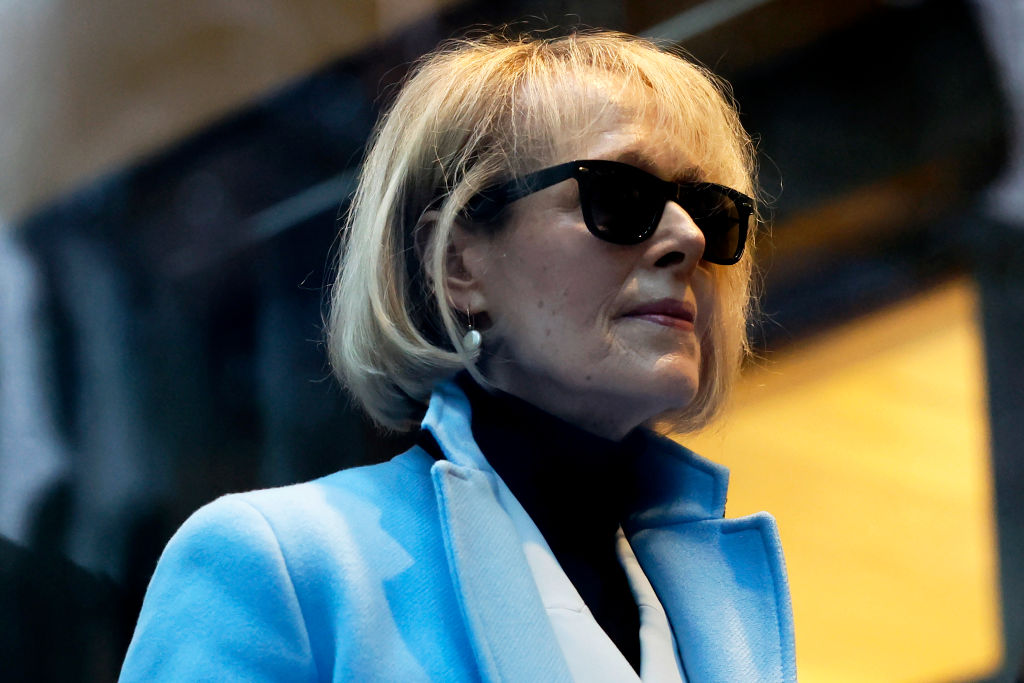
President Donald Trump unleashed a blistering response to the Supreme Court on Monday after it refused to intervene in his bid to overturn a jury’s finding that he sexually abused and defamed E. Jean Carroll, leaving intact a $5 million civil judgment.
The president accused the justices of declining to review a "Fake Case" and calling the ruling an "Injustice" driven by political "Weaponization" and "Lawfare." The brief, unexplained order arrives as the court issues some of its most consequential end‑of‑term decisions, many of which are central to Trump’s legal and political agenda. Meanwhile, Carroll posted on Substack shortly after the ruling, celebrating the outcome and describing the Supreme Court’s decision as a victory.
The move effectively ends Trump’s attempt to erase the first federal verdict against him as he continues to face mounting legal exposure. The decision means Carroll’s victory stands—and it signals that a second, far larger defamation award could soon follow the same path to the Supreme Court.
The Supreme Court justices issued no explanation and noted no dissents, a routine but consequential step that shuts the door on Trump’s argument that the trial was tainted by "highly inflammatory" evidence. In the underlying case, jurors heard testimony from two other women who accused Trump of sexual assault, as well as a portion of the Access Hollywood tape—evidence Trump’s lawyers said violated federal rules.
The jury concluded Trump sexually abused Carroll, under New York law.
The Second Circuit upheld the verdict, finding Trump "failed to show" the evidence deprived him of a fair trial, according to the appeals court’s December 2024 ruling.
The appeals court also described the evidence—including the Access Hollywood tape—as showing a “repeated, idiosyncratic pattern of conduct” consistent with Carroll’s allegations.
In a separate 2025 decision, the Second Circuit declined to throw out the $83.3 million defamation verdict Carroll won in her second lawsuit, rejecting Trump’s argument that she fabricated her claims to sell her book.
Newsweek reached out to a representative for Carroll via email for comment. She reacted to the Supreme Court’s decision on her Substack, writing “WE WON!” and calling the outcome “for every woman in the world.”
Her post framed the ruling as a broader victory for survivors, celebrating the justices’ refusal to revisit the jury’s findings and affirming that the verdict against Trump will stand.
Newsweek reached out to the White House for comment and was referred to Trump's post on Truth Social.
On Monday, Trump shared a post on his Truth Social account, writing: "Surprisingly, the Supreme Court declined to "review" a Fake Case brought against me by a woman I never met (Decades old celebrity photo line, standing with her husband, does not count!). I will continue the fight against this Weaponization and Lawfare Case against me, including the ridiculous claim of Defamation, with all of my power and strength."
The post continued, "This Case is really against the United States of America, and all it stands for, and should never be allowed to happen to another President, or Candidate to be! New York State created a Law, for an instant speck of time, going back many decades, in order to wrongfully "nab" me. It was tailormade, and this Injustice cannot be allowed to stand! Thank you for your attention to this matter."
Trump’s reference is to New York’s Adult Survivors Act, a temporary statute that lifted the civil statute of limitations for one year, allowing adults to sue over decades‑old sexual assault claims. Carroll filed her lawsuit during that window.
Trump has repeatedly denied Carroll’s allegations, calling them "a hoax," "a lie," and insisting she was "not my type." In depositions, he referred to her as a "nut job" and "whack job," and on social media, he labeled her claims "a complete con job."
His legal team argued the trial judge improperly allowed “decades‑old, unverified and unrelated allegations” into evidence. They also told the Supreme Court that Carroll waited more than 20 years to accuse Trump “to maximize political injury” and “profit for herself.”
Carroll is a journalist, author, and former Elle advice columnist whose "Ask E. Jean" column ran for more than two decades. Her career spans magazine writing, television, and books, including her 2019 memoir What Do We Need Men For?, in which she first publicly accused Trump of assault.
She has written for The Atlantic, Vanity Fair, Esquire, and other major outlets.
Carroll testified that Trump assaulted her in a dressing room at Bergdorf Goodman in the mid‑1990s. A federal jury in 2023 found Trump liable for sexual abuse and defamation, awarding her $5 million.
A second jury in 2024 found Trump liable again for defamation over comments he made while president, awarding her an additional $83.3 million. Both verdicts are under appeal, though Monday’s Supreme Court decision likely marks the end of Trump’s challenge to the first case.
Trump’s appeal of the $83.3 million verdict rests on a different legal argument: that he was acting within the scope of his presidential duties when he made the 2019 statements denying Carroll’s allegations, and is therefore entitled to presidential immunity. That question has not yet reached the Supreme Court.
In March 2026, the Second Circuit paused payment of the $83.3 million award pending the outcome of the appeal, provided that Trump posted a $100 million bond.
E. Jean Carroll reacted to the Supreme Court’s decision on her Substack, writing “WE WON!” and calling the outcome “for every woman in the world.”
Her post framed the ruling as a broader victory for survivors, celebrating the justices’ refusal to revisit the jury’s findings and affirming that the verdict against Trump will stand.
Initial reports in May said the Justice Department was examining whether E. Jean Carroll committed perjury in testimony related to the civil lawsuits she won against Trump. However, the U.S. Attorney's Office later said Carroll was not the target of a criminal investigation, and subsequent reporting indicated the inquiry was focused primarily on litigation-funding arrangements linked to a nonprofit associated with Reid Hoffman.
Carroll continues to write, publish, and speak publicly about her case. Her 2025 book Not My Type, chronicling the years following her first lawsuit, debuted at No. 2 on The New York Times bestseller list.
In a 2025 CNN interview, she said she planned to give away the money awarded to her: "The last thing I care about is money. The first thing I care about is people knowing the truth."
Contact Newsweek editors on this story: Gabe Whisnant and Sam Wilson.