
Why US bases in the Persian Gulf are doomed
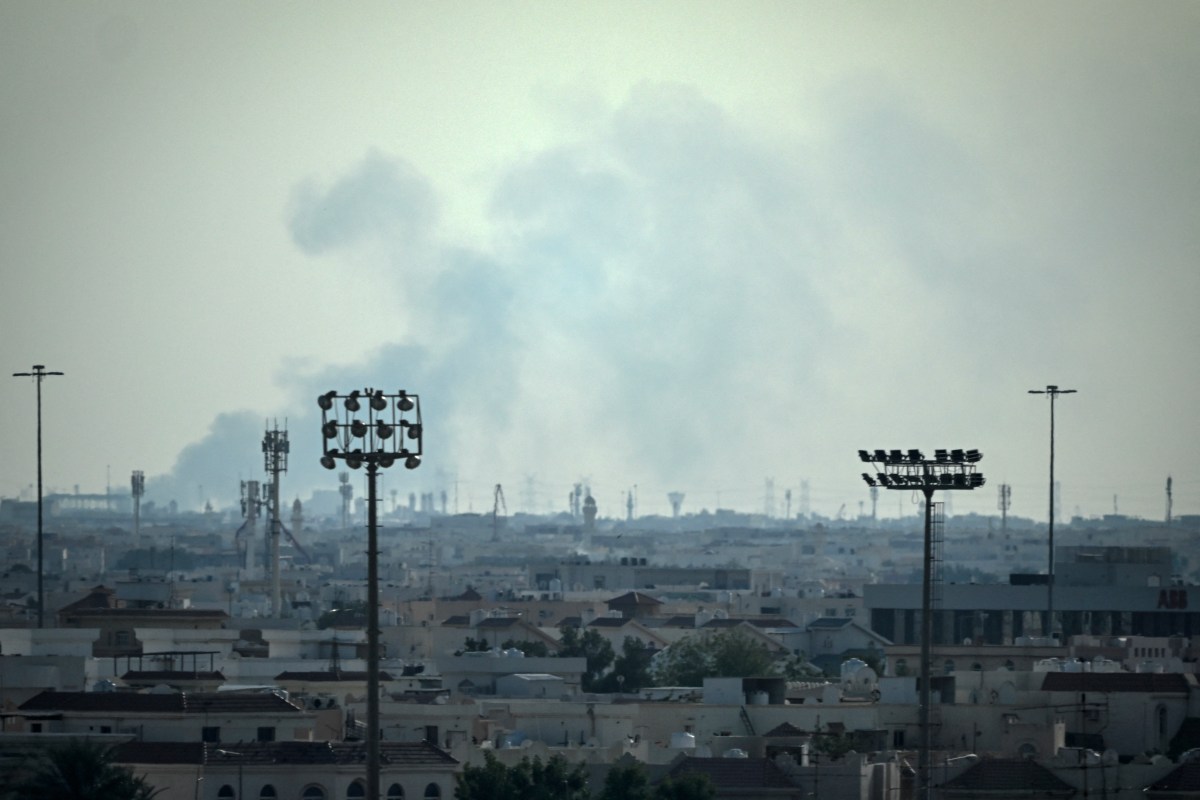
The extensive targeting of U.S. bases by Iran throughout the yet-unresolved conflict now in its fourth month is raising new doubts about the sustainability of maintaining large, fixed military installations near the Persian Gulf—and potentially elsewhere across the globe.
Among the leading voices calling for a substantial recalibration of U.S. force posture so close to Iran is a man who not long ago oversaw the sprawling base network in the region.
General Kenneth F. McKenzie, Jr., commander of U.S. Central Command (CENTCOM) from March 2019 to April 2022, said he has long pushed for change on this front, and that the confrontation with Iran has only reinforced his conviction that priorities, including the deployment of aircraft, weapons systems and other capabilities, should be moved further westward.
"What you want to do is you want to spread out that necklace of bases far to the west, where you make it harder for the Iranians to see you, you make it harder for the Iranians to range you," McKenzie said Monday during a virtual conference hosted by the Jewish Institute for National Security of America (JINSA) and attended by Newsweek.
"Although over time we should recognize Iranian missiles are going to increase in range," McKenzie, who is a distinguished senior fellow at JINSA, said, "but I'm solving a problem for today."
Responding to Newsweek's question regarding lessons learned from the Iran conflict thus far, he offered the example of Qatar's Al-Udeid Air Base, which serves as CENTCOM Forward Headquarters, as a "monument to old think" in the midst of a brave new era of modern hybrid warfare undermining the strategic value of static large-scale sites in the Middle East and beyond, to include the Asia-Pacific and Europe.
"We need to be able to move, we need to be able to deceive about where our locations are, and that's going to require not only significant electromagnetic emanation management, it's going to require an understanding of what's in space looking at us, and how do we deal with that," McKenzie said. "And that will require a very sophisticated understanding of not only military overhead non-air breathing systems, but also the plethora of commercial overhead imagery systems that are out there."
"We need to know and understand and master how we use that ability, that capability to help us and to hurt potential foes," he added. "Those lessons apply everywhere in any conflict anywhere."
When it comes to the Middle East, McKenzie recommended, first and foremost, Israel as a top candidate to consolidate some of the U.S. military's most valuable equipment given the country's robust air defense network. He also saw room to maintain some degree of presence in key Persian Gulf sites, with a focus primarily on shoring up anti-missile and drone defenses, hardening infrastructure and boosting cooperation with host nations.
Such a rethinking could bring the current strategy up to date. After all, he pointed out, the roots of U.S. basing in the Persian Gulf were initially devised as part of a Cold War-era effort to safeguard the oil-rich region from a feared clash with the Soviet Union, and later to serve the needs of post-9/11 "war on terror" counterinsurgency campaigns.
"What you've got really is an artifact of earlier posture decisions," McKenzie said. "No one in their right mind would ever put the CENTCOM Forward Headquarters 100 miles away from Iran, yet that's where it is, because when we put it in place many years ago, we were thinking Iraq, we were thinking Afghanistan, we were thinking other things, and not the growing threat from Iran."
"Anticipation is the heart of wisdom," he added. "Not a lot of wisdom there when we chose the location of the CENTCOM Forward Headquarters."
Reached for comment, a U.S. defense official told Newsweek, "we regularly monitor the regional security environment including any potential threats to our deployed troops and take every precaution to protect them."
"We do not discuss specific force protection for operational security reasons," the defense official said.
While the full extent of U.S. force posture abroad is classified, it is widely recognized that the U.S. maintains the most foreign bases of any nation in the world and likely more than every other country combined, with estimates exceeding 750 individual sites.
The most exhaustive public accounting comes from David Vine, an author and anthropologist who has written extensively on the U.S. base hegemony. He estimated around 89 U.S. military installations in the greater Middle East region.
Among them, Al-Udeid Air Base in Qatar, Naval Support Activity Bahrain, Camp Arifjan in Kuwait, Al-Dhafra Air Base in the United Arab Emirates, and Prince Sultan Air Base in Saudi Arabia are among the most crucial hubs.
But despite far superior U.S. firepower, each of these sites and many more have been directly targeted by Iranian attacks since the U.S. and Israel launched their joint war against the Islamic Republic in late February.
Much of this came in the form of missiles and drones, such as a deadly strike on a makeshift operations center at Kuwait's Shuaiba port, though an Iranian F-5E strike on Camp Buehring, also in Kuwait, demonstrated even aging conventional assets could prove a threat.
The risks have carried well over into the ceasefire first announced in April. Even after Washington and Tehran further embraced diplomacy through a June 17 memorandum of understanding and touted progress in follow-up talks, new tit-for-tat clashes saw the Islamic Revolutionary Guard Corps (IRGC) claim strikes against eight U.S. bases in Bahrain and Kuwait over the weekend.
"The U.S.-Israeli war on Iran is inspiring a deep and long-overdue questioning of the profoundly flawed mainstream conventional wisdom that U.S. bases in the Middle East and around the globe are helping defend the United States and other countries," Vine told Newsweek.
"The widespread damage that Iran has inflicted on U.S. military bases in the Persian Gulf and broader region, including dozens of deaths and billions in infrastructure costs, has revealed for all to see the longstanding myths about U.S. bases in the Middle East and globally," Vine said.
These "myths," he argued, involve the defensive nature, military effectiveness and necessity of such bases to U.S. security. Rather, he said, these installations have encouraged offensive action at great cost, not just to U.S. personnel and taxpayers but to host nations as well.
"The U.S.-Israeli war is thus forcing a desperately needed reconsideration of U.S. military presence not just in the Middle East but also globally and leading growing numbers of analysts to conclude that the military should close and consolidate bases abroad and bring large numbers of troops home," Vine said.
As the U.S. and Iran return to the negotiating table following a mutually agreed de-escalation, the fate of the U.S. military presence in the Middle East is among the key issues up for discussion.
The White House has already signaled willingness to compromise. The fourth point of the memorandum of understanding signed by President Donald Trump and Iranian counterpart Masoud Pezeshkian includes a provision through which the U.S. "further undertakes to remove its forces from the proximity of the Islamic Republic of Iran within 30 days after the final Deal."
The precise nature of the promised U.S. drawback remains undefined and contingent on a comprehensive deal with Iran. But while some have cast the commitment as a concession, Trump has an extensive history of backing a reduction of the U.S. military footprint abroad and urging allies and partners to contribute more on security burden-sharing.
Plans may already be underway to proceed on this front. The Wall Street Journal reported Thursday that the Trump administration was actively considering proposals to relocate critical operations west, revealing an even greater extent of damage to U.S. Naval Support Activity Bahrain, including a $400 million reconstruction cost that does not account for other impacted sites or millions of dollars' worth of expended munitions.
Two unnamed officials cited Israel as a leading candidate, not unlike McKenzie's recommendation, which the former CENTCOM chief said was rooted in efforts to restructure U.S. posture dating back to the Biden administration.
He's not the only former official speaking out today.
"The Iran war should settle the debate," Michael Rubin, senior fellow at the American Enterprise Institute who previously served as an adviser to the Office of the Secretary of Defense, told Newsweek.
Rubin also saw political reasons to change course, arguing that "it has always been diplomatically stupid to have bases in countries like Turkey and Qatar, since both use the American presence at a 'Get Out of Jail Free' card for bad behavior."
"Both Ankara and Doha know that generations of Pentagon officials fail to see the forest through the trees, and care more about free real estate or advantageous leases than the big picture of American national security," Rubin said. "With Cyprus and Greece having strategic depth, and LHDs (landing helicopter docks) more advanced than ever, there really is no need for half of the frontline presence we have."
"We are increasing Iran's leverage by basing troops in Kuwait and Qatar, not deterring them," he said.
Rubin saw signs of adaptation in other theaters, noting that the presence of U.S. forces in Darwin, Australia, provides a second-strike capability in the event of a war with China. Given the history of hesitancy demonstrated by administrations in the face of calls for more comprehensive action on this front, however, he suggested even more radical measures.
"Warfare is changing, though, far faster than the ossified Pentagon was," Rubin said. "We're getting to the point where it might be worthwhile tearing the whole bureaucracy down and starting over based on lessons about new warfare and bureaucratic agility learned from Ukraine and, to a lesser extent, Israel."
Contact Newsweek editors on this story: Frances Mao and Sam Wilson.