
Winter weather warnings issued as other states face "heat dome"
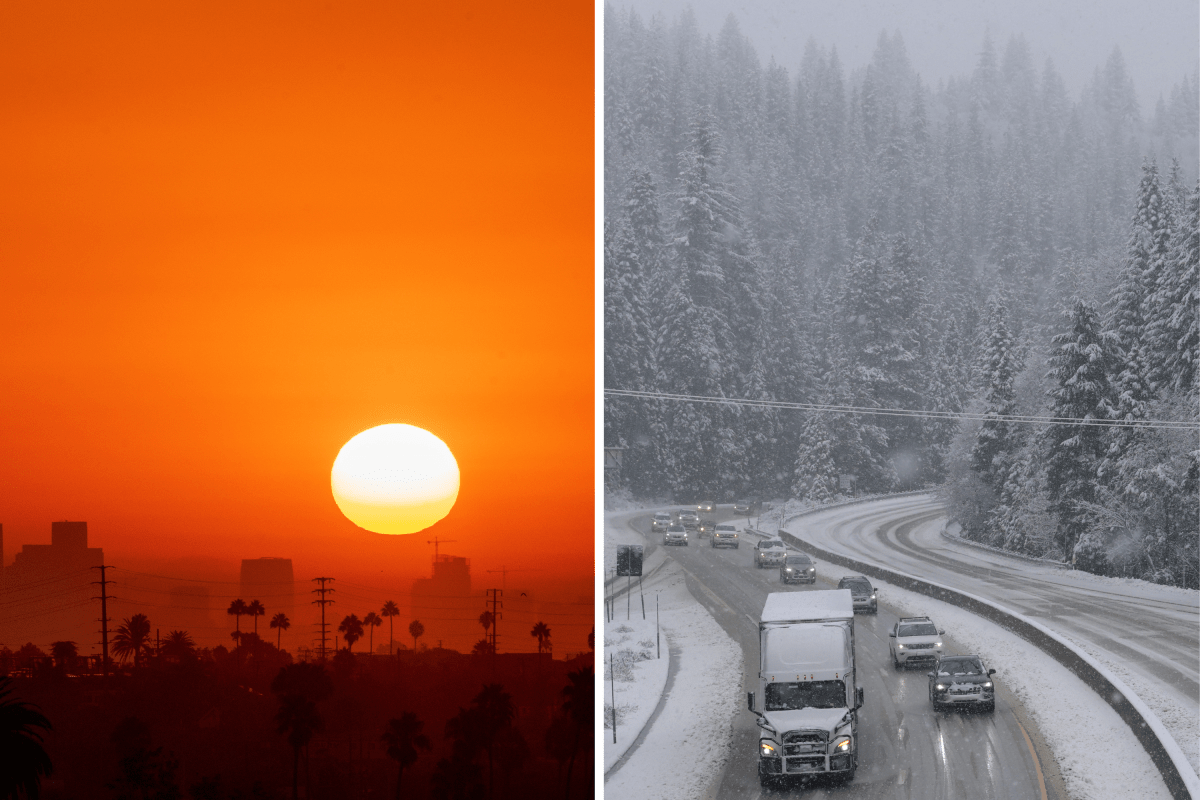
A sharp contrast in weather is unfolding across the United States days before the July 4 holiday weekend, one of the busiest travel periods of the year. Winter storm warnings have been issued to some western parts of the U.S., while a dangerous heat dome grips much of the central and eastern states.
Meteorologists say the two extremes are not separate events but part of the same large-scale atmospheric pattern, driven by the jet stream and amplified by a "blocking" system that is allowing both conditions to persist at the same time.
The National Weather Service (NWS) has issued winter storm warnings across southwest Montana and parts of central Idaho, particularly affecting high-elevation and backcountry areas.
In northwest Beaverhead County, Montana—including areas such as Wisdom and Big Hole Pass—heavy, wet snow is expected through Monday, with up to 3 inches near mountain passes and more than 6 inches at higher elevations. The conditions are expected to create elevated hypothermia risks, especially for those outdoors without proper outdoor gear.
Further west, across Lemhi County in Idaho and the surrounding mountain ranges, 4 to 8 inches of snow is forecast above 6,500 feet, with as much as 12 inches possible on the highest peaks.
Similar totals are expected in the Bitterroot and Sapphire Mountains, while the Anaconda Pintler range could see up to 16 inches of snow in the most elevated areas.
These unseasonable, winter-like hazards in late June are expected to bring snow-covered trails, gusty winds and the potential for fallen trees blocking roads and access routes. Travel in the backcountry is being strongly discouraged, and campers are warned that even a few inches of heavy snow could damage tents and equipment.
At the same time, a large portion of the country is experiencing the extreme opposite.
A heat dome—an area of high pressure that traps hot air over a specific area—is expected to expand across 30 central and eastern states, pushing temperatures into the 90s and low 100s for millions of Americans, from July 2-6, according to the NWS's Climate Prediction Center.
The NWS has warned that the heat will spread across the Midwest, Southeast and Northeast, with especially dangerous conditions in parts of Ohio, North Carolina and Washington, D.C., where heat and humidity will combine to create "feels like" temperatures exceeding 100 degrees Fahrenheit.
This pattern is expected to last through the July 4 weekend, one of the busiest periods for outdoor gatherings, raising concerns about heat exhaustion, dehydration and other heat-related illnesses.
Even the evenings are expected to remain hot, offering little relief and increasing exposure to the potentially dangerous conditions.
The simultaneous weather extremes are creating different but equally hazardous conditions.
Meteorologists say these two weather extremes, sometimes described as "weather whiplash," are not as contradictory as they might appear.
The contrasting conditions aren't two separate events but part of the same atmospheric pattern.
At the center of the heat is what forecasters call a heat dome—a persistent area of high pressure in the upper atmosphere that traps hot air beneath it.
A heat dome is a meteorological phenomenon produced when a large area of high pressure "acts like a lid, preventing heat from escaping and blocking cloud formation, which leads to persistently high temperatures and minimal relief from the heat," AccuWeather meteorologist Brandon Buckingham explained.
Under this high-pressure system, air sinks toward the ground and warms as it compresses, allowing heat to build day after day.
That same sinking motion suppresses clouds and rainfall, meaning there is little relief from the sun. As a result, temperatures can remain elevated for extended periods—sometimes for days or even weeks.
While the heat dome dominates one region, meteorologists point to the jet stream—a fast-moving current of air high in the atmosphere—as the reason other parts of the country are seeing the opposite extreme.
When the jet stream swings north, it creates a ridge, which allows air to pile up and sink—fueling a heat dome. But when it dips south, it forms a trough that pulls colder air down from the Arctic.
That means, at the same time one region is trapped under extreme heat, another can experience cold snaps or snow.
A key factor behind these simultaneous extremes is what meteorologists call a blocking pattern.
Blocking occurs when a strong area of high pressure slows or stalls the usual movement of weather systems.
When the jet stream weakens or becomes more wavy, these systems can linger, locking in heat in one region while keeping colder, stormier conditions nearby.