
Woman, 32, never smoked a day in her life. Then came the diagnosis
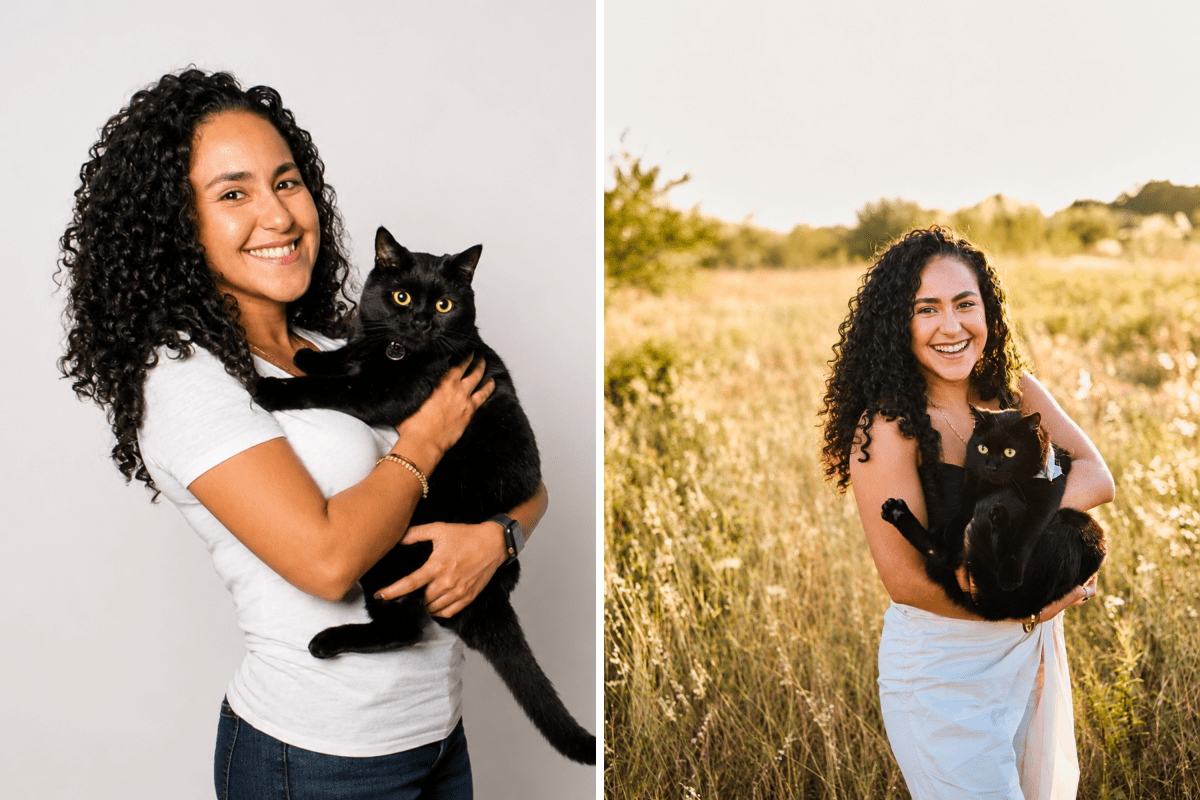
Yvette Ramirez had never smoked a cigarette. She had no family history of lung cancer. She was 32, living in the Netherlands, and building a life she assumed unquestionably had decades left in it. Then a cough that would not go away turned everything upside down.
"I was eventually diagnosed with stage 4 lung cancer," Ramirez, now 36, told Newsweek. "I have no family history of lung cancer, haven't really smoked a cigarette, and yeah it was quite shocking to get that kind of diagnosis."
Ramirez's case is a stark illustration of a pattern oncologists have increasingly flagged in recent years: lung cancer diagnosed in younger, nonsmoking patients, often driven by genetic mutations rather than tobacco exposure, and often caught late because doctors do not expect to find it in someone so young and otherwise healthy.
Ramirez, who is Cuban- and Salvadoran-American and was raised in Florida, first noticed a cough in September 2022, not long after moving to the Netherlands. She assumed it was seasonal. It was not.
"It kept going on for months, until December actually," she said. "I was getting ready to go home for the holidays and my partner at the time suggested that I go to the doctor here in the Netherlands to get it checked out."
She said she "really had to exaggerate some of the symptoms" just to secure an appointment.
Her Dutch general practitioner suspected bronchitis and prescribed standard medication.
Sadly, the cough did not relent. While visiting family in the U.S. that winter, Ramirez went to an emergency room, where a chest scan showed inflammation but prompted no further investigation. She flew back to the Netherlands for work and returned to her physician, who this time suspected a respiratory infection. A subsequent work trip to the U.S. came and went, and by the time she got back, she said, her doctor "felt like he had run out of options" and referred her to a pulmonologist, who initially suspected tuberculosis.
Then came a PET scan—and a moment familiar to patients in the Dutch healthcare system, where test results are often posted to an online portal before a doctor calls.
"I got a notification one weekend, opened it, and it said I have a tumor," Ramirez said.
A biopsy followed and in February 2023, at 32, she learned she had stage 4 EGFR-mutated non-small cell lung adenocarcinoma. The cancer had already metastasized to her brain, including her left frontal lobe, which is what pushed her diagnosis to stage 4.
"One of the hardest parts of the diagnosis was grieving more than my health," Ramirez said. "I also had to grieve the future I had assumed would always be available to me, including the possibility of having a family of my own."
The diagnosis forced a question she had long postponed: what did she want to leave behind while she was still here?
That question led her back to a project she had shelved for years.
Growing up in a Cuban- and Salvadoran-American household, Ramirez said she rarely saw families like hers reflected in children's books—the language, the food, the music, the multigenerational gatherings.
She founded Kuro Libros, an independent bilingual children's publishing brand, whose debut title, Mi Familia Cubana con Kuro / My Cuban Family with Kuro, follows her black cat, Kuro, on a visit to family in Miami.
"The book was not created as a cancer project," she said, adding that cancer instead "changed [her] relationship with time."
She said she initially hesitated to share her diagnosis publicly while building the company, worried it might overshadow the work. She now believes there is value in sharing both.
"I wanted people to understand that stage 4 lung cancer does not have one face," she said. "It can affect younger people and people who have never smoked."
Ramirez began targeted therapy with osimertinib (Tagrisso) in 2023 but stopped after developing drug-related pneumonitis.
She switched to erlotinib from 2024 into mid-2025, then resumed a reduced dose of osimertinib that July. In March, testing revealed MET amplification, a resistance mechanism, prompting doctors to add tepotinib (Tepmetko) to her regimen.
She continues treatment today, alongside regular imaging and monitoring—living, she says, with a chronic disease rather than defined by one.
"Continuing to make plans, build something, create, and pursue meaningful work is not denial," Ramirez said. "For me, it is a way of refusing to let cancer become my entire identity."
Is there a health issue that's worrying you? Let us know via [email protected]. We can ask experts for advice, and your story could be featured on Newsweek.