
World Cup 2026: Africa's amazing success leaves Asia looking for answers
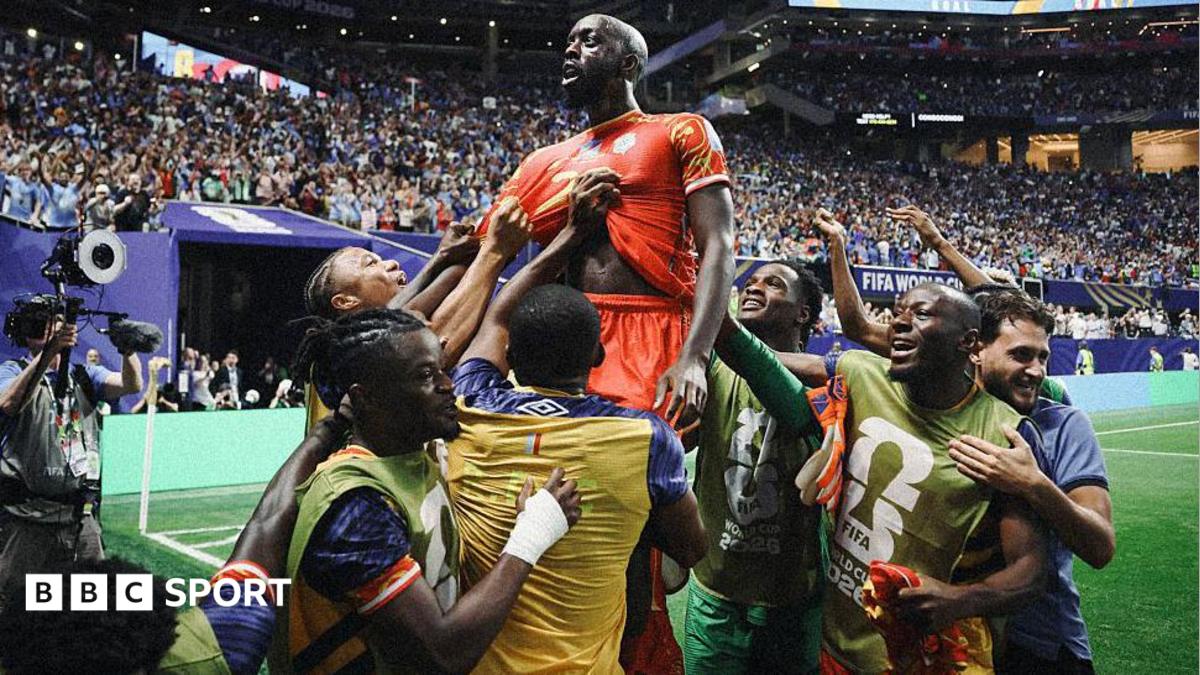
The transformation of African football at the World Cup has been nothing short of meteoric.
At the 2018 World Cup in Russia, not one of Africa's five teams made it out of the group stage, recording just three wins out of a possible 15.
Fast forward to the 2026 World Cup and Africa will be held up as vindication of Gianni Infantino's expansion project.
Of the 10 African teams, all but one made it through the group stage.
Only Tunisia failed to progress, with Cape Verde, Egypt, Ivory Coast, Morocco and South Africa runners-up and Algeria, DR Congo, Ghana and Senegal through in third place.
It is a very different story for Asia, with only two of its nine countries getting out of the group stage.
For Africa it is cause for celebration, while Asia is left to reflect on failure.
Infantino's revamp of the World Cup had been rubber-stamped well before the 2018 World Cup.
So when Africa performed so poorly in Russia, justification for giving the continent another four places appeared to be weak.
Eight years on, and such concerns have been completely banished.
It is a remarkable turnaround in fortunes, partly inspired by the long-term commitment by the Moroccan FA.
Confederation of African Football (Caf) president Patrice Motsepe puts it down to the "hard work and investments in youth football development, coaching and professional football leagues" across the continent.
The first signs of improvement came in Qatar four years ago, as two African nations reached the knockout stage for the first time.
Before the 2022 World Cup, only three African teams had reached the quarter-finals - Cameroon in 1990, Senegal in 2002 and Ghana in 2010.
Morocco achieved what no African country had done, reaching the semi-finals by beating Belgium, Spain and Portugal, before France ended their run.
If Morocco could create a structure which would bring clear, long-term results - including beating supposed bigger countries in the knockout rounds - why couldn't other African countries?
"Morocco created a blueprint of how it can be done, which is years and years of investing in grassroot football and academies," former Nigeria captain William Troost-Ekong told BBC Sport Africa this month.
"Morocco have invested not just money but also time and effort, with a clear idea of how they can progress.
"The facilities they have, the consistency throughout their age groups, I think that's the only blueprint you can follow."
The new World Cup format did help, but that does not explain why Africa did so well and Asia so poorly.
In most recent World Cups, two of the top 16 teams would be in each group.
Now those 16 teams are spread over 12 groups - meaning only four groups have two of the traditionally stronger countries.
Those numbers alone suggest that the groups, in general, had to be weaker.
Third-placed teams went through too, leading to the first knockout round having 32 teams - as many as in the group stage in Qatar.
South Africa were eliminated in the last 32 by a late goal from Canada on Sunday, and the co-hosts will now face the winners of Morocco's game against the Netherlands.
Morocco go into the game as African champions, though only after Caf overturned the result of the Africa Cup of Nations final following Senegal's controversial walk-off.
A decade ago Morocco would have been given little chance of beating the Netherlands, but no-one would dismiss their chances today.
Indeed, there is an argument the North Africans should really be favourites. After all, they are now sixth in the Fifa world rankings - one place above the Netherlands.
With the top four ranked countries - Argentina, England, France and Spain - kept apart in the bracket it makes it more difficult to emulate Morocco and reach the last four.
An African country would very likely have to beat one of those four to get to the semi-finals again.
For instance, Morocco are on a collision course with France in a potential quarter-final.
Defending champions Argentina, who play Cape Verde on Friday, have four African teams in their section of the bracket and could potentially play one in each round on the way to the semi-finals.
As part of that section, Algeria face Switzerland and Ghana meet Colombia. It presents the best possibility of an all-African tie in the last 16.
If the expanded World Cup format turned out to be an opportunity for Africa, the opposite applies to Asia.
From 27 games played, Asia's nine representatives only managed three victories at 0.67 points per game.
African nations played 30 matches and won 10 at 1.33 points per game.
In the final round of group games there were five Africa v Asia matches crucial for qualification. Asian countries did not win any of them, losing four.
Four years ago, Australia, Japan and South Korea made the first knockout round.
This time it is just Australia and Japan.
While African teams have grown and improved - five qualified for the knockout phase for the first time - Asia has gone backwards.
"Other than Japan, Australia and maybe Iran, every team needs to improve," said Uzbekistan head coach Fabio Cannavaro after his team lost all three matches.
The consequences of South Korea's failure, ultimately caused by a shock defeat by South Africa in their final match, have been huge.
South Korea President Lee Jae Myung called for an investigation into the team's poor performance, calling it "a failure of organisation and personnel".
Hours later, head coach Hong Myung-bo resigned after two years in charge.
Jordan, making their World Cup debut, lost all three matches, scoring three goals and conceding eight.
Jamal Sellami, Jordan's head coach, gave a reason for the huge gulf in performance.
"Because African players compete in the major European leagues," Sellami said.
"The most important thing for Jordanian football, if it is to have a greater chance of achieving results, is to have players competing in stronger and more competitive leagues."
The numbers support this with 20 of Morocco's 26-man squad playing in Europe, and 15 of those in the top five leagues.
DR Congo, the last African nation to qualify through the inter-confederation play-offs, has 24 players in Europe - though only 11 in a major league.
Only Egypt has a low number, with 17 players at clubs in the domestic league and six at a European team.
For Jordan, forward Musa Al-Taamari is the sole player in Europe, at French club Rennes.
Iraq and Uzbekistan have three in Europe, and Iran have four.
There is no comparison to Asia's best-performing countries. Japan have 23 players in Europe, Australia 16 and South Korea 15.
It shows the gap in development which has to be bridged.
The Asian confederation has much work to do to try to catch up with Africa and show its teams can be competitive in this expanded format.