
World Cup 2026: Fifa explain decision to rule out Germany's extra-time goal against Paraguay
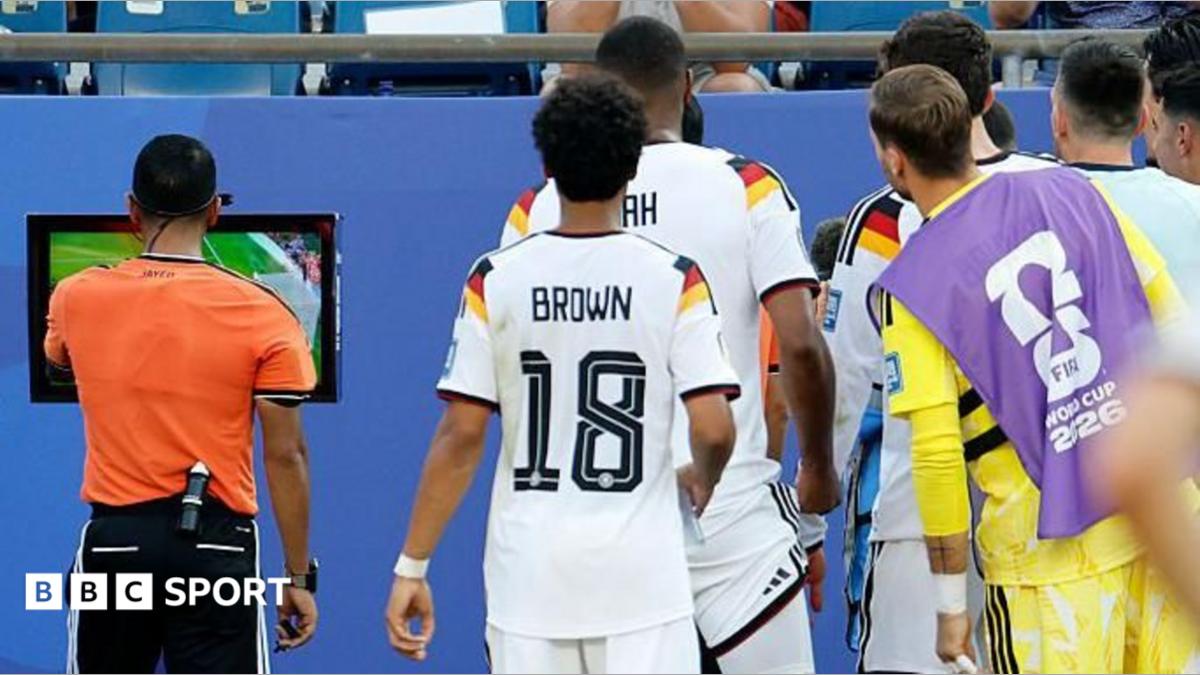
Fifa says coaches and players were told before the World Cup that referees will punish the type of foul that meant Germany's extra-time goal against Paraguay was ruled out.
Jonathan Tah thought he had given Germany a 2-1 lead but following an intervention by the video assistant referee (VAR), referee Jalal Jayed disallowed the goal because Waldemar Anton was adjudged to have fouled Paraguay goalkeeper Orlando Gill.
The last-32 match ended 1-1 and Paraguay then won 4-3 on penalties, with defender Tah firing his spot-kick over the bar to give Jose Canale the chance to score the decisive kick.
Following the defeat - four-time winners Germany's first loss in a World Cup penalty shootout - head coach Julian Nagelsmann said: "In my opinion, this foul was not a real foul; it was actually a joke that his goal was disallowed."
But Pierluigi Collina, Fifa's head of referees, has said officials had been told to punish incidents when players try to block opponents and make no attempt to play the ball, especially when goalkeepers are involved.
"Although keeping a position is not a foul per se, when an attacking player is not interested in the ball and deliberately moves, even marginally, with the clear intention of obstructing opponents' movement and prevents him from defending, then referees, and VAR when needed, should carefully analyse the incident and intervene," Collina said.
"This is especially the case when the tactic aims to prevent the opposing goalkeeper from being able to defend the goal.
"Coaches and players were informed, so it should come as no surprise that referees will punish these fouls."
Paraguay will play two-time champions France in the last 16 in Philadelphia on Saturday (22:00 BST).
Before the World Cup began, Pierluigi Collina gave a presentation about what we should expect at the tournament.
Collina talked about blocking, although in relation to offences that happen before the ball is in play.
Fifa changed the VAR protocol so a goal could be disallowed if the blocking happened, for example, prior to a corner being taken.
This does not quite fall into that category, as Germany had already taken the corner when Anton came into contact with Gill.
But it does still show that it was an area of focus for the Italian.
The decision seems soft, however, and the VAR recommending the referee should review the incident was a surprise.
If anything, it is the goalkeeper who moves into the Germany player, who did not alter his position. The contact between them was a consequence of that.
Was Gill really impeded from being able to make a potential save? And was it really a clear and obvious error?
While the Premier League will place a greater focus on blocking and holding next season, we should not expect a VAR intervention for something like this.